
Cacio e Pepe Recipe
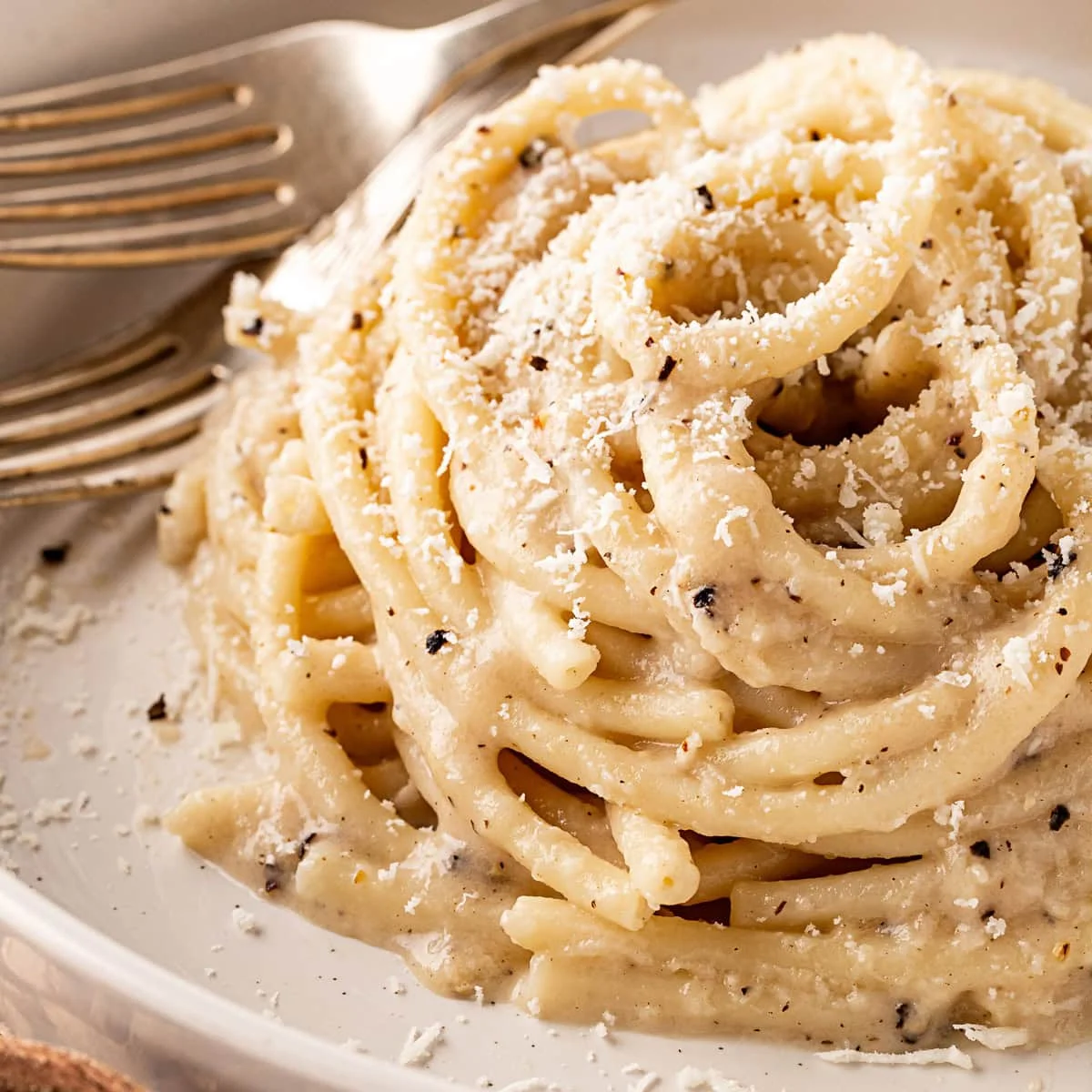
Cacio e pepe is a Roman pasta dish coated in a silky sauce made from Pecorino Romano, black pepper and starchy pasta water. This quick version needs just a few ingredients and is ready in about 20 minutes.
Ingredients
- 227 g (8 oz)pasta, preferably good-quality bucatini or spaghetti
- 7.5 ml (1½ tsp)freshly ground black pepper
- 113 g (4 oz), very finely grated, plus extra for garnishPecorino Romano cheese
- 240 ml (1 cup)pasta water
Instructions
- 1
Grate the cheese
Finely grate the Pecorino Romano using the smallest holes on a box grater or a zester. Set it aside, keeping some extra for garnish and a little more for the sauce if needed.
- 2
Prepare the pepper
Grind the black pepper into a saucier pan or high-sided frying pan. Toast it briefly if you like.
- 3
Cook the pasta
Bring a large pot of water to the boil without adding salt. Cook the pasta according to the packet instructions or until it reaches your preferred consistency; it will not cook further in the sauce.
- 4
Warm the plates
Put two plates or pasta bowls in a warming drawer or a warm oven so the pasta can be served in warm dishes.
- 5
Warm the pepper
When the pasta is nearly cooked, spoon 60 ml (¼ cup) of boiling pasta water into the pan with the pepper. Swirl the pan to warm it, but do not turn on the heat beneath it: the pan should be warm, not hot.
- 6
Combine pasta and cheese
When the pasta is cooked, transfer it straight into the pan. Add the 113 g of finely grated cheese and pour over 120 ml (½ cup) of hot pasta water.
- 7
Emulsify the sauce
Vigorously mix the pasta, water and cheese with a wooden spoon or large kitchen tweezers until the cheese melts and forms a creamy coating. This may take 30 seconds to 1 minute. Add a little more pasta water to loosen the sauce if needed, or more cheese if it is too loose.
- 8
Twirl and serve
Once the sauce is creamy, twirl the pasta onto the two warmed plates or bowls using kitchen tweezers. Finish with extra Pecorino Romano and serve immediately.
What is cacio e pepe?
Cacio e pepe means “cheese and pepper” in Italian and refers to a classic Roman pasta dish. Its simple sauce relies on Pecorino Romano, black pepper and starchy cooking water rather than cream.
This version keeps the ingredient list short and uses finely grated cheese with carefully warmed pasta water. Vigorous mixing helps turn those basics into a smooth sauce.
Nutrition and macros by portion
The nutrition label shows one serving as written: 644 calories, 33g protein, 88g carbs, 17g fat.
| Portion | Adjustment | kcal | Protein | Carbs | Fat |
|---|---|---|---|---|---|
| Lighter | Smaller pasta portion | 451 kcal | 23g | 62g | 12g |
| This serving | As written | 644 kcal | 33g | 88g | 17g |
| Hungry | Larger pasta portion | 966 kcal | 50g | 132g | 26g |
The pasta supplies most of the carbohydrates, while Pecorino Romano contributes much of the protein and fat. Serve a green salad or vegetables alongside to add freshness and balance the plate.
Choosing the pasta and cheese
Pasta shape: Bucatini or spaghetti both work well; their long strands are easy to coat and twirl. Cook the pasta fully in the pot, since the method does not finish cooking it in the sauce.
Pecorino: Use Pecorino Romano and grate it very finely, using the smallest holes on a grater or a zester. Fine shreds melt more readily into the water than larger pieces.
Why the pasta water matters
Starchy water: The hot cooking water helps the cheese form a sauce that clings to the pasta. The recipe uses 60 ml (¼ cup) to warm the pepper, then 120 ml (½ cup) with the pasta and cheese.
Reserve extra: Keep some cooking water available in case the sauce needs loosening. Add it in small amounts while mixing rather than pouring it all in at once.
Getting the sauce smooth
Pan temperature: Warm the pepper with pasta water, but leave the pan off the heat. The method calls for a warm pan, not a hot one.
Mixing: Work the pasta, cheese and water vigorously for 30 seconds to 1 minute. Look for a creamy coating on the strands; if it is too thick, add a little water, and if it is too loose, add more cheese.
Timing and serving
Be ready: Grate the cheese and prepare the pepper before the pasta is done so you can combine everything promptly. The finished pasta is best served as soon as the sauce comes together.
Warm dishes: Heat the plates or pasta bowls while the pasta cooks. This helps keep the pasta warm at the table.
What to serve with it
A crisp green salad or simply dressed vegetables make a fresh contrast to the rich, savoury cheese sauce. Keep accompaniments straightforward so the pepper and Pecorino remain the focus.
For a fuller meal, serve bread alongside the pasta or add a vegetable side. Avoid adding too many strongly flavoured extras if you want to keep the dish close to its classic character.
Recipe notes & tips
- Finely grate the cheese so it blends into the sauce more easily.
- Keep the pan off the heat when you add the first pasta water.
- Have extra pasta water ready before draining the pasta.
- Mix vigorously until the sauce clings evenly to the strands.
- Warm the serving plates while the pasta cooks.
- Serve straight away for the creamiest texture.
Variations
- Try bucatini: Use it instead of spaghetti for a thicker, hollow strand.
- Adjust the pepper: Add a little less or more to suit your preference.
- Use a different long pasta: Choose another long shape if bucatini or spaghetti is unavailable.
- Add greens on the side: Serve with simply cooked vegetables to round out the meal.
- Finish with extra Pecorino: Grate a little more over each portion just before serving.
Common mistakes to avoid
- Coarse cheese: Large shreds may not melt smoothly; grate the Pecorino very finely.
- Hot pan: Direct heat can make the sauce harder to bring together; keep the pan warm, not hot.
- No reserved water: The sauce needs pasta water to emulsify; save enough before finishing the pasta.
- Too much water at once: The sauce can turn loose; add extra water a little at a time.
- Under-cooked pasta: It will not cook further in the sauce; cook it fully in the pot.
- Serving in cold bowls: The pasta cools quickly; warm the plates before serving.
How to store
Cacio e pepe is best eaten as soon as it is made, when the sauce is creamy. If you have leftovers, refrigerate them in a sealed container and use within 2 days; reheat gently in a pan with a splash of water, stirring as the sauce loosens.
Frequently asked questions
Can I use spaghetti instead of bucatini?
Yes. The recipe recommends either good-quality bucatini or spaghetti.
Should I salt the pasta water?
This recipe specifically says not to salt it. The Pecorino provides the dish’s salty flavour.
Can I make the sauce with cream?
Cream is not needed for this recipe. The sauce is made by mixing finely grated Pecorino with hot pasta water.
What if my sauce is too thick?
Mix in a small amount of additional pasta water until the sauce loosens and coats the pasta.
What if the sauce is too loose?
Mix in a little more finely grated Pecorino Romano to help thicken it.
Can I make it ahead?
It is best made and served straight away, as the sauce is creamiest just after mixing. You can grate the cheese in advance to speed up the cooking.
Cook it from the original
This recipe comes from noshingwiththenolands.com. Their page has the author’s own photos, notes and tips — the best place to cook it from.
Open the recipe on noshingwiththenolands.com