
Pan Seared Red Snapper (fresh, whole fish)
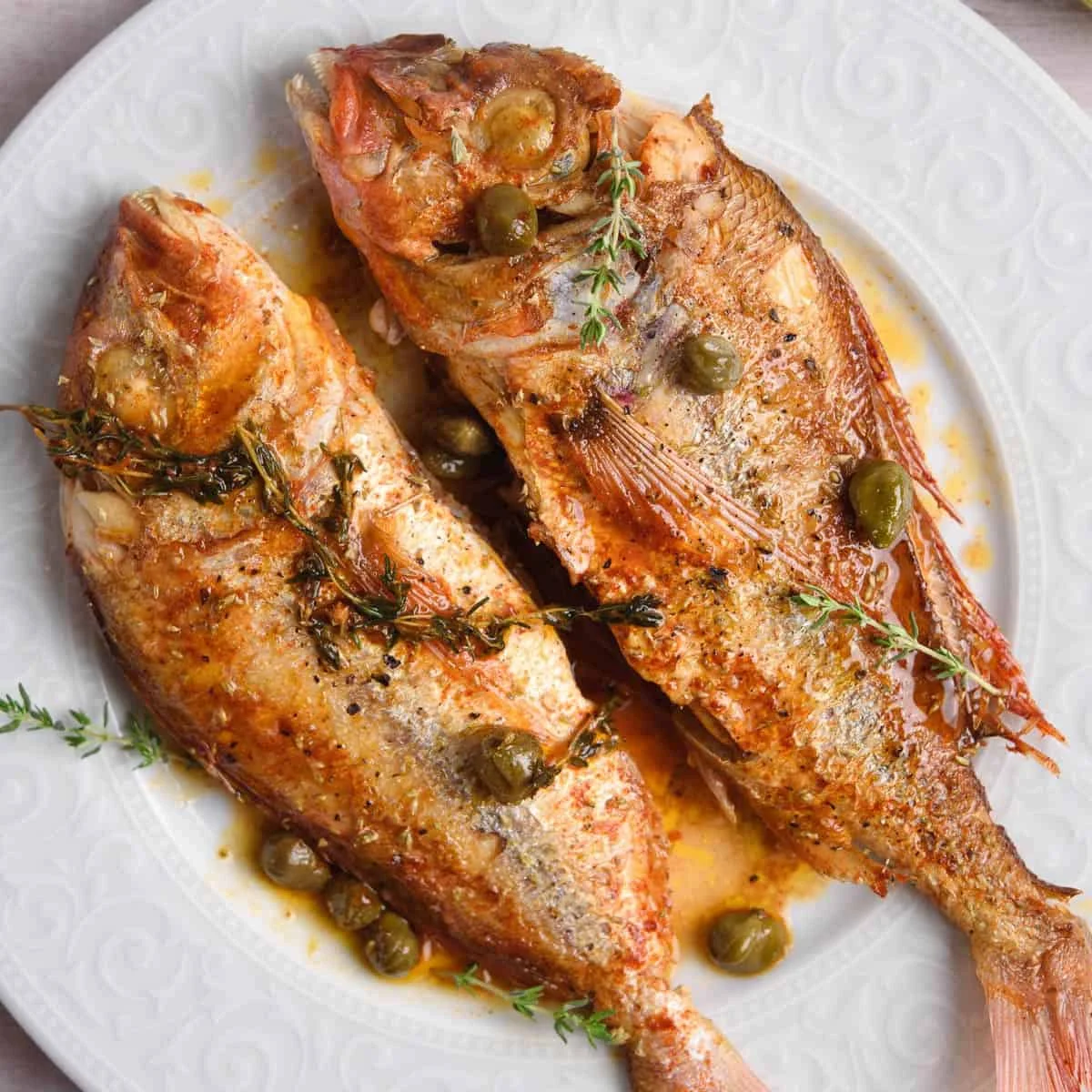
This Greek-style whole red snapper is pan-seared until its skin is browned, then finished with lemon, paprika, capers and herbs. It makes a quick, bright-tasting fish supper with pan juices worth spooning over the top.
Ingredients
- 500 g (1.1 pounds)red snapper (1 large or 2 smaller fish)
- 3 tablespoonsextra virgin olive oil
- 1 sprigthyme, divided into 5–6 single stems
- 2 tablespoonslemon juice
- ½ teaspoonsweet paprika
- 1 teaspoonbaby capers
- ½ teaspoondried oregano
- to tastecoarse sea salt
- to tastefreshly ground pepper
- to servefresh lemon
Instructions
- 1
Prepare the fish
Scale and gut the fish, leaving the head on or removing it as you prefer. Season it with coarse sea salt, including inside the belly, then refrigerate for one hour.
- 2
Mix the sauce
Stir the paprika into the lemon juice with 3 tablespoons of water, then set aside.
- 3
Heat the oil
Heat the olive oil in a non-stick frying pan over high heat until it is smoking hot.
- 4
Dry the fish
Pat the fish dry with paper towels. Take the pan off the heat for a couple of seconds to let it cool slightly, then add the fish.
- 5
Sear the first side
Cook for 2 minutes, or 3 minutes if using a large fish. Reduce the heat to medium on a gas stove or medium-high on an electric stove.
- 6
Turn the fish
Gently flip the fish with two forks, taking care not to tear the skin. Cook for 1–2 minutes.
- 7
Add the flavourings
Add the thyme, paprika-lemon mixture and capers to the pan.
- 8
Lower the heat
Reduce the heat to low.
- 9
Finish cooking
Cook for a further 4–6 minutes, flipping the fish once: allow 4 minutes for 2 smaller fish or 6 minutes for one large fish.
- 10
Serve with juices
Serve with the pan juices, dried oregano and freshly ground pepper on top. Squeeze over extra lemon if you like.
What is pan-seared red snapper?
Red snapper is a firm, mild white fish that works well cooked whole in a hot pan. This Greek-style preparation pairs it with lemon, olive oil, oregano, thyme and capers for a fresh, savoury finish.
Whole-fish cooking is common across many coastal food traditions, including Greek cooking. Here, a quick sear builds colour before the fish finishes gently in a lemony pan sauce.
Nutrition and macros by portion
The nutrition label shows one serving as written: 442 calories, 51g protein, 2g carbs, 24g fat.
| Portion | Adjustment | kcal | Protein | Carbs | Fat |
|---|---|---|---|---|---|
| Lighter | Use less olive oil | 309 kcal | 36g | 1g | 17g |
| This serving | As written | 442 kcal | 51g | 2g | 24g |
| Hungry | Add potatoes or rice | 663 kcal | 77g | 3g | 36g |
The fish provides most of the protein, while the olive oil supplies most of the fat. The small amount of carbohydrate comes mainly from the lemon juice and seasonings; serve with vegetables and a sensible portion of potatoes, rice or bread for a more complete plate.
Getting the fish ready
Salt first: seasoning the fish inside and out gives the flesh a head start on flavour. The method calls for an hour in the fridge after salting, so allow for that resting time in your schedule.
Dry thoroughly: patting the fish with paper towels helps its skin make contact with the hot oil instead of releasing excess moisture into the pan.
Managing the pan heat
Start hot: the oil should be smoking hot before the fish goes in, but take the pan off the heat briefly first as directed. That short pause helps temper the heat before adding the fish.
Turn it down: after the initial sear, reduce the heat according to your hob type. Lower heat for the final stage helps the fish cook through as the sauce and herbs flavour the pan.
Turning and checking doneness
Gentle handling: use two forks to turn the fish carefully so the skin stays as intact as possible. If the fish resists, ease it rather than pulling hard.
Check the thickest part: the flesh should turn opaque and separate easily from the bone when cooked. Fish size affects timing, so use the stated shorter timing for two smaller fish and the longer timing for one large fish.
Lemon, herbs and capers
Paprika and lemon: mixing them with water before adding them to the pan spreads the seasoning around the fish and helps create the cooking juices.
Finishings: thyme and capers go into the pan during cooking, while oregano and pepper are added when serving. A final squeeze of fresh lemon is optional but brings extra brightness.
What to serve alongside
Simple sides: serve the snapper with boiled or roasted potatoes, rice, or crusty bread to make use of the pan juices. A green salad or steamed vegetables add freshness alongside the fish.
Keep the plate balanced: pair the fish with a generous portion of vegetables and a moderate serving of a starchy side.
Recipe notes & tips
- Ask the fishmonger to scale and gut the snapper if you do not want to prepare it yourself.
- Leave enough room in the pan for the fish to sit without being crowded.
- Keep the capers and lemon mixture beside the hob so they are ready when the fish has been turned.
- Choose a pan large enough to hold the fish without bending it.
- Spoon the pan juices over the fish just before serving.
Variations
- Add garlic: add a finely chopped clove to the pan with the thyme.
- Use parsley: scatter chopped fresh parsley over the fish at the end.
- Try another fish: use a similar-sized whole firm white fish and adjust the cooking time to its size.
- Make it chilli-spiked: add a pinch of chilli flakes with the paprika.
- Add olives: stir a few pitted, sliced olives into the pan with the capers.
Common mistakes to avoid
- Skipping the drying step: damp skin can hinder browning, so pat the fish thoroughly with paper towels.
- Crowding the pan: fish that does not fit comfortably is harder to turn; use two smaller fish or a larger pan.
- Turning too roughly: pulling at the skin can tear it, so use two forks and turn gently.
- Keeping the heat high: the fish may brown too quickly before cooking through; reduce the heat after the initial sear.
- Using the large-fish timing for small fish: two smaller fish need less time in the final stage, so cook them for 4 minutes rather than 6.
How to store
Refrigerate leftover fish promptly in a covered container and eat within 1–2 days. Reheat gently in a covered pan over low heat with a splash of water, just until warmed through, to help prevent it drying out.
Frequently asked questions
Can I use two smaller red snappers?
Yes. The recipe allows for either one large fish or two smaller ones. Use the shorter timings specified for smaller fish, especially for the final 4-minute cooking stage.
Do I need to remove the head?
No. The head can be left on or removed according to your preference. The fish should still be scaled and gutted.
Why is the fish refrigerated after salting?
The method rests the seasoned fish in the fridge for one hour before cooking. Factor that resting time into your plan, as it is not included in a 25-minute active cooking window.
How do I know when the snapper is cooked?
Look for opaque flesh that separates easily from the bone at the thickest part. If it still looks translucent, give it a little more time over low heat.
Can I make this without a non-stick pan?
A well-seasoned pan may work, but the recipe specifies non-stick to make turning the whole fish easier. Whichever pan you use, handle the fish gently when flipping.
Cook it from the original
This recipe comes from realgreekrecipes.com. Their page has the author’s own photos, notes and tips — the best place to cook it from.
Open the recipe on realgreekrecipes.com