
Spaghetti alla Puttanesca
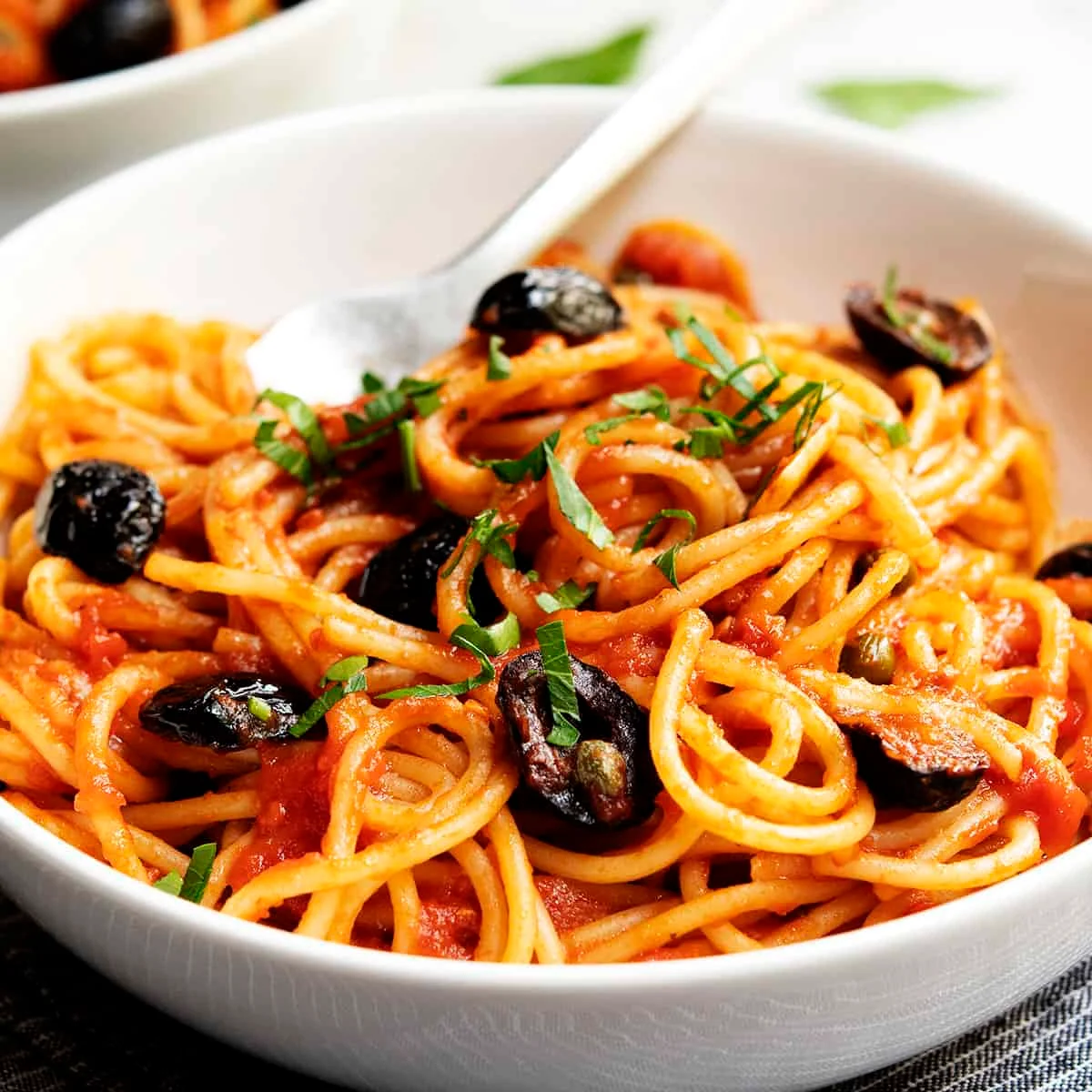
Spaghetti alla puttanesca is a quick Italian pasta with a punchy tomato sauce enriched with olives, capers and anchovies. It comes together in about 30 minutes, making it a useful choice when you want a bold-tasting supper from pantry staples.
Ingredients
- 283 g (10 oz)spaghetti or other long, thin pasta
- 30 ml (2 tablespoons)extra-virgin olive oil
- 3 cloves, thinly slicedgarlic
- 4 fillets, finely choppedanchovies
- 1.25 ml (¼ teaspoon), or more to tastered pepper flakes
- 411 g (14½ oz)crushed tomatoes, with their juice
- 2.5 ml (½ teaspoon)dried oregano
- 120 ml (½ cup)pitted black olives, oil-cured or Kalamata, halved
- 15 ml (1 tablespoon), chopped if largecapers
- For garnishfresh parsley, chopped
Instructions
- 1
Cook the pasta
Cook the spaghetti in a large pot of water according to the packet directions until al dente. Drain it, reserving at least 240 ml (1 cup) of the cooking water. Ideally, time it to finish with the sauce; if it is ready sooner, use some cooking water to loosen it before adding it to the sauce.
- 2
Fry the aromatics
Meanwhile, heat the olive oil in a large frying pan over medium heat until hot. Add the sliced garlic, chopped anchovies and red pepper flakes. Cook, stirring, for about 1 minute, until fragrant.
- 3
Simmer the sauce
Add the tomatoes with their juice and the oregano, then bring the mixture to the boil. Lower the heat and simmer for 5 minutes. Stir in the olives and capers, then simmer for a further 3–5 minutes, stirring occasionally, until thickened.
- 4
Combine and serve
Add the cooked spaghetti to the sauce and toss to coat, adding reserved pasta water as needed to loosen it. Serve garnished with chopped parsley.
What is spaghetti alla puttanesca?
Spaghetti alla puttanesca is an Italian pasta dish known for a savoury, briny tomato sauce. It is especially associated with Naples, although stories about the name and exact origins vary.
This version gets its character from anchovies, olives and capers, which season the tomatoes while they simmer. The short cooking time keeps the sauce lively and lets those assertive flavours come through.
Nutrition and macros by portion
The nutrition label shows one serving as written: 392 calories, 12g protein, 62g carbs, 11g fat.
| Portion | Adjustment | kcal | Protein | Carbs | Fat |
|---|---|---|---|---|---|
| Lighter | Less pasta, more vegetables | 274 kcal | 8g | 43g | 8g |
| This serving | As written | 392 kcal | 12g | 62g | 11g |
| Hungry | Larger pasta portion | 588 kcal | 18g | 93g | 17g |
Most of the carbohydrates come from the spaghetti, while the olive oil supplies much of the fat. The anchovies contribute protein, with smaller amounts from the pasta; tomatoes, olives and capers also contribute to the overall flavour and nutrition. Pair a serving with a generous side of green vegetables or salad for a more varied plate.
Build the savoury base
Garlic and anchovies: warm them gently in the olive oil with the pepper flakes until fragrant, rather than letting the garlic brown. The anchovies break down as they cook and season the oil and sauce.
Olives and capers: add these after the tomatoes have simmered for 5 minutes. Their salty, briny flavour is concentrated, so taste the finished sauce before adding any extra salt.
Use the pasta water
Starchy cooking water helps the sauce cling to the spaghetti and loosens it without making it watery. Reserve it before draining, then add a little at a time as you toss the pasta with the sauce.
The recipe works best when pasta and sauce finish at roughly the same time. If the spaghetti is ready first, a splash of its cooking water will help keep it from sticking while you finish the sauce.
Check the sauce texture
The tomatoes should simmer until the sauce thickens, first for 5 minutes on their own and then for another 3–5 minutes with the olives and capers. Stir occasionally and look for a cohesive sauce rather than a watery layer around the edges.
Once tossed with the spaghetti, the sauce should coat the strands. Add reserved pasta water gradually if it seems too thick.
Choose your olives
Oil-cured and Kalamata olives both suit this sauce, as long as they are pitted and halved. The oil-cured variety tends to have a more intense, wrinkled flavour, while Kalamata olives bring a familiar fruity brininess.
Keep the capers chopped if they are large so their flavour is distributed through the sauce. Their saltiness, along with the olives and anchovies, does much of the seasoning work.
What to serve with it
Serve the spaghetti as soon as it is coated and garnished with parsley. A simple green salad or steamed green vegetables can add freshness alongside the rich, savoury sauce.
Because the dish already has tomatoes, olives and capers, keep any side dish simply dressed. Crusty bread is also handy for scooping up sauce.
Recipe notes & tips
- Reserve the pasta water before draining, and keep at least 240 ml on hand.
- Slice the garlic thinly so it cooks quickly and evenly.
- Stir the garlic and anchovies while they cook to help prevent the garlic from browning.
- Add pasta water a little at a time when tossing, so the sauce does not become too loose.
- Taste before adding extra salt because anchovies, olives and capers are already salty.
- Halve the olives before they go into the sauce so they are easier to distribute.
Variations
- Adjust the heat: use more red pepper flakes for a spicier sauce, or reduce them for a milder one.
- Try another long pasta: linguine or another thin, long pasta can replace the spaghetti.
- Choose your olives: use oil-cured olives or Kalamata olives, as in the recipe.
- Add extra parsley: scatter more chopped parsley over the pasta just before serving.
- Make it vegetarian: leave out the anchovies, bearing in mind that the sauce will lose some of its savoury depth.
Common mistakes to avoid
- Browning the garlic: it can turn bitter, so cook it only until fragrant.
- Forgetting the pasta water: reserve it before draining so you can loosen the sauce as needed.
- Adding all the pasta water at once: use small splashes to avoid thinning the sauce too much.
- Overcooking the spaghetti: cook it only until al dente, as it will be tossed with the hot sauce.
- Salting before tasting: the anchovies, olives and capers already bring plenty of saltiness.
How to store
Refrigerate leftover pasta in a covered container for up to 3 days. Reheat gently in a pan with a splash of water, stirring until hot; the pasta may be softer after storage.
Frequently asked questions
Can I use a different type of pasta?
Yes. The recipe calls for spaghetti or another long, thin pasta, and linguine is a suitable alternative. Cook it according to its packet directions.
Can I leave out the anchovies?
Yes, but the sauce will have less of its characteristic savoury depth. Taste it before serving and adjust the seasoning to suit.
How spicy is this dish?
The listed amount of red pepper flakes gives it some warmth. Use less for a milder sauce or add more to taste.
Why reserve pasta water?
It helps loosen the sauce and encourages it to coat the spaghetti. Add it gradually while tossing.
How do I know when the sauce is ready?
After simmering, it should look thickened rather than watery. Once combined with the pasta, it should cling to the strands.
Can I make the sauce ahead?
You can prepare the sauce ahead and refrigerate it in a covered container, then reheat it gently while the pasta cooks. Combine them with a little pasta water just before serving.
Cook it from the original
This recipe comes from pinchandswirl.com. Their page has the author’s own photos, notes and tips — the best place to cook it from.
Open the recipe on pinchandswirl.com