
Beef Wine Stew With Quince (Sofigado)
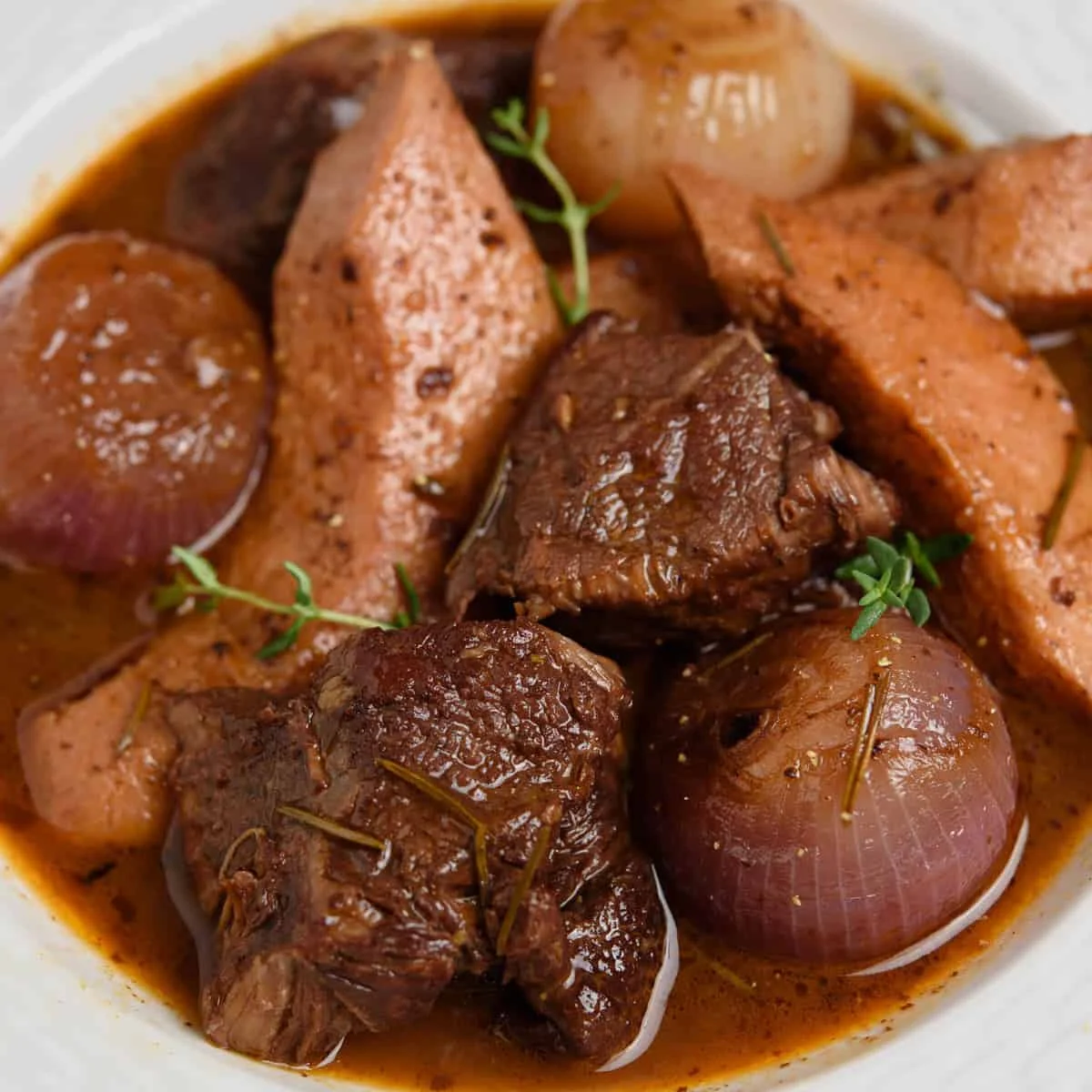
Sofigado is a traditional beef stew from the Greek island of Lefkada, simmered with red wine, quince, shallots and grape molasses. Its sweet-savoury sauce makes it a distinctive choice for a slow, warming meal.
Ingredients
- 75 ml (5 tablespoons)olive oil
- 1 kg (2.3 pounds), cut into 5 cm (2-inch) piecesbeef chuck, chuck tender or flatiron steak
- 900 g (1.2 pounds)quince
- 450 mlsemi-sweet red wine
- 550 mlvegetable, chicken or beef stock
- 90 ml (6 tablespoons) grape molasses or 60 ml (4 tablespoons) honeygrape molasses or honey
- 5 berries or 1 teaspoon groundallspice
- 15 ml (1 tablespoon)tomato paste
- 2 sprigsrosemary, fresh or dried
- 2 leavesbay leaves, fresh or dried
- 3–4 small sprigsfresh thyme
- 3 clovesgarlic
- 600 g (21 ounces)pearl onions or shallots
- 30 ml (2 tablespoons)red wine vinegar or balsamic vinegar
Instructions
- 1
Season the beef
Pat the beef dry and season it with salt and pepper.
- 2
Heat the oil
Heat 60 ml (4 tablespoons) of the olive oil in a braising pot or Dutch oven, then add the beef.
- 3
Brown the beef
Brown the meat all over over medium-high heat, working in two batches if needed to avoid crowding. Remove it, cover and set aside, then reduce the heat to medium.
- 4
Deglaze the pot
Add the tomato paste and 400 ml of red wine. Scrape the browned bits from the bottom with a wooden spoon, then wait for the wine to begin boiling.
- 5
Add the flavourings
Pour in the stock and add the rosemary, bay leaves, thyme, garlic, allspice and grape molasses.
- 6
Simmer the beef
Return the beef and its resting juices to the pot. Cover and simmer over low heat for 40–50 minutes.
- 7
Prepare the quince
While the beef cooks, peel the quince and cut it into wedges 3–4 cm (1⅓ inches) thick.
- 8
Heat a frying pan
Place a non-stick frying pan over medium-high heat.
- 9
Brown the quince
Sauté the quince in two batches for at least 15 minutes per batch, turning the pieces often with tongs until coloured all over. Keep them moving to prevent burning, then set them aside on a plate.
- 10
Cook the onions
Add 15 ml (1 tablespoon) of olive oil and the pearl onions to the same pan. Sauté for about 10 minutes, until they have some colour all around.
- 11
Deglaze the pan
Pour the remaining 50 ml of red wine into the frying pan and scrape up the browned bits.
- 12
Glaze the onions
Add 200 ml of hot water. Cook, turning the onions now and then, until the water has evaporated and only a thin layer of glossy liquid remains.
- 13
Add the onions
Transfer the contents of the frying pan to the pot with the beef. Shake the pot so the onions settle into the liquid.
- 14
Top with quince
Arrange the quince on top of the stew and replace the lid.
- 15
Finish simmering
Simmer covered for another 40–50 minutes, or until the sauce has thickened.
- 16
Season and add vinegar
Taste and adjust the seasoning if needed. Turn off the heat and stir in the vinegar.
- 17
Rest before serving
Leave the stew to rest in the pot for 15 minutes before serving.
What is sofigado?
Sofigado is a traditional stew from Lefkada, a Greek island in the Ionian Sea. Beef is slowly cooked with wine and fruit, bringing savoury, tart and sweet flavours together.
Quince and grape molasses make this version especially distinctive. The beef simmers in the wine-and-stock base first, while the quince and onions are browned separately before joining the pot.
Nutrition and macros by portion
The nutrition label shows one serving as written: 1052 calories, 53g protein, 92g carbs, 47g fat.
| Portion | Adjustment | kcal | Protein | Carbs | Fat |
|---|---|---|---|---|---|
| Lighter | Use less olive oil | 736 kcal | 37g | 64g | 33g |
| This serving | As written | 1052 kcal | 53g | 92g | 47g |
| Hungry | Serve with extra potatoes | 1578 kcal | 80g | 138g | 71g |
The beef provides most of the protein, while the quince and grape molasses contribute much of the carbohydrate. Olive oil and the beef contribute fat. To balance the plate, serve the stew with a generous portion of vegetables or salad.
Choosing the beef
Cut size: Pieces about 5 cm across suit the long simmer and are easy to serve alongside the quince.
Browning: Drying the beef first helps it colour in the hot oil. Brown it in batches if necessary; crowded meat releases moisture and is less likely to sear.
Building the wine sauce
Deglazing: Scrape the bottom of the pot after adding the first 400 ml of wine to lift the browned bits into the sauce.
Sweetness: Grape molasses gives the stew its characteristic sweet depth; honey is the listed alternative. Semi-sweet wine adds another layer of sweetness, so taste the sauce before adjusting its seasoning.
Preparing the quince and onions
Quince: Peel it and cut it into thick wedges, then sauté in two batches for at least 15 minutes each. Turn the pieces regularly so they colour without scorching.
Onions: Give the onions about 10 minutes in the same pan, then deglaze with the remaining wine and cook with hot water until only a thin glossy coating remains.
Judging when it is ready
First simmer: The beef cooks covered for 40–50 minutes before the fruit and onions are added.
Final simmer: Cook for another 40–50 minutes, checking that the sauce has thickened. Rest the finished stew in the pot for 15 minutes after adding the vinegar.
Serving the stew
Serve the beef with the quince, onions and plenty of sauce so each portion gets a mix of the sweet and savoury elements.
A plain accompaniment such as rice, potatoes or crusty bread can catch the sauce. A simply dressed green salad provides a fresh contrast.
Recipe notes & tips
- Pat the beef dry before it goes into the pot so it can brown more readily.
- Brown the beef in batches if the pieces would otherwise touch or crowd one another.
- Turn the quince frequently while sautéing to help it colour evenly without burning.
- Keep the heat low during the covered beef simmer and check that the pot is not boiling hard.
- Let the stew rest for the full 15 minutes so the sauce can settle before serving.
Variations
- Choose honey: Use 60 ml (4 tablespoons) of honey instead of 90 ml (6 tablespoons) of grape molasses.
- Change the stock: Use vegetable, chicken or beef stock, as listed.
- Swap the vinegar: Finish with balsamic vinegar instead of red wine vinegar.
- Use ground allspice: Replace the 5 allspice berries with 1 teaspoon of ground allspice.
- Pick your onions: Use pearl onions or shallots, whichever is available.
Common mistakes to avoid
- Crowding the beef: It can hinder browning; sear it in two batches if needed.
- Leaving the quince unattended: It can scorch; turn the wedges often with tongs.
- Skipping the deglaze: Scrape the browned bits into the sauce when adding the wine.
- Adding the quince too early: Brown it separately and place it on top for the final simmer.
- Serving straight away: Rest the stew in the pot for 15 minutes after adding the vinegar.
How to store
Cool leftovers promptly, store them in an airtight container in the fridge and eat within 3 days. Reheat gently in a covered saucepan until piping hot, adding a splash of water or stock if the sauce has thickened too much.
Frequently asked questions
Can I use a different cut of beef?
The recipe lists beef chuck, chuck tender or flatiron steak. Cut it into 5 cm pieces so it cooks as directed.
Can I use honey instead of grape molasses?
Yes. Use 60 ml (4 tablespoons) of honey in place of 90 ml (6 tablespoons) of grape molasses.
How should I cut the quince?
Peel it and cut it into wedges 3–4 cm thick. Sauté the wedges in two batches, turning them often.
Can I use shallots instead of pearl onions?
Yes, the recipe allows either pearl onions or shallots. Sauté them in the pan as directed until they have some colour.
How do I know when the stew is ready?
After the second covered simmer of 40–50 minutes, the sauce should have thickened. The recipe also calls for a 15-minute rest before serving.
What can I serve with sofigado?
Rice, potatoes or crusty bread work well for serving with the sauce. A green salad makes a fresh side.
Cook it from the original
This recipe comes from realgreekrecipes.com. Their page has the author’s own photos, notes and tips — the best place to cook it from.
Open the recipe on realgreekrecipes.com