
Bucatini Cacio e Pepe
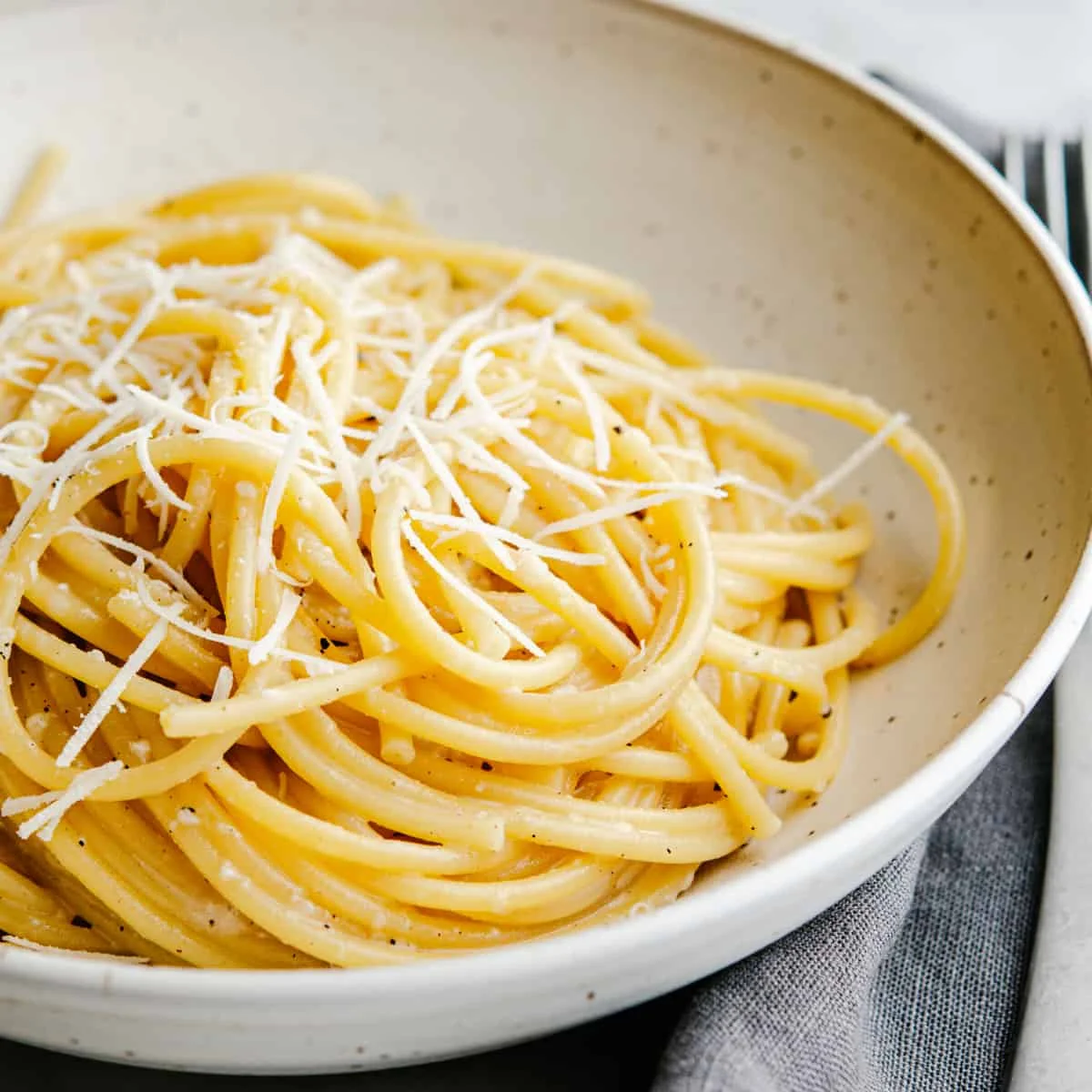
Bucatini cacio e pepe pairs thick, hollow pasta with a sharp pecorino and black pepper sauce. This method blends the cheese with cold water first, helping it turn into a smooth sauce when tossed with hot pasta.
Ingredients
- 340 g (12 oz)dried bucatini pasta
- 142 g (5 oz), plus more for servinggrated Pecorino Romano
- 2 teaspoons, plus more for servingfreshly ground black pepper
- 75 ml, plus more as neededcold water
Instructions
- 1
Boil the water
Bring a large pot of water to the boil over medium-high heat.
- 2
Blend the cheese
While the water heats, put the Pecorino Romano, black pepper and 75 ml cold water in a food processor. Process until very smooth and thick, scraping down the sides as needed. If necessary, add more cold water 5 ml at a time. Scrape the mixture into a serving bowl large enough to hold and toss the pasta.
- 3
Cook the pasta
Add the bucatini to the boiling water and cook according to the packet instructions until al dente.
- 4
Make the sauce
When the pasta has 1 minute left to cook, scoop out 120 ml of the hot cooking water. Stir 45 ml of it into the cheese mixture, a little at a time, stirring vigorously until the sauce is thick and smooth. Drain the pasta and add it to the sauce straight away. Toss vigorously to coat, adding a little more cooking water if needed to loosen the sauce. Divide between 4 pasta bowls and finish with more Pecorino and black pepper. Serve immediately.
What is cacio e pepe?
Cacio e pepe is a Roman pasta dish whose name means cheese and pepper. Its classic combination of pecorino, black pepper and pasta water makes a simple, savoury sauce without cream.
This version uses bucatini, a long pasta with a hollow centre, and blends the cheese with cold water before adding pasta water. That gives you a smooth base to toss with the cooked pasta.
Nutrition and macros by portion
The nutrition label shows one serving as written: 455 calories, 22g protein, 65g carbs, 11g fat.
| Portion | Adjustment | kcal | Protein | Carbs | Fat |
|---|---|---|---|---|---|
| Lighter | Smaller pasta portion | 319 kcal | 15g | 46g | 8g |
| This serving | As written | 455 kcal | 22g | 65g | 11g |
| Hungry | Larger pasta portion | 683 kcal | 33g | 98g | 17g |
The bucatini supplies most of the carbohydrates, while Pecorino contributes much of the protein and fat. Serve a bowl with a green salad or vegetables to add freshness and balance the meal.
Choose the right cheese
Pecorino Romano: its salty, tangy flavour is central to the dish, so grate it finely for a sauce that blends evenly.
Freshly ground pepper: the recipe uses two teaspoons, with extra at the end. Grinding it fresh gives the pepper a more pronounced aroma.
Blend a smooth base
Cold water: blend it with the cheese and pepper until the mixture is very smooth and thick, scraping down the processor as needed.
Small additions: if the mixture needs loosening in the processor, add cold water a teaspoon at a time. This helps you control the texture rather than making the base too thin.
Use pasta water carefully
Reserved water: scoop out the hot cooking water when the pasta has one minute left. It contains starch from the pasta and helps bring the cheese mixture together.
Gradual mixing: stir in the measured water a little at a time, then add more only if needed. The aim is a thick, smooth sauce that coats the bucatini.
Check for al dente pasta
Packet timing: cook the bucatini according to its packet instructions and taste it near the end. It should be tender but still have a slight bite.
Work promptly: have the cheese mixture ready before the pasta is done, so you can drain and toss the bucatini while it is hot.
Serve straight away
Finish: divide the pasta between four bowls and add more grated Pecorino and black pepper. Serve immediately, while the sauce is smooth and clings to the strands.
Alongside: a crisp green salad or simply dressed vegetables make a fresh contrast to the salty, peppery pasta.
Recipe notes & tips
- Grate the Pecorino finely so it blends smoothly in the food processor.
- Scrape down the processor bowl to catch cheese that sticks to the sides.
- Reserve the pasta water before draining the bucatini.
- Add pasta water gradually rather than pouring it all in at once.
- Toss the pasta vigorously while it is hot so the sauce coats it evenly.
- Have the serving bowls ready so you can serve the pasta immediately.
Variations
- More pepper: add extra freshly ground black pepper at the table for a sharper bite.
- Cheese finish: grate additional Pecorino Romano over each bowl just before serving.
- Short pasta: use another pasta shape if bucatini is unavailable, and cook it according to its packet instructions.
- Vegetable side: serve with a simply dressed salad or cooked greens for a fresh accompaniment.
Common mistakes to avoid
- Lumpy cheese base: blend the mixture until very smooth, scraping down the sides as needed.
- Too much water at once: stir it in gradually so the sauce stays thick and cohesive.
- Missed pasta water: scoop it out before draining, while the pasta still has one minute to cook.
- Overcooked bucatini: follow the packet timing and check for a slight bite near the end.
- Waiting to serve: toss and portion the pasta as soon as it is coated, before the sauce cools.
How to store
For the best texture, serve this pasta immediately. If you have leftovers, refrigerate them in an airtight container for up to 2 days; reheat gently with a splash of water, stirring often, though the sauce may not be as smooth.
Frequently asked questions
Can I use another type of pasta?
Yes. A long pasta shape can stand in for bucatini; cook it according to its packet instructions and reserve some cooking water.
Why blend the cheese with cold water?
It creates a smooth, thick base before the hot pasta and cooking water are added. This helps the sauce coat the bucatini.
How much pasta water should I add?
Start by stirring in 45 ml, as directed, and add more a little at a time only if the sauce needs loosening.
Can I make the sauce ahead?
It is best to blend the cheese mixture while the pasta water heats, then finish the sauce when the pasta is nearly cooked. The dish is at its best served straight away.
What does al dente mean?
It means the pasta is cooked through but still has a slight firmness when bitten. Check the packet timing and taste the bucatini towards the end.
Cook it from the original
This recipe comes from pinchandswirl.com. Their page has the author’s own photos, notes and tips — the best place to cook it from.
Open the recipe on pinchandswirl.com