
Honey Butter Chicken
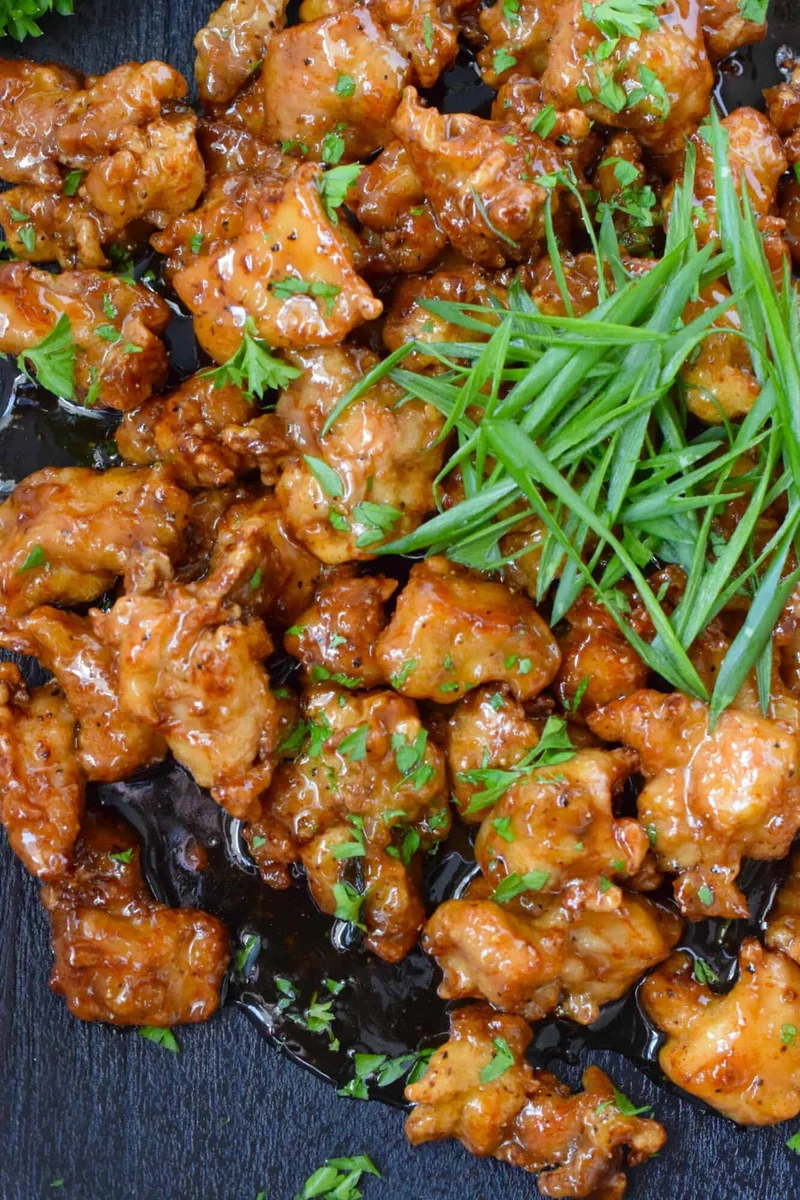
Honey butter chicken pairs crisp, bite-sized pieces of chicken with a glossy, sweet-and-savoury sauce. Fry the chicken in batches, then coat it in the sauce just before serving so it keeps its crunch.
Ingredients
- 8boneless, skinless chicken thighs, cut into 2.5 cm pieces
- 120 g (1 cup)cornflour
- 1 teaspoononion powder
- ½ teaspoongarlic powder
- ½ teaspoonground black pepper
- ½ teaspoonsalt
- 60 ml (¼ cup)milk
- vegetable oil, enough to fill the pot to a depth of about 5 cm (2 inches)vegetable oil, for frying
- 85 g (6 tablespoons)butter
- 110 g (⅓ cup)honey
- 30 ml (2 tablespoons)low-sodium soy sauce
- 15 ml (1 tablespoon)rice vinegar
- ¼ teaspoonsalt
- ¼ teaspoonground black pepper
- to tastespring onions, thinly sliced, to garnish
Instructions
- 1
Mix the coating
In a mixing bowl, stir together the cornflour, onion powder, garlic powder, ½ teaspoon of black pepper, ½ teaspoon of salt and the milk.
- 2
Coat the chicken
Add the chicken pieces and toss until they are evenly coated.
- 3
Fry in batches
Pour vegetable oil into a heavy-based pot to a depth of about 5 cm (2 inches). Heat it to 175°C (350°F), then fry the chicken in batches until golden brown.
- 4
Drain the chicken
As each batch is ready, lift the chicken out of the pot and leave it on a plate lined with kitchen paper.
- 5
Cook the sauce
Put the butter, honey, soy sauce, rice vinegar, ¼ teaspoon of salt and ¼ teaspoon of black pepper in a large frying pan. Cook over medium heat, stirring often, until the sauce thickens to a syrupy consistency.
- 6
Coat and serve
Add the fried chicken to the pan and toss to coat. Cook for 2–3 minutes, or until the sauce clings to the chicken, then plate and garnish with spring onions.
What is honey butter chicken?
Honey butter chicken is a Chinese-inspired dish of fried chicken tossed in a sweet, savoury glaze. This version combines honey and butter with soy sauce and rice vinegar for a rich sauce with a little tang.
The chicken is coated in a cornflour mixture and fried before it meets the sauce. That order helps the pieces brown first and gives the glaze a crisp surface to cling to.
Nutrition and macros by portion
The nutrition label shows one serving as written: 646 calories, 45g protein, 55g carbs, 27g fat.
| Portion | Adjustment | kcal | Protein | Carbs | Fat |
|---|---|---|---|---|---|
| Lighter | Use less glaze | 452 kcal | 31g | 39g | 19g |
| This serving | As written | 646 kcal | 45g | 55g | 27g |
| Hungry | Add a larger rice portion | 969 kcal | 68g | 83g | 41g |
The chicken provides most of the protein, while the cornflour and honey contribute much of the carbohydrate. Butter and frying oil supply much of the fat; serve a portion with vegetables and rice, adjusting the rice to suit your appetite, for a more balanced plate.
The coating and chicken
Cornflour: it forms the coating that browns in the hot oil and helps the finished chicken hold on to the sauce.
Chicken thighs: boneless, skinless thighs are cut into small, even pieces so they cook quickly. Try to keep the pieces close in size for more consistent frying.
Frying safely and evenly
Oil depth: the method calls for about 5 cm (2 inches) of oil in a heavy-based pot. Use a pot with plenty of room above the oil, and heat it to 175°C (350°F) before frying.
Small batches: adding too much chicken at once can cool the oil and make the coating less crisp. Give the pieces space, and let the oil return to temperature between batches.
Getting the glaze right
Syrupy texture: stir the butter, honey, soy sauce, vinegar, salt and pepper over medium heat until the sauce thickens. Keep stirring often so it heats evenly.
Coating cue: once the chicken is in the pan, toss it until the glaze covers the pieces and clings to them. The final 2–3 minutes help the sauce adhere without leaving the chicken in it for too long.
Timing the cooking
Fry first: drain each batch on kitchen paper while you finish the rest. This gives excess oil a chance to drain before the chicken goes into the sauce.
Sauce last: cook the glaze while the chicken is ready, then coat and serve promptly. The chicken is at its crispest just after frying and glazing.
What to serve alongside
Rice: plain steamed rice is a simple base for the glossy sauce. Add a vegetable side, such as steamed greens or stir-fried vegetables, for contrast.
Fresh finish: sliced spring onions add a sharp, fresh note against the sweet buttery coating. Scatter them over the chicken just before serving.
Recipe notes & tips
- Cut the thighs into similar-sized pieces so they cook at roughly the same pace.
- Check the oil temperature before each batch and allow it to recover between batches.
- Lower chicken pieces into the oil carefully to avoid splashing.
- Stir the sauce regularly as it thickens so it does not catch on the pan.
- Toss the chicken in the sauce just before serving to retain as much crispness as possible.
Variations
- Add ginger: stir a little finely grated ginger into the sauce as it cooks.
- Bring the heat: add chilli flakes to the glaze for a spicy edge.
- Use chicken breast: cut it into similar-sized pieces and take care not to overcook it.
- Add sesame: finish with toasted sesame seeds alongside the spring onions.
- Make it tangier: add a little extra rice vinegar to the sauce to taste.
Common mistakes to avoid
- Crowding the pot: too many pieces can lower the oil temperature; fry in batches.
- Uneven pieces: different sizes cook at different rates; cut the chicken into similar-sized pieces.
- Oil that is too cool: the coating may turn greasy rather than crisp; wait for the oil to reach 175°C (350°F).
- Skipping the drain: excess oil can make the final dish heavy; rest each batch briefly on kitchen paper.
- Saucing too early: the coating softens as it sits; toss the chicken in the glaze just before serving.
How to store
Refrigerate leftovers in a covered container and eat within 2 days. Reheat until piping hot in a frying pan or oven; the coating may be softer after storage.
Frequently asked questions
Can I make the chicken ahead?
You can fry it ahead, but it is best to make the sauce and toss the chicken just before serving. The coating softens once it sits in the glaze.
How do I know the oil is ready?
The method specifies 175°C (350°F), so use a kitchen thermometer if you have one. Let the oil recover its heat between batches.
Can I use chicken breast instead of thighs?
Yes. Cut it into evenly sized pieces and watch it closely, as breast can become dry if overcooked.
Can I make this without deep-frying?
This method relies on frying for the crisp coating. Baking or air-frying would change the texture and would require a different method.
Why is my sauce not thickening?
Keep it over medium heat and stir often until it becomes syrupy. Avoid adding the chicken before the sauce has thickened.
What goes well with honey butter chicken?
Serve it with steamed rice and a vegetable side. Spring onions add a fresh finish to the sweet, buttery glaze.
Cook it from the original
This recipe comes from lordbyronskitchen.com. Their page has the author’s own photos, notes and tips — the best place to cook it from.
Open the recipe on lordbyronskitchen.com