
Homemade Dill Pickles
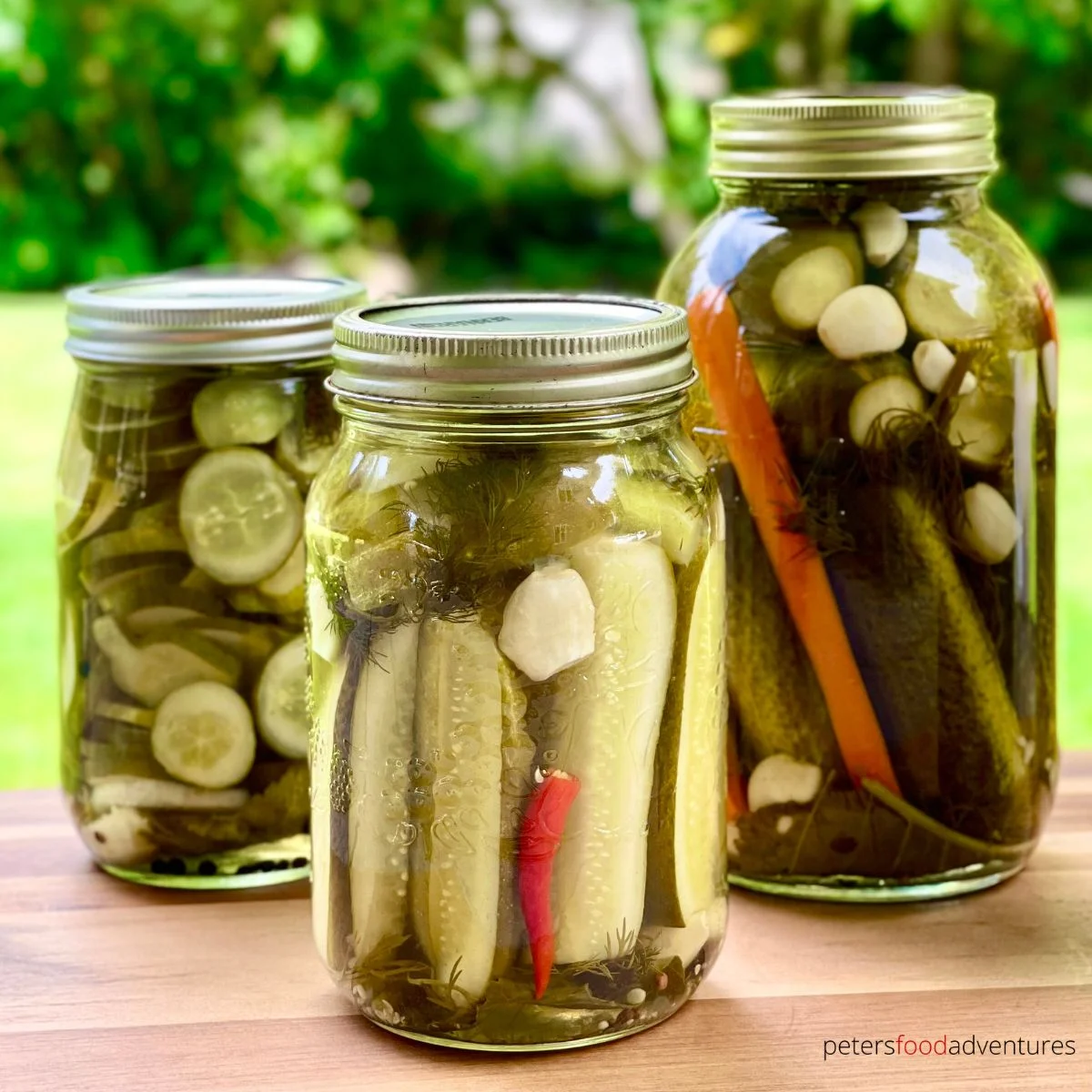
These Eastern European-style dill pickles pack cucumbers into jars with garlic, dill and spices, then cover them with a hot vinegar brine. Choose whole pickles, spears or hamburger-style rounds, and use a water bath to process the jars for pantry storage.
Ingredients
- 2 kgpickling cucumbers, ends trimmed
- 1horseradish leaf (or blackcurrant or cherry leaf)
- 1 bunchdill
- 1 headgarlic, peeled into cloves
- 1½ tablespoonspeppercorns
- 4bay leaves
- 1 (optional)carrot, sliced lengthways into spears
- 2 tablespoons (optional)sliced onion, for hamburger pickles
- 1.07 litreswater
- 1.07 litresvinegar
- 9 teaspoonspickling salt
- 6 teaspoonssugar
Instructions
- 1
Sterilise the jars
Wash the glass jars and lids, then sterilise them in boiling water for at least 10 minutes. Remove them carefully.
- 2
Make hamburger pickles
Wash and rinse the cucumbers, trim off the ends and cut them into rounds about 6 mm thick. Put fresh dill, a blackcurrant leaf, garlic cloves, an onion slice, peppercorns and a bay leaf in the bottom of the jars. Pack the cucumber rounds tightly into the jars.
- 3
Cut pickle spears
Wash and rinse the cucumbers, trim off the ends and cut each cucumber in half lengthways, then cut each half in half again to make spears. Cut thicker cucumbers into three lengthways pieces instead. Put fresh dill, a horseradish leaf, garlic cloves, peppercorns and a bay leaf in the bottom of the jars, then pack in the spears. Add a chilli pepper if you like.
- 4
Pack whole pickles
Wash and rinse the cucumbers, then trim off the ends. Put fresh dill, a horseradish leaf, garlic cloves, peppercorns and a bay leaf in the bottom of the jars. Pack in the cucumbers, tucking carrot spears into the gaps if using, and add extra dill and garlic throughout.
- 5
Boil the brine
Bring the water, pickling salt, sugar and vinegar to a rolling boil.
- 6
Fill and close
Pour the boiling brine over the cucumbers, filling each jar to within 1.3 cm of the top. Close the lids tightly.
- 7
Process the jars
Place the jars in a boiling water bath, making sure they are covered with water. Keep them fully submerged for 15 minutes, then carefully remove them and set them upside down on the worktop until completely cool.
- 8
Check the seal
Once cool, check that each jar has sealed. If a lid still pops when pressed, the seal has not taken; refrigerate that jar and use the pickles within a month.
What are dill pickles?
Dill pickles are cucumbers preserved in a vinegar brine with dill, garlic and spices. This version draws on Eastern European pickling traditions, where herbs and aromatics give the cucumbers their savoury, tangy flavour.
Three cuts make the recipe adaptable: whole cucumbers, spears and thin rounds for burgers. A horseradish leaf is included for crunch, with blackcurrant or cherry leaf offered as alternatives.
Nutrition and macros by portion
The nutrition label shows one serving as written: 74 calories, 4g protein, 15g carbs, 1g fat.
| Portion | Adjustment | kcal | Protein | Carbs | Fat |
|---|---|---|---|---|---|
| Lighter | Use fewer pickle slices | 52 kcal | 3g | 10g | 0g |
| This serving | As written | 74 kcal | 4g | 15g | 1g |
| Hungry | Serve extra pickle spears | 111 kcal | 5g | 22g | 1g |
Cucumbers provide most of the carbohydrate, while the vinegar, herbs and spices add little energy; the pickling salt is the main source of sodium. Serve a few pickles with a meal that includes a protein-rich food and a filling side, rather than relying on the pickles alone.
Choosing the cucumbers
Cucumber size: Pickling cucumbers are small and firm, so they fit into jars and hold their shape. Trim the ends as directed before packing.
Cut: Use rounds for hamburger pickles, lengthways spears for a snackable shape, or leave the cucumbers whole. Thicker cucumbers need to be cut into thirds for spears.
Building the flavour
Herbs and spices: Dill, garlic, peppercorns and bay leaves form the aromatic base in each jar. Add a horseradish leaf for the whole-pickle and spear versions, or use a blackcurrant or cherry leaf.
Optional extras: Onion is listed for hamburger pickles, while carrot spears can be tucked between whole cucumbers. A chilli pepper is an optional addition for the spear jars.
Packing the jars
Tight packing: Arrange the cucumbers snugly so they stay in place when the brine is poured in. Leave enough room for the liquid to flow around them and cover them.
Headspace: Fill each jar to within 1.3 cm of the top. This gives the jars the specified space beneath the lid.
Getting the brine right
Boil: Bring the water, vinegar, pickling salt and sugar to a rolling boil before pouring it over the cucumbers. Take care as hot brine can splash.
Coverage: Pour until the cucumbers are covered, while keeping the stated headspace. Close the lids tightly before processing.
Water-bath timing and doneness
Processing: Keep the jars fully submerged in boiling water for 15 minutes, as the method specifies. Remove them carefully and leave them upside down on the worktop until completely cool.
Seal check: A lid that still pops when pressed has not sealed. Refrigerate that jar and enjoy its pickles within a month rather than storing it in the pantry.
Serving ideas
Burgers and sandwiches: Use the thin rounds as a tangy, crunchy topping. Spears and whole pickles work well alongside a sandwich or as part of a savoury snack plate.
Simple pairings: Their sharp, garlicky flavour can cut through rich or salty foods. Drain the pickles before serving, and add them to the plate just before eating.
Recipe notes & tips
- Choose firm cucumbers of similar size so they fit into the jars consistently.
- Trim the ends before slicing or packing the cucumbers.
- Use a horseradish, blackcurrant or cherry leaf according to the pickle style and availability.
- Pack the cucumbers snugly, but leave space for the brine to reach around them.
- Keep the jars fully submerged throughout the 15-minute water-bath processing time.
- Check the lids only after the jars have cooled completely.
Variations
- Hamburger rounds: Slice the cucumbers into 6 mm rounds and include the optional onion.
- Pickle spears: Cut the cucumbers lengthways and add a chilli pepper for extra heat.
- Whole cucumbers: Leave the cucumbers intact and tuck the optional carrot spears into the gaps.
- Leaf swap: Use a blackcurrant or cherry leaf in place of the horseradish leaf.
- Extra aromatics: Distribute additional dill and garlic among the whole-pickle jars as described.
Common mistakes to avoid
- Uneven spears: Cut thicker cucumbers into thirds so the pieces are more manageable.
- Loose packing: Arrange the cucumbers snugly so they stay in place when the brine goes in.
- Too little headspace: Stop filling 1.3 cm from the top of each jar.
- Partly submerged jars: Keep every jar covered with water during the full 15-minute bath.
- Unsealed lid: Refrigerate a jar whose lid still pops and use its pickles within a month.
- Handling hot jars carelessly: Remove them carefully after processing and let them cool fully.
How to store
After the jars have cooled, store properly sealed jars in the pantry. If a lid still pops, refrigerate that jar and use the pickles within a month. Follow current, tested canning guidance for safe pantry storage.
Frequently asked questions
Can I make these as spears, rounds or whole pickles?
Yes. The method gives separate preparation options for hamburger-style rounds, lengthways spears and whole cucumbers. Choose the cut that fits your jars and intended use.
What can I use instead of a horseradish leaf?
The ingredients list blackcurrant or cherry leaf as alternatives. The hamburger-pickle method specifically calls for a blackcurrant leaf.
How much space should I leave at the top?
Leave about 1.3 cm between the brine and the top of the jar, as directed in the method.
How long do the jars stay in the water bath?
The recipe specifies 15 minutes with the jars fully submerged in boiling water.
What if a jar does not seal?
If the lid still pops, refrigerate that jar and use the pickles within a month. Do not store it in the pantry.
Can I add chilli?
Yes. The spear-pickle instructions suggest adding a chilli pepper if you like a spicy pickle.
Cook it from the original
This recipe comes from petersfoodadventures.com. Their page has the author’s own photos, notes and tips — the best place to cook it from.
Open the recipe on petersfoodadventures.com