
Spiced vegetable couscous
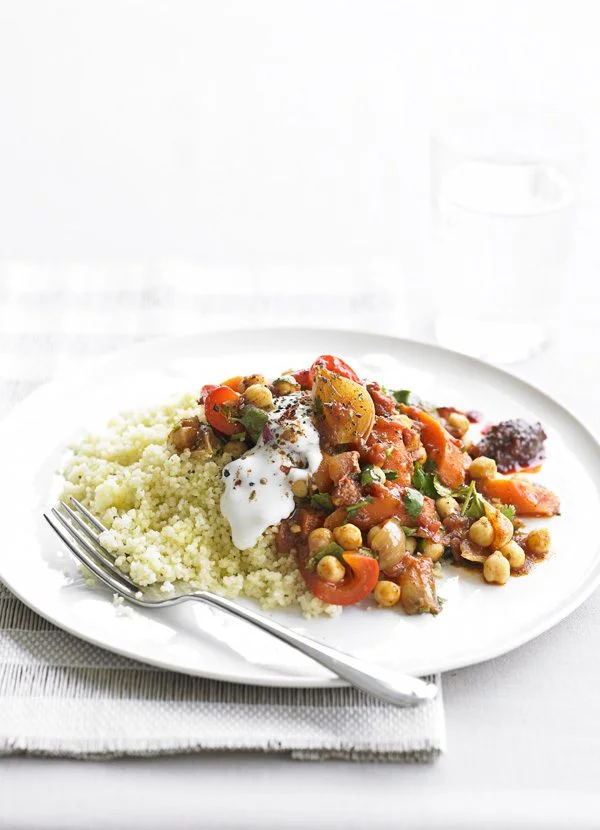
This quick vegetarian couscous supper pairs fluffy couscous with a gently spiced tomato, pepper and chickpea stew. It makes two filling portions and is practical to pack for lunch the next day.
Ingredients
- 100 gcouscous
- 1 tspolive oil
- 2carrots, peeled and chopped
- 2shallots, peeled and quartered
- 1 tspras-el-hanout, cinnamon or ground cumin
- 1red pepper, cubed
- 1 tinchopped tomatoes
- 1 tinchickpeas
- 1/2 packcoriander, roughly chopped
- 1 small tub (optional)low-fat yoghurt
- to serve (optional)harissa
Instructions
- 1
Cook the couscous
Prepare the couscous.
- 2
Fry the vegetables
Heat 1 tsp olive oil in a deep frying pan. Add the carrots and shallots and fry briefly. Stir in the ras-el-hanout, cinnamon or cumin and the pepper, then fry for 1 minute, until the spices smell fragrant.
- 3
Simmer and serve
Add the tomatoes and bring to a simmer. Cover and cook for 20 minutes, or until the vegetables are tender; add a splash of water if the mixture looks too dry. Season well, stir in the chickpeas and heat through, then mix in the coriander. Spoon the vegetables and chickpeas over the couscous and serve with yoghurt and harissa, if you like.
What is spiced vegetable couscous?
Couscous is a North African staple made from small granules of durum wheat semolina, commonly served with vegetables and a richly flavoured sauce. This version turns it into a simple vegetarian main by topping it with a tomato-based mixture of peppers, carrots and chickpeas.
The method keeps the couscous separate from the stew until serving, so it can soak up the tomato juices without being simmered in the pan.
Nutrition and macros by portion
The nutrition label shows one serving as written: 423 calories, 16g protein, 65g carbs, 12g fat.
| Portion | Adjustment | kcal | Protein | Carbs | Fat |
|---|---|---|---|---|---|
| Lighter | Use less couscous | 296 kcal | 11g | 45g | 8g |
| This serving | As written | 423 kcal | 16g | 65g | 12g |
| Hungry | Serve a larger portion | 635 kcal | 24g | 97g | 18g |
Most of the carbohydrates come from the couscous, with chickpeas contributing both carbohydrates and protein. Olive oil and optional yoghurt contribute fat, while the chickpeas also help make the meal filling. Add a green salad or another non-starchy vegetable alongside it for extra variety on the plate.
Choose your spice
Ras-el-hanout: this aromatic spice blend gives the dish a rounded, warming flavour.
Cinnamon or cumin: either can stand in for the blend, as the recipe suggests; choose one rather than adding all three.
Build the vegetable base
Carrots and shallots: fry them briefly first, then let them soften in the covered tomato mixture.
Red pepper: adding it with the spice gives it a short fry before the tomatoes go in, while it still has time to become tender during the simmer.
Simmer until tender
The covered vegetables cook for 20 minutes, but use tenderness as the final cue. If the sauce becomes too thick or starts to look dry, add a splash of water.
Stir in the chickpeas towards the end and heat them through. Adding the coriander after that helps keep its fresh, herbal flavour noticeable.
Keep the couscous fluffy
Cook the couscous separately, following its preparation instructions, then spoon the vegetable mixture over it. This lets you keep the couscous light while still catching plenty of sauce in each serving.
If preparing ahead, storing the couscous and stew separately can help the grains retain their texture.
Finish and serve
Low-fat yoghurt offers a cool, creamy contrast to the warm spices, while harissa brings extra heat. Both are optional, so serve them at the table for people to add as they prefer.
The dish works as a complete supper on its own; a simple green salad can add a crisp side.
Recipe notes & tips
- Chop the carrots into similar-sized pieces so they soften at roughly the same pace.
- Let the spices fry for about 1 minute, until fragrant, before adding the tomatoes.
- Keep the pan covered while the vegetables simmer so they can cook until tender.
- Add water a splash at a time if the tomato mixture looks too dry.
- Stir the chickpeas through near the end so they heat without breaking up.
- Offer the harissa separately so everyone can choose how much heat to add.
Variations
- Use cumin: choose ground cumin instead of ras-el-hanout for a simpler earthy spice flavour.
- Try cinnamon: use the listed cinnamon option for a warmer, sweeter edge.
- Add more heat: serve extra harissa alongside the finished couscous.
- Make it creamier: add a spoonful of the optional low-fat yoghurt to each serving.
- Pack for lunch: keep the couscous and vegetable mixture separate until serving if practical.
Common mistakes to avoid
- Adding all the water at once: the recipe only calls for a splash if the vegetables look too dry, so add it gradually.
- Rushing the simmer: give the vegetables the full 20 minutes, or cook until tender.
- Skipping the fragrant stage: fry the spices with the pepper for 1 minute before adding the tomatoes.
- Cooking the chickpeas for the whole simmer: stir them in after the vegetables are tender and heat through.
- Mixing everything together too early: spoon the stew over the couscous when serving to preserve the separate textures.
How to store
Refrigerate leftovers in a covered container and eat within 2 days. Reheat the vegetable mixture until piping hot, adding a splash of water if needed; prepare or reheat the couscous separately where possible.
Frequently asked questions
Can I use a different spice?
Yes. The recipe gives ras-el-hanout, cinnamon or ground cumin as alternatives; use 1 tsp of one of them.
How do I know when the vegetables are ready?
They should be tender after about 20 minutes of covered simmering. Check with a fork and cook a little longer if needed.
What if the sauce gets too thick?
Add a splash of water and stir it in. The recipe suggests doing this if the mixture looks too dry.
Can I leave out the yoghurt or harissa?
Yes. Both are optional serving accompaniments, so the couscous and vegetable mixture can be served without them.
Can I make this ahead for lunch?
Yes. The description suggests taking leftovers to work the next day. Refrigerate them in a covered container and reheat thoroughly.
Cook it from the original
This recipe comes from olivemagazine.com. Their page has the author’s own photos, notes and tips — the best place to cook it from.
Open the recipe on olivemagazine.com