
French Vinaigrette
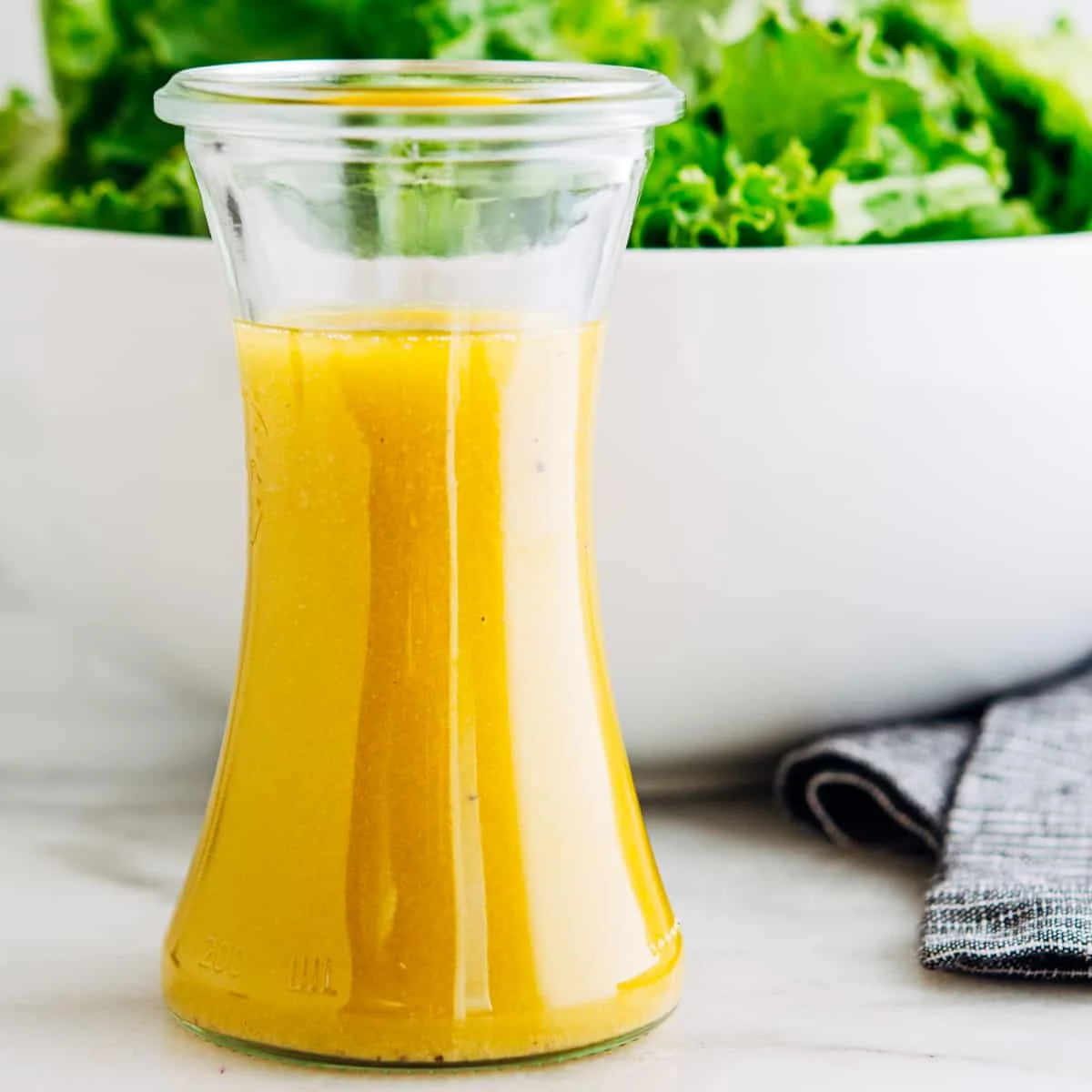
French vinaigrette is a sharp, savoury dressing made by whisking vinegar, Dijon mustard and olive oil until smooth. It takes just a few minutes and is easy to adjust to suit your salad.
Ingredients
- 30 ml (2 tablespoons)wine vinegar (white or red)
- 2.5 ml (1/2 teaspoon)Dijon mustard
- 80 ml (1/3 cup)extra-virgin olive oil
- 1.25 ml (1/4 teaspoon), plus more to tastekosher salt
- to tastefreshly ground black pepper
Instructions
- 1
Whisk vinegar and mustard
In a medium bowl, whisk the vinegar and Dijon mustard together until combined.
- 2
Emulsify the oil
Pour in the olive oil in a slow, steady stream while whisking constantly, until the dressing is emulsified.
- 3
Season and serve
Whisk in the salt and several grinds of black pepper. Taste and add more salt or pepper as needed, then serve or refrigerate for up to 2 weeks.
What is French vinaigrette?
French vinaigrette is a simple dressing built around the balance of vinegar and oil, with mustard helping bring the mixture together. This version keeps the ingredient list short and works well on everyday green salads.
White wine vinegar gives a gentler tang, while red wine vinegar brings a more pronounced flavour. Either choice fits the recipe.
Nutrition and macros by portion
The nutrition label shows one serving as written: 161 calories, 1g protein, 1g carbs, 18g fat.
| Portion | Adjustment | kcal | Protein | Carbs | Fat |
|---|---|---|---|---|---|
| Lighter | Use less olive oil | 113 kcal | 1g | 1g | 13g |
| This serving | As written | 161 kcal | 1g | 1g | 18g |
| Hungry | Larger dressing portion | 242 kcal | 2g | 2g | 27g |
Most of the calories and fat come from the olive oil; the vinegar and mustard contribute very little carbohydrate, and the dressing provides only a small amount of protein. Serve it with a generous portion of vegetables and add a protein-rich food such as beans, eggs or chicken to make a more substantial plate.
Choosing the ingredients
Vinegar: Use white or red wine vinegar, depending on how sharp you want the dressing to taste.
Mustard: Dijon adds a little bite and helps the oil and vinegar emulsify.
Olive oil: Extra-virgin olive oil supplies most of the dressing’s richness, so choose one whose flavour you enjoy.
Getting the emulsion right
Steady pouring: Add the oil gradually while whisking continuously rather than tipping it in all at once.
Texture cue: A properly emulsified dressing looks smooth and slightly thickened, without obvious pools of oil and vinegar. If it separates, whisk it again before serving.
Seasoning to taste
Salt and pepper: The listed salt is a starting point, so taste the dressing before adding more. Several grinds of pepper give it a gentle warmth.
Balance: If the dressing tastes too sharp, whisk in a little more oil; if it seems too rich, add a small splash of vinegar.
When to dress the salad
Timing: Whisk the vinaigrette just before serving or prepare it ahead and refrigerate it. Give it another whisk if it separates while standing.
Serving: Add a little at a time and toss the leaves, so they are coated without becoming heavy with dressing.
What to serve it with
Salad leaves: Toss it with crisp lettuce, mixed leaves or tender greens for a quick side salad.
Beyond salad: It also suits sliced tomatoes or steamed vegetables. Add it when the vegetables are ready to serve so the dressing’s fresh, tangy flavour stays prominent.
Recipe notes & tips
- Whisk in a medium bowl to give yourself room to work the dressing smoothly.
- Add the oil slowly for a more stable emulsion.
- Choose white or red wine vinegar according to your preferred level of tang.
- Taste before adding extra salt, especially if the salad will include salty ingredients.
- Whisk the dressing again if it separates before serving.
Variations
- Add garlic: Whisk in a small amount of finely grated garlic for a savoury edge.
- Use lemon: Replace some of the vinegar with lemon juice for a brighter citrus note.
- Add herbs: Stir in finely chopped fresh parsley or chives just before serving.
- Try shallot: Add finely minced shallot for a mild onion flavour.
- Make it sweeter: Whisk in a small amount of honey to soften the acidity.
Common mistakes to avoid
- Adding oil too quickly: The dressing may split; pour it in slowly while whisking constantly.
- Skipping the taste test: Vinegar varies in sharpness; check the seasoning before serving.
- Over-salting at the start: Begin with the stated amount and add more only after tasting.
- Leaving it unwhisked: Oil and vinegar can separate; whisk the dressing again just before use.
- Dressing leaves too early: They can become limp; toss the salad shortly before serving.
How to store
Refrigerate the vinaigrette in a covered container for up to 2 weeks. Whisk it again before serving if the oil and vinegar have separated.
Frequently asked questions
Can I make French vinaigrette ahead?
Yes. Prepare it ahead and keep it covered in the refrigerator for up to 2 weeks, then whisk before serving.
Why has my vinaigrette separated?
Oil and vinegar naturally separate over time, or they may not have emulsified fully. Whisk the dressing again before using it.
Can I use red wine vinegar instead of white?
Yes. The recipe works with either; red wine vinegar usually gives a more pronounced flavour.
What can I use instead of Dijon mustard?
Another smooth mustard can work, though it may change the flavour. Dijon is included for its tang and its help with emulsifying.
How much dressing should I put on a salad?
Start with a small amount, toss the leaves and add more only if needed. This helps coat the salad without making it soggy.
Cook it from the original
This recipe comes from pinchandswirl.com. Their page has the author’s own photos, notes and tips — the best place to cook it from.
Open the recipe on pinchandswirl.com