
Italian Spaghetti Aglio e Olio
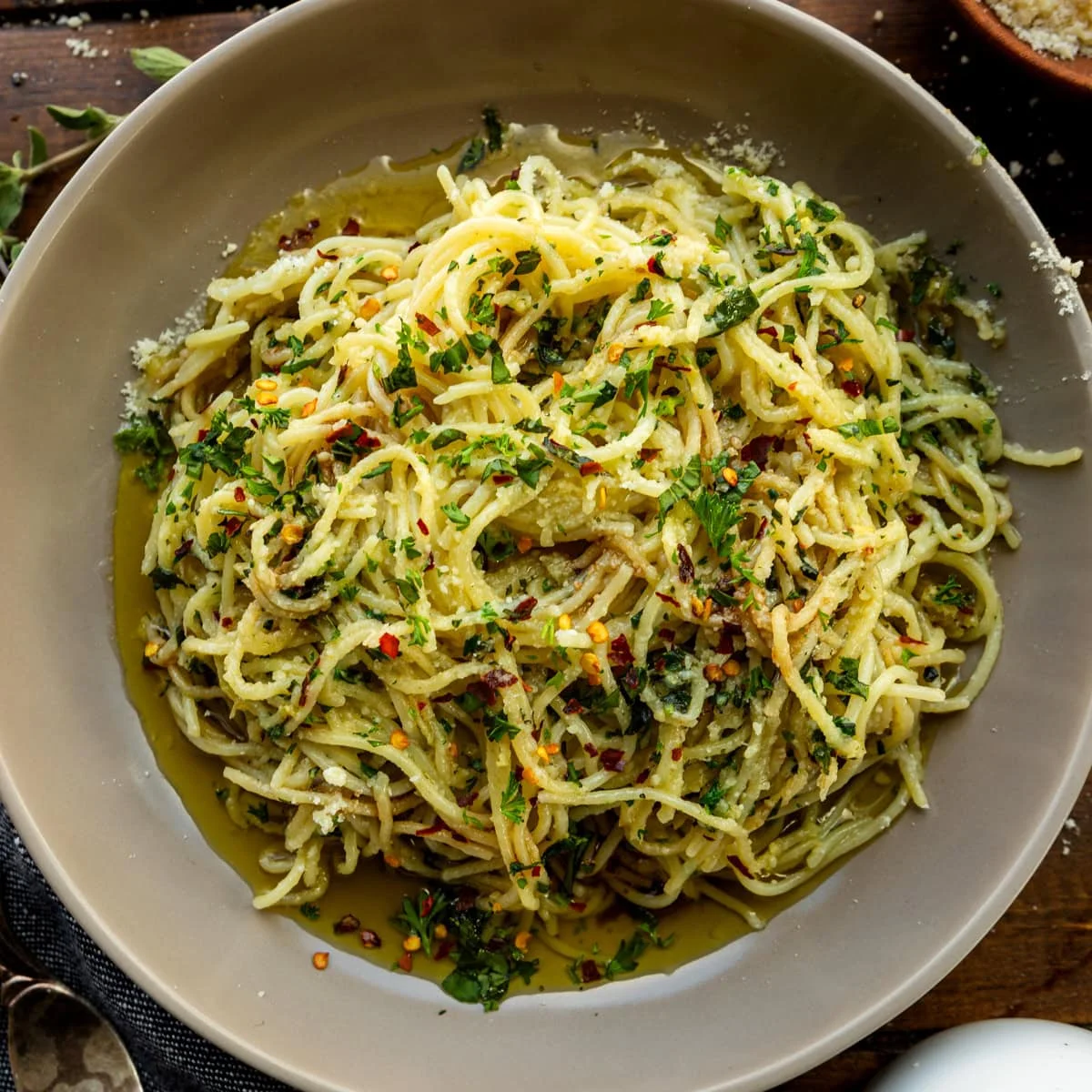
Spaghetti aglio e olio is a quick Italian pasta dish dressed with olive oil, garlic, herbs and chilli. This version offers two ways to make the fragrant oil, then tosses it with al dente spaghetti and a little Parmesan.
Ingredients
- 160 ml (⅔ cup)extra-virgin olive oil
- 8 clovesgarlic, minced
- 15 ml (3 teaspoons)fresh parsley, finely chopped
- 15 ml (3 teaspoons)fresh oregano or marjoram, finely chopped
- 7.5 ml (1½ teaspoons)fresh rosemary, finely chopped
- 20 ml (4 teaspoons)fresh basil, finely chopped
- 10 ml (2 teaspoons)red pepper flakes
- 10 ml (2 teaspoons), or to tastekosher salt
- to tastebalsamic vinegar
- 454 g (1 pound)fresh spaghetti, cooked al dente
- 15–30 ml (1–2 tablespoons)freshly grated Parmesan
Instructions
- 1
Choose a method
Make the seasoned oil using either the toasted garlic method or the fresh garlic method below.
- 2
Arrange the herbs
For the toasted garlic method, put all the herbs and spices in a shallow bowl.
- 3
Warm the oil
Heat the oil in a very small saucepan over medium heat. When it shimmers, add the garlic and watch closely, as it browns quickly.
- 4
Season the oil
Pour the hot oil and garlic over the herbs and spices, then stir well. Add a drizzle of balsamic vinegar and sprinkle salt over the top.
- 5
Toss the spaghetti
Put the cooked spaghetti in a large serving bowl. Pour over the hot oil, toss to coat, finish with Parmesan and serve immediately.
- 6
Add fresh garlic
For the fresh garlic method, put all the herbs, garlic and spices in a shallow bowl.
- 7
Heat the oil
Warm the oil over medium heat until it shimmers, then quickly pour it over the herbs. Wait a second, add a drizzle of balsamic vinegar and top with salt.
- 8
Finish the pasta
Put the cooked spaghetti in a large serving bowl. Pour over the hot oil, toss to coat, finish with Parmesan and serve immediately.
What is spaghetti aglio e olio?
Aglio e olio means garlic and oil in Italian, and the dish is a simple pasta preparation associated with Naples and the wider Campania region. Its basic character comes from pasta coated in olive oil infused with garlic, often with chilli.
This version adds several fresh herbs and balsamic vinegar for a more aromatic, tangy finish. The two garlic methods let you choose between browned, toasted notes and a fresher, sharper garlic flavour.
Nutrition and macros by portion
The nutrition label shows one serving as written: 518 calories, 8g protein, 39g carbs, 38g fat.
| Portion | Adjustment | kcal | Protein | Carbs | Fat |
|---|---|---|---|---|---|
| Lighter | Use less olive oil | 363 kcal | 6g | 27g | 27g |
| This serving | As written | 518 kcal | 8g | 39g | 38g |
| Hungry | Larger portion of spaghetti | 777 kcal | 12g | 59g | 57g |
Olive oil supplies most of the fat and energy, while the spaghetti is the main source of carbohydrates. The recipe’s listed protein comes from the pasta and Parmesan, with the cheese adding a little more. Pair a serving with a generous portion of vegetables or salad for extra variety on the plate.
Choose your garlic method
Toasted garlic: heat the minced garlic in the oil until it starts to brown, then pour the mixture over the herbs. Keep a close eye on it so it does not turn dark and bitter.
Fresh garlic: put the garlic in the bowl with the herbs and pour the shimmering oil over everything. This method is quick, but the garlic will taste more pronounced and less mellow.
Build the herb oil
Fresh herbs: parsley, oregano or marjoram, rosemary and basil give the oil a layered flavour. Chop them finely so they distribute through the pasta rather than gathering in large pieces.
Chilli and vinegar: red pepper flakes bring heat, while balsamic vinegar adds a sweet-sour note. Add the vinegar as directed, then adjust the amount to suit your taste.
Watch the heat
Shimmering oil: heat it over medium heat until it moves easily and looks glossy, rather than letting it smoke. In the toasted version, add the garlic only at this point.
Garlic colour: minced garlic cooks fast in hot oil. Take care while heating and pour it over the herbs as soon as it begins to brown.
Get the pasta texture right
Al dente spaghetti: cook the pasta until it is tender but still has a little bite, following the timing on its packet. The recipe calls for cooked pasta, so have it ready before you pour over the hot oil.
Even coating: toss the spaghetti thoroughly in a large serving bowl so the herb oil reaches the strands. Serve straight away while the oil is still warm.
Serve it simply
Parmesan: a small amount of freshly grated cheese adds a savoury finish without obscuring the herbs and garlic. Sprinkle it over the pasta just before serving.
On the side: serve with a crisp green salad or cooked vegetables for a more rounded meal. Crusty bread can help mop up any seasoned oil left in the bowl.
Recipe notes & tips
- Have the herbs and spices ready before heating the oil, as the garlic method moves quickly.
- Use a very small saucepan for the toasted garlic method so the oil is easy to pour over the herbs.
- Chop the herbs finely for a more even coating on the spaghetti.
- Taste the finished seasoning before adding extra salt, especially if your Parmesan is salty.
- Serve the pasta immediately after tossing so the oil is warm.
Variations
- Use marjoram: swap it for the oregano as suggested in the ingredient list.
- Adjust the chilli: reduce the red pepper flakes for a milder pasta or add more for extra heat.
- Choose toasted garlic: brown the garlic lightly in the oil for a mellower, toasted flavour.
- Choose fresh garlic: pour the hot oil over the herbs and raw garlic for a sharper garlic taste.
- Add more herbs: increase the chopped parsley or basil to bring their flavour further forward.
Common mistakes to avoid
- Over-browning the garlic: it can taste bitter; watch it closely and pour the oil over the herbs as soon as it starts to colour.
- Heating the oil until it smokes: keep it at medium heat and use it when it shimmers.
- Adding the oil before the herbs are ready: arrange the herbs and spices first so you can pour promptly.
- Leaving the spaghetti untossed: mix it thoroughly with the oil so the strands are coated.
- Serving it too late: toss and serve immediately while the oil is hot.
How to store
For the best texture, serve this pasta straight away. Refrigerate leftovers in a covered container and use within 3 days; reheat gently in a pan, adding a small splash of water if the pasta seems dry.
Frequently asked questions
Can I use dried herbs instead of fresh?
The ingredient list calls for fresh herbs, which give the oil its characteristic fresh aroma. Dried herbs have a more concentrated flavour, so use them sparingly if substituting.
Which garlic method should I choose?
Choose toasted garlic for a mellower flavour, or fresh garlic for a more direct, pungent taste. Both methods are included in the recipe.
How do I know when the spaghetti is al dente?
It should be tender with a slight firmness in the centre. Check it near the end of the packet’s suggested cooking time.
Can I make the oil ahead?
It is best prepared just before serving, particularly for the fresh garlic method. The recipe relies on pouring hot oil over the herbs and tossing it with the pasta straight away.
What can I serve with aglio e olio?
A green salad or cooked vegetables make an easy accompaniment. Bread is another option for serving alongside the seasoned oil.
Cook it from the original
This recipe comes from ohsweetbasil.com. Their page has the author’s own photos, notes and tips — the best place to cook it from.
Open the recipe on ohsweetbasil.com