
Black Garlic Glazed Miso Eggplant (Nasu Dengaku)
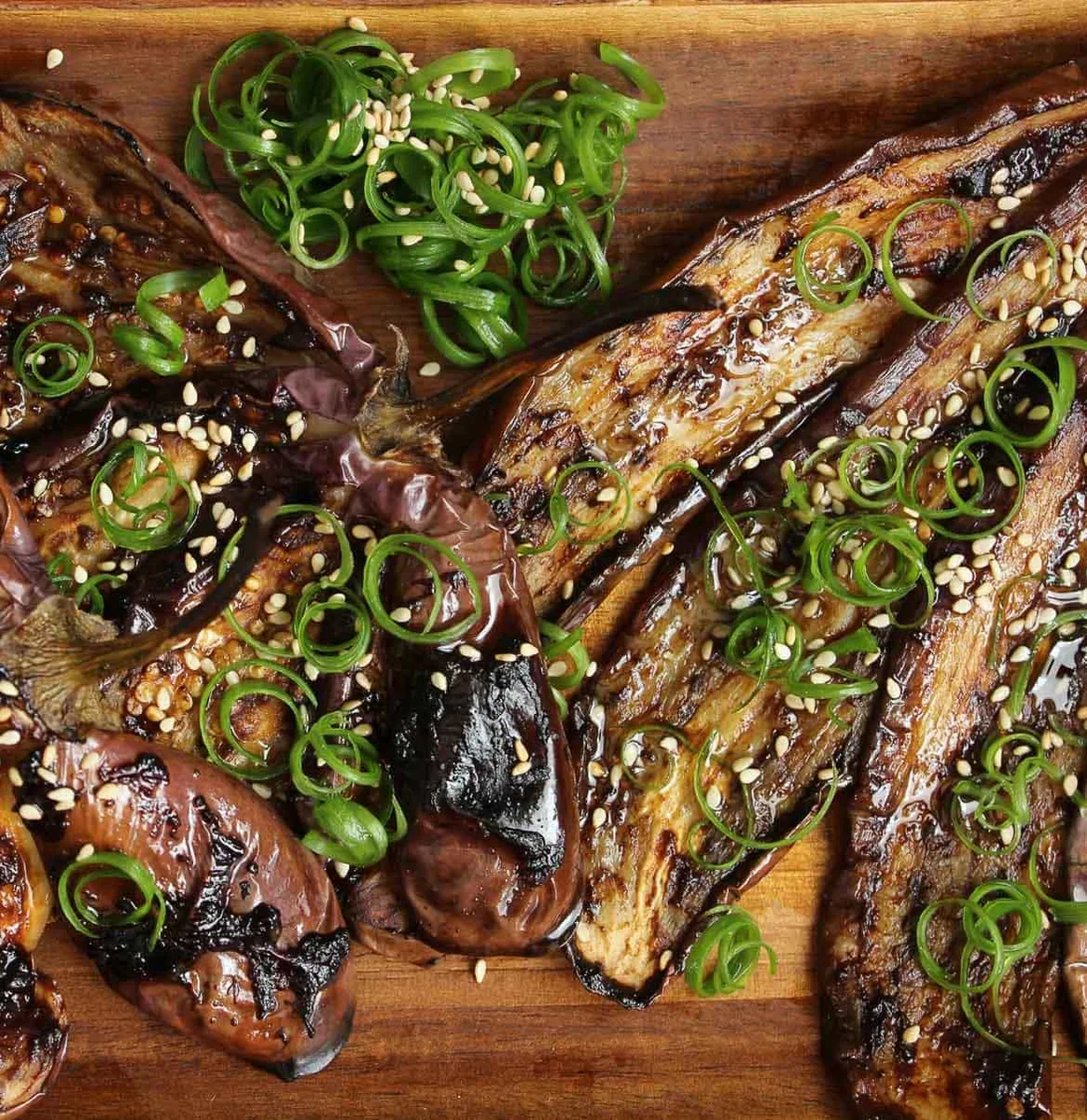
Nasu dengaku is Japanese eggplant roasted until tender and finished with a savoury-sweet miso glaze. Black garlic brings a deep, mellow umami flavour, while spring onions and sesame add a fresh, nutty finish.
Ingredients
- 6Chinese eggplants
- to tasteoil, for brushing onto the eggplant
- 7 tablespoonswater
- 2 tablespoonsblack garlic
- 1 tablespoonmiso
- 2 tablespoonscooking sake (or regular sake or dry sherry)
- 1 tablespoonmirin
- to tastespring onions, finely chopped
- to tastetoasted sesame seeds
Instructions
- 1
Blend the glaze
Put the black garlic, water, mirin, sake and miso in a food processor and blend until smooth. For a thinner glaze, add 1 more tablespoon of water.
- 2
Set aside
Put the glaze to one side until you are ready to use it.
- 3
Cut the eggplants
Make lengthways cuts down each eggplant, spaced 1.3 cm (½ inch) apart, using a small or paring knife. If you prefer, halve the eggplants lengthways instead of making several cuts.
- 4
Oil the eggplants
Brush the skin and the spaces between the cuts lightly with oil. Run your fingers over the eggplant to spread the oil into a thin layer.
- 5
Arrange on foil
Line a baking tray with foil and fan out the eggplants on it. If they do not fan out easily, leave them as they are; they will soften and become easier to spread out as they cook.
- 6
Broil the eggplants
Set the oven to broil and place the eggplants inside. Keep a close eye on them throughout, as they can burn quickly.
- 7
Turn regularly
Turn the eggplants every 2 minutes, 2–3 times, cooking for approximately 4–6 minutes per side.
- 8
Glaze and finish
When the eggplants look browned and roasted, brush them with the glaze and return them to the broiler for 2 minutes.
- 9
Add the toppings
Finish with toasted sesame seeds and finely chopped spring onions, then serve.
What is nasu dengaku?
Nasu dengaku is a Japanese dish of eggplant finished with a savoury-sweet miso topping. The name refers to a style of miso-glazed cooking, and the eggplant is typically roasted or grilled until soft.
This version uses black garlic in the glaze, adding a rich, mellow note alongside the miso, sake and mirin. Broiling makes it a practical choice when you want tender, browned eggplant without grilling outdoors.
Nutrition and macros by portion
The nutrition label shows one serving as written: 134 calories, 3g protein, 15g carbs, 7g fat.
| Portion | Adjustment | kcal | Protein | Carbs | Fat |
|---|---|---|---|---|---|
| Lighter | Use less brushing oil | 94 kcal | 2g | 11g | 5g |
| This serving | As written | 134 kcal | 3g | 15g | 7g |
| Hungry | Serve with extra rice | 201 kcal | 5g | 23g | 11g |
The eggplant provides most of the carbohydrates, while the brushing oil contributes most of the fat; the miso and black garlic add some flavour and smaller amounts of the macros. Protein is modest, so serve it with tofu or another protein-rich accompaniment and rice to make a more balanced plate.
The black garlic miso glaze
Smooth glaze: blending the black garlic, water, mirin, sake and miso gives you an even mixture that is easy to brush over the eggplant.
Adjust the consistency: the listed water makes a brushable glaze; add the optional extra tablespoon if you want it thinner. Keep the glaze aside until the eggplant is roasted.
Cutting and oiling the eggplant
Lengthways cuts: make the slits about 1.3 cm apart so the eggplant opens into a fan as it softens. A small knife gives you more control, but halving the eggplants lengthways is a simpler alternative.
Light coating: spread a little oil over the skin and into the cuts. This helps the exposed surfaces roast rather than dry out under the broiler.
Broiling safely
Close attention: eggplant can brown and burn quickly under a broiler, so stay nearby and watch it throughout. Turn it every 2 minutes, as directed, for more even roasting.
Flexible shape: if the cut eggplants do not fan out neatly at first, leave them in place. They soften during cooking and can be spread out more easily.
How to tell when it is ready
Roasted surface: look for browned, roasted-looking eggplant before adding the glaze. The recipe does not specify a separate tenderness test, but the eggplant should have softened enough to fan out.
Glaze finish: brush the glaze on once the eggplant is browned, then broil for 2 minutes. Keep watching closely during this final stage so the glaze does not burn.
Serving ideas
Fresh finish: scatter the sesame seeds and finely chopped spring onions over the glazed eggplant just before serving. They add contrast to the soft, savoury-sweet topping.
A meal alongside: serve with steamed rice and a simple vegetable side for a fuller plate. The recipe does not specify sides, so choose accompaniments that suit your meal.
Recipe notes & tips
- Use a small, sharp knife to make the lengthways cuts with control.
- Spread the oil thinly over the skin and into the slits rather than pooling it on the tray.
- Keep the eggplants in a single layer on the foil-lined tray.
- Stay beside the oven while broiling because the eggplant can burn quickly.
- If the glaze is too thick to brush easily, blend in the optional extra tablespoon of water.
- Add the spring onions and sesame seeds after the final broil for a fresh, crisp finish.
Variations
- Use dry sherry: substitute it for the cooking sake as suggested in the ingredient list.
- Halve the eggplants: cut them lengthways instead of making several slits.
- Thin the glaze: blend in 1 more tablespoon of water for a looser coating.
- Add chilli: serve with a little chilli for a spicier finish.
- Serve with tofu: add tofu on the side for a more substantial meal.
Common mistakes to avoid
- Forgetting to watch the broiler: eggplant can burn quickly, so stay nearby and check it frequently.
- Crowding the cuts with oil: too much oil can collect between the slits; brush on a thin layer instead.
- Forcing the eggplant into a fan: it may be stiff before cooking, so let it soften before trying to spread it out.
- Glazing too early: wait until the eggplant looks browned and roasted before brushing on the miso mixture.
- Leaving the glaze under the broiler unattended: watch closely during the final 2 minutes to prevent burning.
How to store
Cool leftovers and store them in an airtight container in the fridge for up to 3 days. Reheat in the oven until warmed through; watch carefully if using the broiler, as the glaze can burn.
Frequently asked questions
Can I use regular sake instead of cooking sake?
Yes. The ingredient list suggests regular sake or dry sherry as substitutes for cooking sake.
Do I have to cut the eggplants into slits?
No. You can halve them lengthways instead, as the recipe suggests.
How do I make the glaze thinner?
Blend in 1 more tablespoon of water until it reaches a consistency that is easy to brush.
Can I make the glaze ahead?
Yes. Blend it and set it aside until you are ready to roast and glaze the eggplant.
Why should I watch the eggplant so closely?
The recipe notes that eggplant can burn very quickly under the broiler. Stay by the oven and check it as it cooks.
What should I serve with nasu dengaku?
Steamed rice makes a simple accompaniment, and tofu or vegetables can round out the meal.
Cook it from the original
This recipe comes from pupswithchopsticks.com. Their page has the author’s own photos, notes and tips — the best place to cook it from.
Open the recipe on pupswithchopsticks.com