
Barros Luco
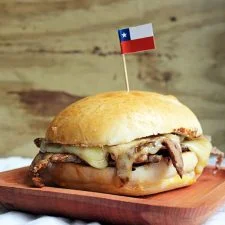
Barros Luco is a hot Chilean sandwich filled with seared steak and melted cheese. It comes together quickly on a griddle, making it a straightforward choice when you want a filling, freshly made sandwich.
Ingredients
- 1 per personsandwich roll, or marraqueta
- 1steak, such as milanesa-cut beef, asiento, posta or loin
- to tastesalt
- 2 slicesmantecoso cheese; Havarti was used here
- to tastebutter
Instructions
- 1
Butter the griddle
Put a little butter on a griddle or frying pan.
- 2
Cook the steak
Sear the steak for about 2 minutes on each side, seasoning it with salt to taste.
- 3
Melt the cheese
Put the cheese on top of the steak and leave it to melt. Alternatively, melt the cheese on the griddle and place it straight on the steak.
- 4
Warm the bread
Cut the roll in half and warm both sides on the same griddle.
- 5
Fill the roll
Put the steak and cheese inside the bread.
- 6
Work quickly
Carry out the steps quickly.
- 7
Serve the sandwich
Cover with the other half of the bread and enjoy.
What is a Barros Luco?
Barros Luco is a Chilean hot sandwich of beef and melted cheese in bread. It is named after former Chilean president Ramón Barros Luco, who was associated with ordering this combination.
This version keeps the filling simple: a quickly seared steak, mantecoso cheese or Havarti, and a warmed sandwich roll or marraqueta. The short cooking time helps the sandwich reach the table while the cheese is still soft.
Nutrition and macros by portion
The nutrition label shows one serving as written: 650 calories, 38g protein, 45g carbs, 32g fat.
| Portion | Adjustment | kcal | Protein | Carbs | Fat |
|---|---|---|---|---|---|
| Lighter | Use less butter | 455 kcal | 27g | 31g | 22g |
| This serving | As written | 650 kcal | 38g | 45g | 32g |
| Hungry | Add another sandwich | 975 kcal | 57g | 68g | 48g |
Most of the carbohydrates come from the bread, while the steak provides much of the protein. Cheese and butter contribute much of the fat, and the cheese also adds some protein. Pair the sandwich with salad or vegetables for a fresh side.
Choosing the steak
Cut of beef: The recipe suggests milanesa-style steak, asiento, posta or loin. A relatively thin steak suits the brief sear and is easier to bite through in a sandwich.
Thickness: The stated 2 minutes per side is a guide, so the steak’s thickness will affect how cooked it becomes. Keep an eye on it rather than relying on the time alone.
Melting the cheese
On the steak: Adding the slices directly to the hot beef lets the cheese soften as the steak finishes cooking.
On the griddle: You can melt the cheese separately on the cooking surface, then transfer it straight onto the steak. Have the bread ready so you can assemble the sandwich without delay.
Getting the bread ready
Warm surface: Use the same griddle after cooking the meat and cheese, as the recipe directs. Warm both cut halves of the roll on the surface.
Marraqueta: This crusty Chilean bread is an alternative to a sandwich roll. Open it before warming so both sides can heat directly on the griddle.
Timing and assembly
Quick sequence: Cook the steak, melt the cheese, warm the bread and assemble while everything is hot. The method specifically calls for working quickly.
Serve promptly: Once filled, cover the sandwich with the top half of the bread and eat it while the cheese is melted and the bread is warm.
What to serve alongside
Fresh side: A simple salad or sliced tomatoes can add a fresh contrast to the warm, rich filling.
More substantial meal: Serve with a modest portion of chips or a vegetable side if you want to make the meal more substantial.
Recipe notes & tips
- Have the bread open and ready before you start cooking the steak.
- Use a hot griddle so the steak can sear in the short cooking time.
- Season the steak with salt while it cooks, as directed.
- Choose a cheese that melts readily, such as Havarti.
- Warm both halves of the bread on the griddle before filling them.
- Assemble and serve promptly so the cheese stays melted.
Variations
- Try Havarti: Use it in place of mantecoso cheese, as in the recipe.
- Choose marraqueta: Use this Chilean bread instead of a sandwich roll.
- Change the cut: Use asiento, posta or loin as suggested.
- Add a fresh side: Serve with sliced tomato or salad alongside.
- Adjust the salt: Season the steak to taste as it cooks.
Common mistakes to avoid
- Starting before everything is ready: The method is quick, so open the bread and prepare the cheese first.
- Overcooking a thin steak: Begin checking it around the stated 2 minutes per side.
- Leaving the cheese on too long: Transfer it as soon as it has melted.
- Warming only one side of the bread: Place both halves on the griddle.
- Waiting to assemble: Fill the warmed bread promptly while the steak and cheese are hot.
How to store
For the best texture, eat the sandwich freshly made. If needed, refrigerate the cooked steak and cheese in a covered container for up to 3 days, separate from the bread, and reheat until piping hot before assembling.
Frequently asked questions
What is marraqueta?
Marraqueta is a crusty Chilean bread that can be used instead of a sandwich roll in this recipe.
Which steak cut can I use?
The recipe suggests milanesa-style steak, asiento, posta or loin. Choose a cut thin enough to cook quickly on the griddle.
Can I use Havarti?
Yes. Havarti is the cheese used in this version, although the recipe names mantecoso cheese.
Can I melt the cheese separately?
Yes. Melt it on the griddle, then place it immediately on the steak, or let it melt on top of the steak.
How long should I cook the steak?
The method gives about 2 minutes per side. The steak’s thickness will affect the result, so check it as it cooks.
Cook it from the original
This recipe comes from midiariodecocina.com. Their page has the author’s own photos, notes and tips — the best place to cook it from.
Open the recipe on midiariodecocina.com