
Singapore Noodles
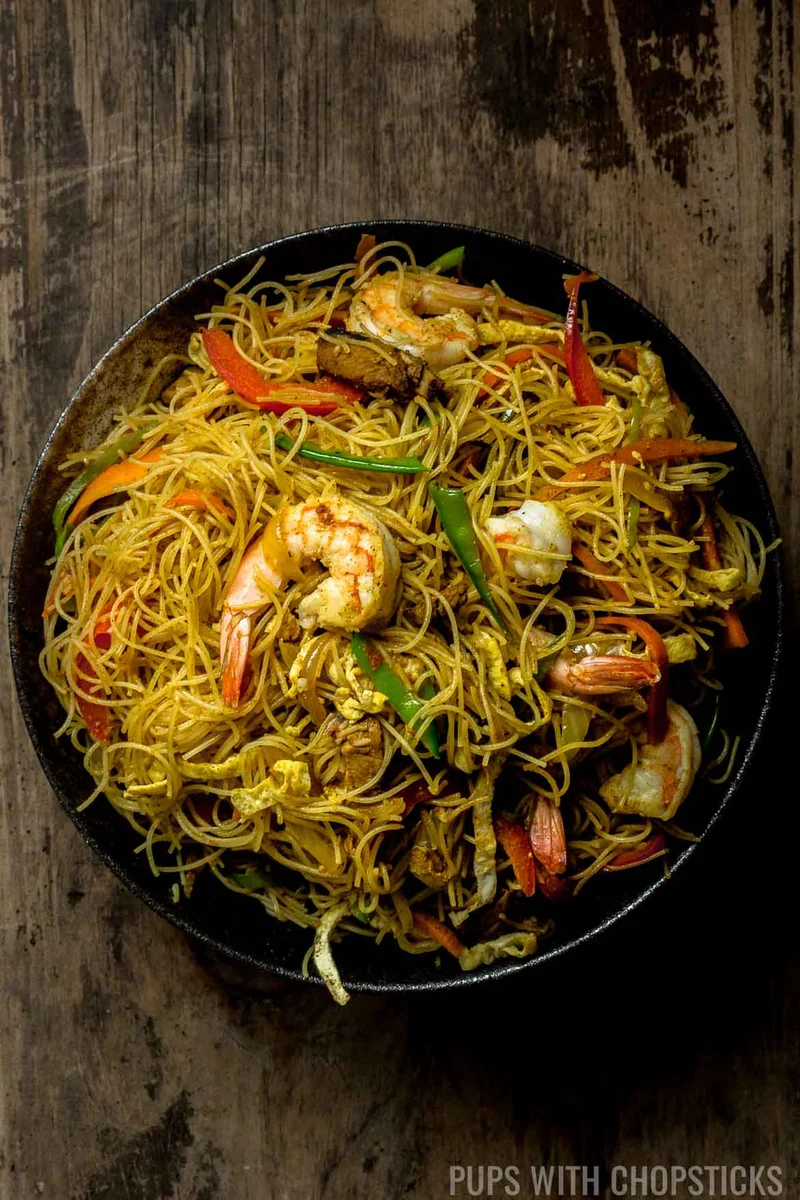
Singapore noodles are a dry-style curry stir-fry with rice vermicelli, prawns, char siu, egg and crisp vegetables. This version brings the ingredients together quickly in a savoury Madras curry sauce.
Ingredients
- 225 grice vermicelli noodles
- 2 cm (grated, approximately 2 tablespoons)ginger
- 4 clovesgarlic
- 1/2 (any colour, sliced, approximately 1 cup)sweet bell pepper
- 1/2 (sliced, approximately 1 cup)white onion
- 1 (approximately 1 cup)carrot
- 1 cup (tips removed, sliced thinly)snow peas
- 2 stalksspring onions
- 12 (peeled, thawed if frozen)prawns
- 1 cup (cut into thin strips)Chinese BBQ pork (char siu)
- 2eggs
- 3 tablespoonsMadras curry powder
- 3 tablespoons (light)soy sauce
- 3 tablespoonsfish sauce
- 1 tablespoon (or dry sherry)Shaoxing cooking wine
- 1 1/2 teaspoonssugar
- 1 1/2 teaspoonssesame oil
- 6 tablespoonswater
Instructions
- 1
Soak the noodles
Put the dry vermicelli in a large bowl and cover completely with hot, not boiling, water. Soak for about 2 minutes, until soft and flexible; thicker noodles may need a few more minutes. They should wrap around a finger without snapping. Drain, and, if the strands are very long, optionally snip them once with scissors.
- 2
Prepare the ingredients
Finely grate the ginger and garlic. Slice the pepper into thin strips, cut the peeled onion into half-moons, and peel and cut the carrot into fine matchsticks. Remove the snow pea tips and slice the pods thinly. Cut the char siu into thin strips. Cut the spring onions into 5 cm chunks, then slice each lengthways; keep them aside for the end. Peel the prawns if needed, and make sure frozen prawns are fully thawed.
- 3
Cook the egg
For egg ribbons, heat a little oil in a large frying pan until a drop of beaten egg sizzles. Beat one egg, pour it into the pan and swirl to form a thin layer. Cook both sides for about 1 minute, then remove. Repeat with the second egg. Stack the egg sheets, roll them into a log and slice into strips about 6 mm thick or thinner; gently separate the strips and set aside. For scrambled egg instead, beat both eggs together, scramble in a frying pan, then remove and set aside.
- 4
Mix the sauce
Combine the Madras curry powder, light soy sauce, fish sauce, Shaoxing cooking wine, sugar, sesame oil and water in a bowl. Mix well and set aside.
- 5
Cook the prawns
Heat a little oil in a large frying pan or wok over medium heat. Once hot and shimmering, add the ginger, garlic and prawns. Cook for about 1 minute, then remove the prawns and set aside.
- 6
Stir-fry the vegetables
Add the char siu and carrots to the pan and cook for 2–3 minutes, until the carrots have wilted. Add the snow peas, onion and pepper, and cook for 1–2 minutes.
- 7
Finish the noodles
Add the drained noodles and mix them with the other ingredients. Pour in the curry sauce and gently toss to coat the noodles. Cook for a further 2 minutes, or until the noodles are soft and cooked. Add the cooked egg and spring onions, turn off the heat and carefully mix everything together.
What are Singapore noodles?
Singapore noodles are a curry-seasoned rice vermicelli stir-fry, despite the dish being more commonly associated with Cantonese-style cooking than with Singapore itself. The name is often used for this combination of noodles, vegetables, egg and meat or seafood.
This version pairs prawns with char siu and uses Madras curry powder for its defining flavour. Thin rice noodles soak up the sauce while the quick cooking keeps the vegetables lively.
Nutrition and macros by portion
The nutrition label shows one serving as written: 488 calories, 33g protein, 66g carbs, 9g fat.
| Portion | Adjustment | kcal | Protein | Carbs | Fat |
|---|---|---|---|---|---|
| Lighter | More vegetables, fewer noodles | 342 kcal | 23g | 46g | 6g |
| This serving | As written | 488 kcal | 33g | 66g | 9g |
| Hungry | Larger noodle portion | 732 kcal | 50g | 99g | 14g |
The rice vermicelli supplies most of the carbohydrates, while the prawns, eggs and char siu contribute protein. The eggs, sesame oil and pork contribute fat, and the sauces add much of the dish's saltiness. Serve with a fresh vegetable side for extra variety without adding another rich component.
Why soak the vermicelli?
Gentle soaking softens the rice vermicelli without fully cooking it before it reaches the pan. Start checking at 2 minutes: the strands should bend around a finger without breaking.
Thicker noodles may need a little longer. Drain them well so excess water does not dilute the curry sauce.
Cut the ingredients evenly
Vegetable strips: cut the pepper, carrot, onion and snow peas into thin pieces so they cook quickly and mix easily through the noodles.
Char siu and spring onions: thin pork strips distribute their savoury flavour throughout the dish. Slice the spring onions lengthways and hold them back until the heat is off so they retain some freshness.
Make the egg ribbons
A hot, lightly oiled pan helps the beaten egg set into a thin sheet; the test is whether a drop of egg sizzles as soon as it hits the surface. Cook each side for about 1 minute, then stack and slice the sheets.
If you prefer a simpler texture, scramble the beaten eggs instead. In either case, keep the cooked egg aside until the final mixing.
Keep the stir-fry moving
Cook the prawns briefly with the ginger and garlic, then lift them out while the pork and vegetables cook. This staged approach gives each ingredient time in the pan without leaving the prawns there through the whole stir-fry.
Add the noodles and sauce only after the vegetables have had their short cooking time. Toss gently for the final 2 minutes, just until the noodles are cooked and coated.
Serving and balance
Serve the noodles straight from the pan while they are hot, with the spring onions and egg distributed through each portion. Their mix of vegetables, prawns and pork makes the dish a substantial one-pan meal.
For a more varied plate, add a simple side of fresh cucumber or leafy greens. Keep it plain so it does not compete with the curry and savoury sauce.
Recipe notes & tips
- Check the noodles at 2 minutes and soak longer only if they still snap when bent.
- Prepare and slice all the ingredients before heating the pan, as the stir-frying stages move quickly.
- Use a large frying pan or wok so the noodles can be tossed with the vegetables and sauce.
- Remove the prawns after about 1 minute, then return attention to them only when assembling the finished dish.
- Add the egg and spring onions after turning off the heat to keep them from cooking further.
Variations
- Scrambled egg: beat both eggs together and scramble them instead of making ribbons.
- Dry sherry: use it in place of the Shaoxing cooking wine.
- Thicker vermicelli: soak for a few more minutes if the strands are not yet pliable.
- Prawn preparation: peel the prawns if they are still in their shells, and thaw frozen ones fully before cooking.
Common mistakes to avoid
- Boiling the noodles: use hot, not boiling, water for soaking so they do not become too soft before stir-frying.
- Under-soaking: if a strand snaps when bent, leave the noodles in the water a little longer.
- Wet noodles: drain them well before adding them to the pan so the sauce is not watered down.
- Overcooking the prawns: remove them after about 1 minute with the ginger and garlic, then set them aside.
- Adding the egg too early: stir it in after turning off the heat so the strips remain distinct.
How to store
Refrigerate leftovers in a covered container and eat within 2 days. Reheat in a frying pan over medium heat until piping hot, stirring gently; add a small splash of water if the noodles have dried out.
Frequently asked questions
How do I know when the vermicelli has soaked long enough?
After about 2 minutes, it should bend around your finger without snapping. If it still breaks, soak it for a few more minutes and check again.
Can I use scrambled eggs instead of egg ribbons?
Yes. Beat the eggs together, scramble them in a frying pan, and set them aside to add at the end.
Can I use dry sherry instead of Shaoxing wine?
Yes, the recipe lists dry sherry as an alternative in the sauce.
Can I use frozen prawns?
Yes. Thaw them fully before cooking, then peel them if necessary.
Why are my noodles difficult to stir-fry?
Very long strands can be harder to handle. After soaking and draining, you can snip them once with scissors to make mixing and eating easier.
Cook it from the original
This recipe comes from pupswithchopsticks.com. Their page has the author’s own photos, notes and tips — the best place to cook it from.
Open the recipe on pupswithchopsticks.com