
Orange Cranberry Scones
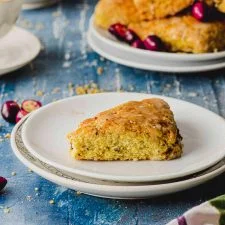
These orange cranberry scones have tender, flaky centres, crisp edges and a bright citrus flavour. They make a welcoming breakfast or teatime bake, with dried cranberries adding little pockets of tart sweetness.
Ingredients
- 240 g (2 cups)plain flour
- 50 g (1/4 cup)granulated sugar
- 2 tspbaking powder
- 1 tspbicarbonate of soda
- 1/8 tspsalt
- 70 g (1/2 cup)dried cranberries
- Zest of 1orange
- 120 ml (1/2 cup)canned light coconut milk (not coconut milk beverage; do not substitute plant milk)
- 60 ml (1/4 cup)maple syrup
- 30 ml (2 tbsp)orange juice
- 110 g (1/2 cup)refined coconut oil, chilled
- To sprinkle on top, optionalcoarse sugar
Instructions
- 1
Line the tray
Line a large baking sheet with baking parchment.
- 2
Mix dry ingredients
In a large bowl, combine the flour, sugar, baking powder, bicarbonate of soda, salt, cranberries and orange zest. Toss thoroughly so the cranberries are coated.
- 3
Whisk wet ingredients
In a medium bowl, whisk together the coconut milk, maple syrup and orange juice. Set the mixture aside.
- 4
Pulse in oil
Put the flour mixture and coconut oil in a food processor, distributing the oil in small spooned-off pieces. Pulse a few times until combined and the mixture resembles coarse cornmeal.
- 5
Form the dough
Pour in the coconut milk mixture and pulse until a dough forms. Take care not to overmix.
- 6
Shape and chill
Turn the dough onto a well-floured surface and shape it into a square about 1.3 cm thick and 16.5 × 16.5 cm. Cut it into four equal squares, then cut each square into four triangles to make 16 scones. Arrange them on the lined baking sheet, sprinkle with coarse sugar if using, and chill for 15 minutes.
- 7
Bake the scones
While the scones chill, preheat the oven to 200°C (400°F). Bake the chilled scones for 23 minutes, until golden brown.
What are orange cranberry scones?
Scones are a familiar British bake, often served at teatime, with a crumbly texture that sits between a biscuit and a quick bread. This version pairs dried cranberries with orange zest and juice for a sweet-tart, citrusy flavour.
Chilled coconut oil is cut into the dry ingredients, helping create a crumbly dough, while canned coconut milk brings it together. The wedges bake with crisp edges and a soft, flaky interior.
Nutrition and macros by portion
The nutrition label shows one serving as written: 164 calories, 2g protein, 23g carbs, 8g fat.
| Portion | Adjustment | kcal | Protein | Carbs | Fat |
|---|---|---|---|---|---|
| Lighter | Serve one scone | 115 kcal | 1g | 16g | 5g |
| This serving | As written | 164 kcal | 2g | 23g | 8g |
| Hungry | Serve two scones | 246 kcal | 2g | 34g | 11g |
The flour and sugar provide most of the carbohydrates, while coconut oil and coconut milk contribute much of the fat. Cranberries add some carbohydrate, and the recipe contains only a small amount of protein overall; serve a scone with yoghurt or another protein-rich food to balance the plate.
Choosing the ingredients
Canned coconut milk: Use the light canned kind specified, not a carton of coconut milk beverage or another plant milk. Its thicker consistency is part of how the dough comes together.
Coconut oil: Keep it chilled until it goes into the processor. Refined coconut oil is specified here, and small pieces help distribute it through the flour.
Orange and cranberries: Zest the orange before juicing it, so the aromatic peel can go into the dry mixture. Tossing the cranberries with the flour helps spread them through the scones.
Making the dough
Dry mixture: Combine the flour, raising agents, salt, sugar, cranberries and zest first. This distributes the flavourings and leavening before the wet ingredients are added.
Food processor: Pulse briefly after adding the coconut oil, aiming for a coarse, crumb-like mixture rather than a smooth paste. Add the coconut milk mixture and stop as soon as the dough forms.
Shaping neat wedges
Floured surface: Turn the dough out onto a well-floured worktop so it is easier to shape and lift. Pat it into a square about 1.3 cm thick and 16.5 cm across, rather than kneading it.
Even portions: Cut the square into four smaller squares, then divide each one diagonally into four triangles. Keeping the wedges similar in size helps them bake at the same rate.
Chilling and baking
Chill time: Arrange the cut scones on the lined tray and chill them for 15 minutes while the oven heats. This gives the shaped dough time to firm up before baking.
Doneness: Bake at 200°C for 23 minutes, looking for golden-brown tops and edges. The recipe gives a time and colour cue; avoid leaving them in longer once they have reached that colour.
Serving suggestions
Serve the scones warm or at room temperature, on their own or with a little fruit spread. Their orange and cranberry flavours also work well alongside plain tea or coffee.
For a more filling plate, pair a scone with yoghurt or another protein-rich accompaniment. The scones are already sweet, so a lightly sweetened or unsweetened side keeps the flavours balanced.
Recipe notes & tips
- Measure the coconut oil while chilled and add it in small pieces so it spreads more evenly through the flour.
- Use canned light coconut milk, not a carton beverage, as the recipe specifies.
- Pulse only until the dough comes together to avoid overworking it.
- Flour the work surface well before shaping the dough square.
- Chill the cut scones for the full 15 minutes while the oven preheats.
- Add the coarse sugar before chilling so it is already in place for baking.
Variations
- More orange: Add extra orange zest for a stronger citrus note.
- No topping: Leave off the coarse sugar for a less crunchy top.
- Different dried fruit: Replace the cranberries with another dried fruit in the same amount.
- Smaller wedges: Cut the dough into smaller triangles and check them for golden colour during baking.
- Extra citrus: Serve with a little orange marmalade for a brighter finish.
Common mistakes to avoid
- Using carton coconut milk: It is not the ingredient specified; use canned light coconut milk instead.
- Warm coconut oil: It can blend differently into the flour; keep it chilled until needed.
- Overmixing the dough: The scones can become less tender; stop pulsing once the dough forms.
- Skipping the flour on the worktop: The dough may stick; dust the surface well before shaping.
- Crowding the tray: Leave room between the triangles so they can bake evenly.
- Guessing the bake: Use the 23-minute guide and look for golden-brown scones.
How to store
Once cool, store the scones in an airtight container at room temperature for up to 2 days. Warm them briefly in a low oven before serving; avoid microwaving for too long, which can soften the outside.
Frequently asked questions
Can I use carton coconut milk?
No. The recipe specifies canned light coconut milk and says not to substitute coconut milk beverage or another plant milk.
Can I make the dough without a food processor?
The method provided uses a food processor to combine the flour mixture and coconut oil, then bring the dough together. If you do mix by hand, work quickly and stop once the dough forms.
Why does the dough need to chill?
The shaped scones chill for 15 minutes before baking. Keep to that step while the oven heats, as directed.
How do I know when the scones are done?
Bake for 23 minutes at 200°C and look for a golden-brown colour.
Can I leave off the coarse sugar?
Yes. The topping is optional, so you can omit it without changing the dough.
How many scones does this recipe make?
The dough is cut into 16 triangles, making 16 scones.
Cook it from the original
This recipe comes from mayihavethatrecipe.com. Their page has the author’s own photos, notes and tips — the best place to cook it from.
Open the recipe on mayihavethatrecipe.com