
Tinolang Tahong with Malunggay
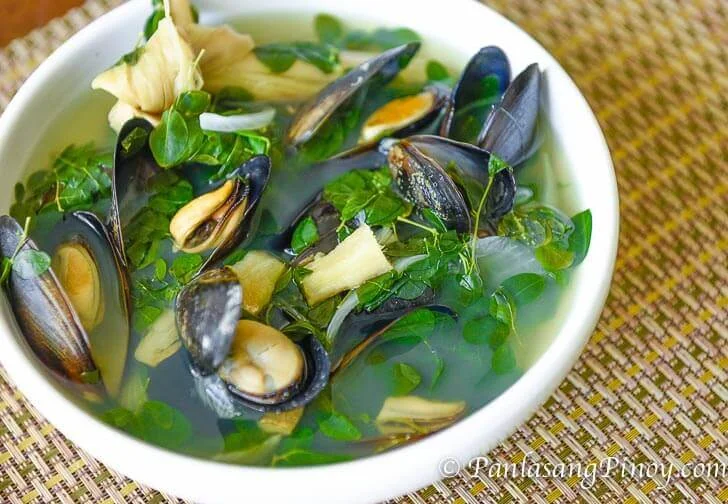
Tinolang tahong is a Filipino mussel soup flavoured with ginger and lemongrass, finished with tender malunggay leaves. Its clear, aromatic broth makes a warming meal, especially on a cold day.
Ingredients
- 907 g (2 lb)cleaned mussels
- 2 thumbsginger, crushed
- 2 stalkslemongrass, tied into a knot
- 480 ml (2 cups)malunggay leaves
- 1 mediumyellow onion, sliced
- 1.2–1.4 litres (5–6 cups)water
- to tastesalt and ground black pepper
Instructions
- 1
Boil the water
Bring the water to a boil.
- 2
Infuse the broth
Add the onion, crushed ginger and knotted lemongrass. Keep the broth at a medium boil for 8 minutes.
- 3
Cook the mussels
Add the mussels and boil for 6 minutes.
- 4
Add the leaves
Gently slide the malunggay leaves into the pot and cook for 6–8 minutes.
- 5
Season the soup
Sprinkle in salt and ground black pepper to taste, then stir.
- 6
Serve the soup
Transfer the soup to a serving bowl and serve.
- 7
Enjoy together
Share and enjoy.
What is tinolang tahong?
Tinolang tahong is a Filipino soup of mussels cooked in a light, ginger-scented broth. It draws on the flavour profile of tinola, a Filipino soup often built around ginger and aromatics, with mussels taking the place of meat.
This version keeps the broth simple, using onion and knotted lemongrass alongside ginger. Malunggay leaves add a fresh, leafy finish.
Nutrition and macros by portion
The nutrition label shows one serving as written: 125 calories, 17g protein, 8g carbs, 3g fat.
| Portion | Adjustment | kcal | Protein | Carbs | Fat |
|---|---|---|---|---|---|
| Lighter | More broth, fewer mussels | 88 kcal | 12g | 6g | 2g |
| This serving | As written | 125 kcal | 17g | 8g | 3g |
| Hungry | Serve with extra rice | 188 kcal | 26g | 12g | 5g |
The mussels provide most of the protein, while the onion and malunggay contribute a small amount of carbohydrate; the recipe contains no added oil, so its fat comes mainly from the mussels. Serve a bowl with rice and a side of vegetables for a more rounded plate.
Build the aromatic broth
Ginger: crushing it helps release its flavour into the water as it simmers. Use the stated 8 minutes of boiling time to give the broth a head start before adding the mussels.
Lemongrass: tying the stalks into a knot makes them easier to lift out or work around when serving. The onion softens in the same broth and rounds out the aromatics.
Choose and clean the mussels
Mussels: use the cleaned mussels listed in the recipe, and check them before cooking. Discard any with cracked shells or any that remain open when tapped.
Freshness: keep the mussels chilled until you are ready to add them. If they need further cleaning, scrub the shells and remove the beards before cooking.
Watch the cooking cues
Mussels: boil them for 6 minutes as directed. Their shells should open as they cook; discard any that stay closed after cooking.
Malunggay: add the leaves gently and cook for 6–8 minutes. They should be tender in the broth rather than left raw or crisp.
Keep the timing in view
The listed cooking stages take about 20–22 minutes after the water comes to a boil, with the full recipe described as taking 25 minutes. Have the ingredients ready before starting so the mussels and leaves can go in promptly.
The method does not specify a temperature, only a medium boil for the aromatics. Keep the broth bubbling steadily rather than letting it boil so vigorously that it splashes.
Serve it with
Rice: serve the soup hot with steamed rice to make a more substantial meal. The broth can be spooned over the rice, with mussels served alongside.
A simple side: pair it with plain vegetables or a crisp salad if you want something fresh alongside the warm, savoury soup.
Recipe notes & tips
- Prepare the onion, ginger and lemongrass before bringing the water to a boil.
- Keep the lemongrass knotted so it is easier to handle in the finished soup.
- Add the mussels only after the aromatics have boiled for 8 minutes.
- Stir gently after seasoning to avoid breaking up the tender leaves.
- Check the mussels before cooking and discard any with damaged shells.
Variations
- Add chilli: include sliced fresh chilli with the aromatics for a hotter broth.
- Use spinach: replace the malunggay leaves with spinach if malunggay is unavailable.
- Add fish sauce: season with a little fish sauce instead of some of the salt.
- Brighten with citrus: serve with a squeeze of calamansi or lime at the table.
- Make it heartier: serve each bowl with steamed rice on the side.
Common mistakes to avoid
- Overcooking the mussels: follow the 6-minute boil and check that the shells open.
- Keeping closed mussels: discard any that remain closed after cooking.
- Boiling too fiercely: maintain a steady medium boil to keep the broth controlled.
- Adding leaves too early: wait until the mussels have boiled for 6 minutes before adding the malunggay.
- Over-seasoning at the start: add salt and pepper at the end, then taste and adjust.
How to store
Refrigerate leftovers in a covered container and use within 1–2 days. Reheat gently on the hob until piping hot, taking care not to boil the mussels for long again; discard any mussels that were left unrefrigerated for more than 2 hours.
Frequently asked questions
What is malunggay?
Malunggay is the leaf of the moringa tree, commonly used in Filipino cooking. Use fresh leaves for this recipe, or substitute spinach if you cannot find them.
Can I use frozen mussels?
Yes, provided they are suitable for cooking from frozen or have been thawed safely according to their packaging. Cooking time may vary, so check the package directions and ensure they are thoroughly cooked.
How do I know when the mussels are cooked?
Their shells should open during cooking. Discard any that remain closed after the 6-minute boil.
Can I make the broth ahead?
You can boil the water with the onion, ginger and lemongrass ahead, then chill the broth promptly. Bring it back to a boil before adding the mussels and malunggay.
What can I use instead of lemongrass?
The recipe is best with lemongrass, but you can leave it out if unavailable. The ginger and onion will still flavour the broth.
How should I serve tinolang tahong?
Serve it hot in bowls, with steamed rice alongside if you want a more filling meal.
Cook it from the original
This recipe comes from panlasangpinoy.com. Their page has the author’s own photos, notes and tips — the best place to cook it from.
Open the recipe on panlasangpinoy.com