
Basmati Rice
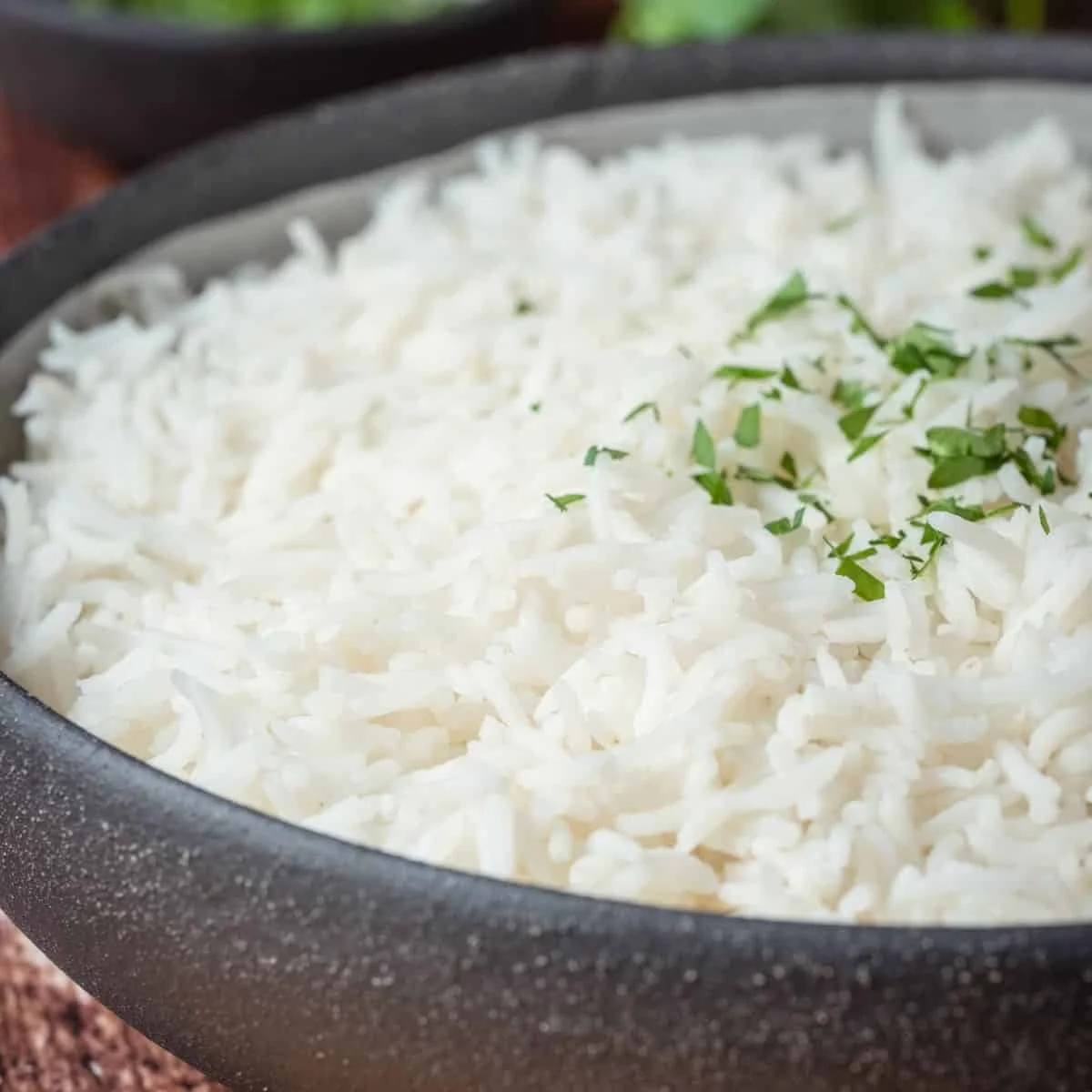
This simple stovetop method makes basmati rice with separate, fluffy grains, using only rice and water. It needs no rinsing or draining, and the covered rest helps finish the rice gently.
Ingredients
- 190 g (1 cup)basmati rice
- 360 ml (1½ cups)water
Instructions
- 1
Heat rice and water
Put the basmati rice and water in a medium saucepan. Set it over medium-high heat, uncovered.
- 2
Bring to a simmer
Heat until the edges bubble and the water’s surface looks white and foamy.
- 3
Cover and simmer
Fit the lid tightly and reduce the heat to medium-low. Simmer for 12 minutes without lifting the lid.
- 4
Rest off heat
After 12 minutes, take the pan off the heat and leave it covered for 10 minutes. Keep the lid on during the rest.
- 5
Fluff the rice
After 10 minutes, remove the lid and gently fluff the rice with a rubber or wooden paddle.
What is basmati rice?
Basmati is a long-grain rice widely used in Indian cooking and across South Asia. When cooked well, its grains are fragrant and distinct rather than sticky.
This version keeps the ingredient list spare and uses a covered simmer followed by a rest. Those steps let the rice cook evenly without draining away water at the end.
Nutrition and macros by portion
The nutrition label shows one serving as written: 169 calories, 3g protein, 37g carbs, 0g fat.
| Portion | Adjustment | kcal | Protein | Carbs | Fat |
|---|---|---|---|---|---|
| Lighter | Smaller rice portion | 118 kcal | 2g | 26g | 0g |
| This serving | As written | 169 kcal | 3g | 37g | 0g |
| Hungry | Larger rice portion | 254 kcal | 5g | 56g | 0g |
Most of the carbohydrates in a serving come from the basmati rice; the recipe contains very little fat, and the rice provides a modest amount of protein. For a more balanced plate, serve it with vegetables and a protein-rich accompaniment such as dal.
Why this water ratio works
Rice and water: the method uses 190 g of rice with 360 ml of water. Measure both carefully so the rice can absorb the water during cooking.
No extras: the recipe adds no salt, oil or other ingredients. The rice is ready to serve as written or alongside a seasoned main dish.
Watch for the simmer
Starting uncovered: heat the pan over medium-high until the water simmers. Bubbling at the edges and a white, foamy surface are the cues to cover it.
Steady heat: once covered, lower the hob to medium-low. The aim is a gentle simmer for 12 minutes, not a vigorous boil.
Keep the lid on
During cooking: leave the lid in place for the full 12 minutes. Lifting it releases steam, which the rice needs to cook through.
During resting: take the pan off the heat and leave it covered for another 10 minutes. The rice continues to settle in the trapped steam.
Fluff for separate grains
After the rest: use a rubber or wooden paddle to loosen the rice gently. Lift and separate the grains rather than pressing them down.
Doneness cue: the rice should be tender and fluffy after the covered cooking and rest. If it still seems firm, keep the lid on briefly so the residual steam can work.
Serving ideas
As a side: serve the rice with a curry, dal or a saucy vegetable dish so it can absorb some of the accompanying flavours.
For a simple plate: pair it with vegetables and a source of protein. Fluff just before serving for the lightest texture.
Recipe notes & tips
- Measure the rice and water before heating so the ratio stays consistent.
- Use a saucepan with a lid that fits tightly to retain steam.
- Wait for the bubbling edges and foamy surface before covering the pan.
- Keep the heat at medium-low once the pan is covered.
- Set a timer for both the 12-minute simmer and the 10-minute rest.
- Fluff gently with a rubber or wooden paddle to keep the grains intact.
Variations
- Salted rice: add salt to the cooking water if you want the rice seasoned on its own.
- Buttery finish: fold a little butter through the rice after fluffing for a richer side.
- Herb finish: scatter chopped fresh herbs over the fluffed rice just before serving.
- Spiced rice: serve it with a spiced main or add whole spices to the cooking water for a more aromatic version.
- Citrus finish: add a little lemon juice after cooking to bring a bright note to the rice.
Common mistakes to avoid
- Lifting the lid: steam escapes and can interrupt cooking; keep the pan covered through the simmer and rest.
- Boiling too hard: the water can evaporate too quickly; reduce the heat to medium-low once covered.
- Skipping the rest: the grains may be less evenly finished; leave the pan off the heat and covered for 10 minutes.
- Stirring while cooking: this can disturb the grains; wait until the end, then fluff gently.
- Pressing while fluffing: the rice can become compact; lift and separate it with a paddle.
How to store
Cool leftover rice promptly, transfer it to a covered container and refrigerate for up to 3 days. Reheat until steaming hot, adding a small splash of water if it seems dry.
Frequently asked questions
Do I need to rinse the basmati rice?
No. This method is designed to cook the rice without rinsing or draining it.
Why should I not lift the lid?
The covered pan holds the steam needed to cook the rice. Keep it closed during both the 12-minute simmer and the 10-minute rest.
How can I tell when the water is simmering?
Look for bubbles around the edges and a white, foamy appearance on the surface before putting on the lid.
Can I use a different type of rice?
This water quantity and timing are given for basmati rice. Other varieties may need a different ratio or cooking time.
Can I make the rice ahead?
Yes. Refrigerate it promptly in a covered container and reheat it until steaming hot before serving.
Cook it from the original
This recipe comes from lovingitvegan.com. Their page has the author’s own photos, notes and tips — the best place to cook it from.
Open the recipe on lovingitvegan.com