
Sago Pineapple Pudding
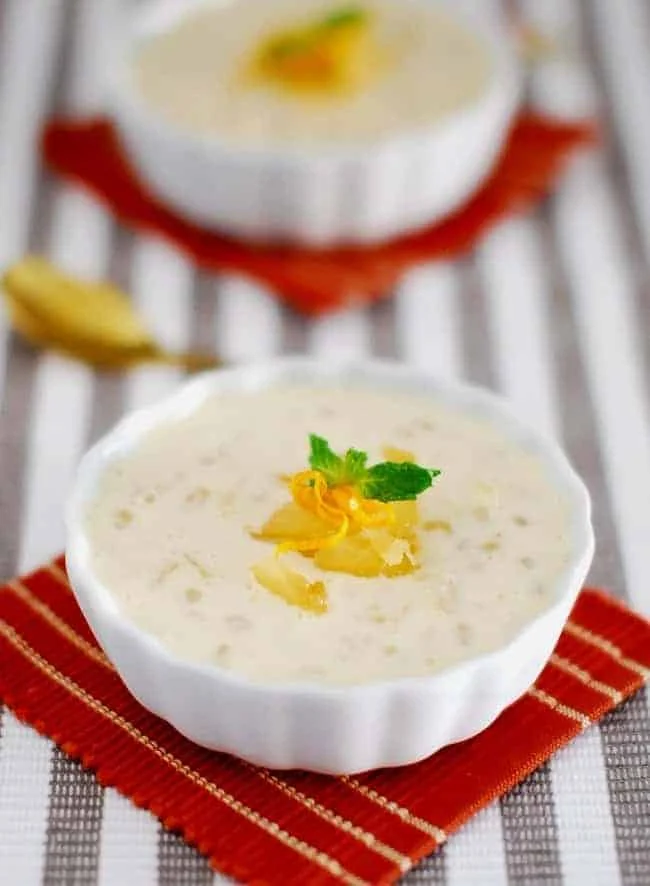
This chilled pudding combines soft, translucent sago pearls with milk, condensed milk and cooked pineapple. It makes a creamy, fruity dessert that can be prepared ahead and served cold.
Ingredients
- 1 mediumpineapple, chopped
- 100 gsago
- 500 mlmilk
- 240 ml (1 cup)condensed milk
- 2 tbsp (optional)sugar
- 240–480 ml (1–2 cups)water, for cooking the sago
Instructions
- 1
Cook the pineapple
Cook the chopped pineapple with a little sugar, then refrigerate it.
- 2
Cook the sago
Heat the sago without frying it. Wash it, then cook it in 240–480 ml (1–2 cups) of water until the pearls turn transparent. Rinse it 2–3 times with normal water to remove the starch.
- 3
Boil the milk
Mix the milk and condensed milk, then bring the mixture to a boil.
- 4
Thicken the pudding
Add the sago when the milk mixture boils. Once it thickens, stir in the sugar and take the pan off the stove.
- 5
Chill and serve
When the mixture has cooled, add the cooked pineapple. Refrigerate the pudding and serve it cold.
What is sago pineapple pudding?
Sago pudding is a milk-based dessert made with small starch pearls that become translucent when cooked. Sago is associated with tropical regions where sago palm starch is used in cooking, and versions of the pudding vary from place to place.
Here, condensed milk gives the base extra sweetness and body, while cooked pineapple brings a bright, fruity contrast. Chilling lets the mixture set into a spoonable dessert.
Nutrition and macros by portion
The nutrition label shows one serving as written: 480 calories, 10g protein, 93g carbs, 11g fat.
| Portion | Adjustment | kcal | Protein | Carbs | Fat |
|---|---|---|---|---|---|
| Lighter | Skip optional sugar | 336 kcal | 7g | 65g | 8g |
| This serving | As written | 480 kcal | 10g | 93g | 11g |
| Hungry | Serve a larger bowl | 720 kcal | 15g | 140g | 17g |
Most of the carbohydrates come from the sago, condensed milk, pineapple and any added sugar; the milk and condensed milk contribute most of the protein and fat. Serve a modest bowl alongside a meal with vegetables and a protein-rich main for a more balanced plate.
Choose and cook the pineapple
Ripe fruit: A fragrant, ripe pineapple gives the pudding a sweet, tangy flavour. Chop it into small pieces so it is easy to scoop with the sago.
Cooked fruit: The recipe cooks the pineapple with a little sugar before chilling it. Let it cool before adding it to the milk mixture.
Get the sago right
Rinse first: Wash the sago before cooking, as directed, and use enough water to keep the pearls submerged.
Translucent centres: Cook until the pearls look transparent, then rinse them 2–3 times with normal water to remove excess starch. This helps keep the finished pudding from becoming overly gluey.
Build a creamy base
Milk and condensed milk: Bring both to a boil together before adding the cooked sago. Stir as the mixture heats so the milk does not catch on the bottom of the pan.
Sweetness: Condensed milk already adds plenty of sweetness, so taste the thickened mixture before adding the optional sugar.
Cool before combining
Temperature: Take the pudding off the stove once thickened and let it cool before stirring in the pineapple. Adding the fruit to a hot mixture can soften it further.
Chilling: Refrigerate the assembled pudding before serving. It will be firmer and more refreshing when cold.
Serving ideas
Serve the pudding chilled in small bowls, with pineapple pieces distributed through each portion. It works well as a dessert after a meal with savoury or lightly spiced dishes.
For a simple finish, reserve a few pieces of cooked pineapple to spoon over the top just before serving.
Recipe notes & tips
- Use a pan with enough room for the milk mixture to rise as it comes to a boil.
- Keep the sago covered with water while it cooks.
- Rinse the cooked sago several times to clear away surface starch.
- Taste the pudding before adding the optional sugar.
- Cool the milk and sago mixture before folding in the pineapple.
- Chill the pudding thoroughly so it is firm and cold when served.
Variations
- Extra fruit: Fold in a little more cooked pineapple for a fruitier pudding.
- Less sweet: Leave out the optional sugar and rely on the condensed milk.
- Coconut: Replace some of the milk with coconut milk for a coconut note.
- Cardamom: Stir a small pinch of ground cardamom into the milk mixture as it heats.
- Layered serving: Spoon the pudding and cooked pineapple into glasses in alternating layers.
Common mistakes to avoid
- Frying the sago: The method calls for cooking it in water, not frying it.
- Stopping too soon: Undercooked sago can have opaque centres; continue until the pearls look transparent.
- Skipping the rinses: Excess starch can make the pudding too gluey, so rinse the cooked pearls 2–3 times.
- Adding fruit while hot: Let the pudding cool first to keep the pineapple from softening further.
- Over-sweetening: Taste the mixture before adding optional sugar, since condensed milk is already sweet.
How to store
Keep the pudding covered in the fridge and eat it within 2 days. Serve it cold; if it thickens during storage, stir it gently before serving.
Frequently asked questions
How can I tell when the sago is cooked?
The pearls should look transparent. If they still have opaque centres, continue cooking them in water.
Why rinse the sago after cooking?
Rinsing 2–3 times with normal water removes surface starch and helps keep the pudding from becoming overly gluey.
Can I leave out the sugar?
Yes. The recipe marks it as optional, and the condensed milk already sweetens the pudding.
Can I prepare this pudding ahead?
Yes. Refrigerate it after assembling so it is cold when served. Keep it covered and use it within 2 days.
Should the pineapple be added while the pudding is hot?
No. Let the milk and sago mixture cool first, then stir in the cooked pineapple.
Cook it from the original
This recipe comes from mariasmenu.com. Their page has the author’s own photos, notes and tips — the best place to cook it from.
Open the recipe on mariasmenu.com