
Brioche French Toast
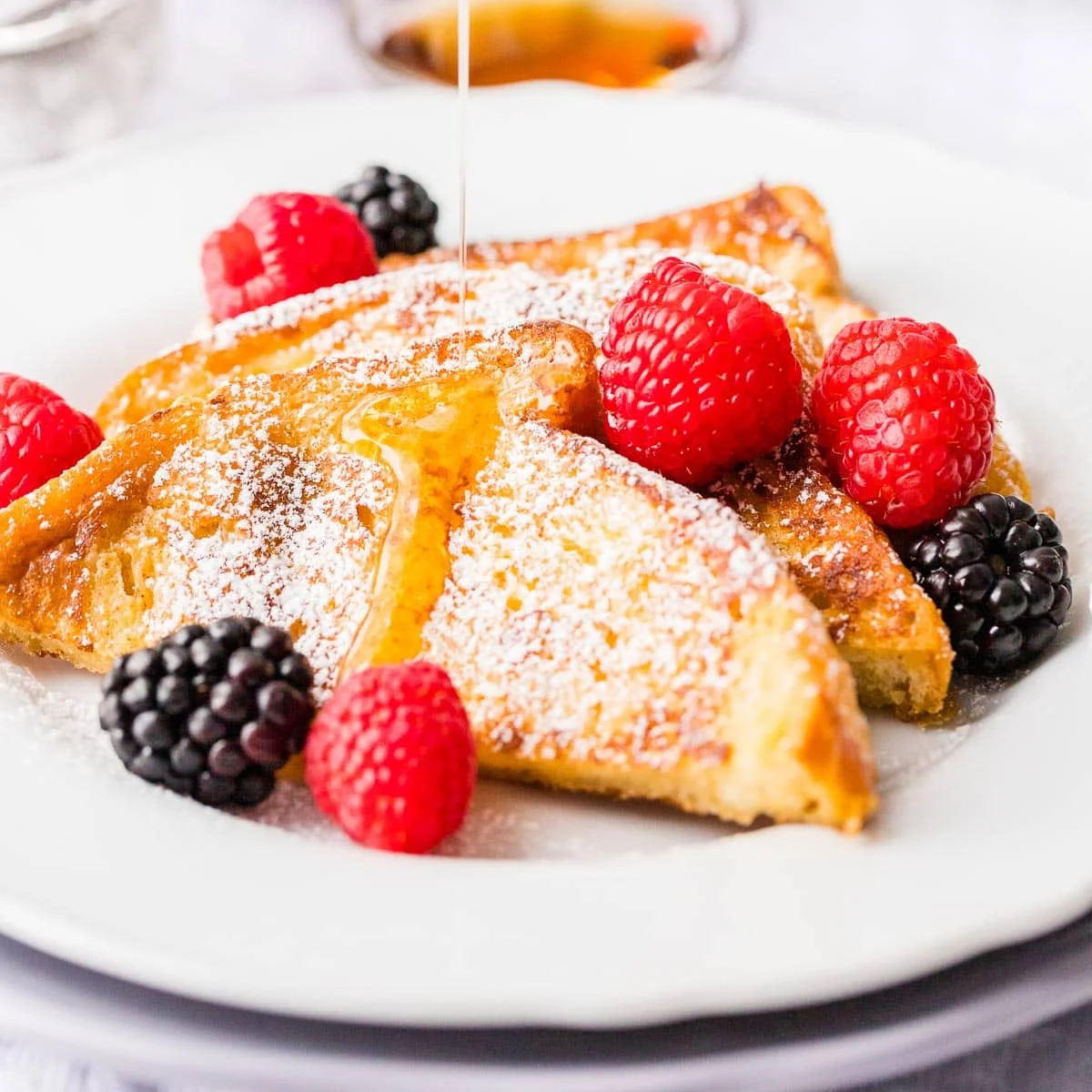
Brioche French toast has a golden, lightly crisp outside and a soft, custardy centre. It comes together quickly and makes a satisfying breakfast or brunch with syrup, berries and a dusting of sugar.
Ingredients
- 2 largeeggs
- 80 ml (1/3 cup)whole milk
- 25 g (2 Tbsp)granulated sugar
- 8 g (1 Tbsp), dissolved in 15 ml (1 Tbsp) watercornstarch
- 10 ml (2 tsp)vanilla extract
- 2.5 ml (1/2 tsp)cinnamon
- 4–6 slices, about 2 cm (3/4 inch) thickday-old brioche bread
- 15 g (1 Tbsp), or morebutter
- to tastemaple syrup
- to tastepowdered sugar
- to tastefresh berries
Instructions
- 1
Whisk the custard
In a bowl, whisk together the eggs, milk, sugar, dissolved cornstarch, vanilla extract and cinnamon.
- 2
Soak the brioche
Arrange the brioche in a shallow baking pan and pour the egg mixture over it. Let it soak for about 1 minute per side, until the mixture has been absorbed.
- 3
Fry until golden
Heat a large pan or griddle over medium heat and melt the butter. Lift each slice from the mixture and let excess drip off. Fry for about 2 minutes per side, until golden brown.
- 4
Finish and serve
Serve the French toast sprinkled with powdered sugar.
What is brioche French toast?
French toast is bread soaked in an egg-and-milk mixture, then cooked in a pan until browned. This American-style breakfast uses brioche, an enriched bread with a tender crumb that turns especially soft in the centre.
The brief soak and medium-heat frying help the slices take on a custardy texture inside while developing a golden exterior. A little cornstarch is whisked into the mixture, and cinnamon and vanilla bring warmth and sweetness.
Nutrition and macros by portion
The nutrition label shows one serving as written: 117 calories, 4g protein, 11g carbs, 6g fat.
| Portion | Adjustment | kcal | Protein | Carbs | Fat |
|---|---|---|---|---|---|
| Lighter | Use less butter and syrup | 82 kcal | 3g | 8g | 4g |
| This serving | As written | 117 kcal | 4g | 11g | 6g |
| Hungry | Serve extra brioche | 176 kcal | 6g | 17g | 9g |
The brioche and sugar provide most of the carbohydrates, while the eggs and milk contribute protein and the butter adds fat. Serve with fresh berries, and add syrup to taste, for a plate with fruit alongside the toast.
Why use day-old brioche?
Day-old bread is slightly drier than fresh brioche, so it can absorb the egg mixture without falling apart as readily. Slices about 2 cm thick hold their shape while the middle softens.
Fresh brioche can work, but handle it gently and keep an eye on the soak so it does not become overly saturated.
Getting the soak right
Short soak: leave each side in the mixture for about 1 minute, as directed, so the bread absorbs flavour without becoming too fragile.
Even coating: use a shallow pan and turn the slices carefully to coat both sides. Let excess mixture drip away before frying to help the outside brown rather than remain wet.
Cooking for a golden crust
Medium heat gives the centre time to warm through while the outside browns. Melt the butter in the pan or on the griddle before adding the soaked bread.
Look for a golden-brown surface after about 2 minutes on each side. If the slices colour too quickly, lower the heat so the centre has time to cook.
Serving ideas
Finish with powdered sugar and serve with maple syrup and fresh berries. The berries add a fresh, tart contrast to the sweet, buttery toast.
For a more substantial brunch, pair it with plain yoghurt or eggs on the side. Add syrup at the table so each person can choose how much to use.
Timing and pan space
The listed total time is 15 minutes, so have the custard ingredients and toppings ready before you start cooking. A pan or griddle large enough for the slices makes it easier to cook in fewer batches.
If cooking in batches, keep the finished slices warm while the rest fry. Add a little more butter if the pan begins to look dry.
Recipe notes & tips
- Use a shallow dish so you can turn the slices easily while soaking.
- Whisk the cornstarch mixture smooth before adding it to the other custard ingredients.
- Let excess custard drip off each slice before it goes into the pan.
- Cook over medium heat and adjust it down if the brioche browns too fast.
- Add more butter between batches if the pan becomes dry.
- Put syrup and berries on the table so everyone can finish their toast to taste.
Variations
- Add nutmeg: replace some of the cinnamon with a pinch of nutmeg.
- Use orange zest: whisk a little finely grated zest into the custard for a citrus note.
- Choose another bread: thick slices of challah can stand in for brioche.
- Top with yoghurt: add a spoonful of plain yoghurt alongside the berries.
- Make it less sweet: reduce the sugar in the custard and keep syrup optional.
Common mistakes to avoid
- Using very fresh bread: it can become fragile when soaked; day-old brioche is easier to handle.
- Soaking for too long: the slices may fall apart; stick to about 1 minute per side.
- Skipping the drip: excess custard can make the surface wet; let it run off before frying.
- Cooking over high heat: the outside may brown before the middle warms; use medium heat.
- Crowding the pan: the slices are harder to turn evenly; cook in batches if needed.
How to store
Refrigerate leftover French toast in a covered container for up to 2 days. Reheat in a pan over a low-to-medium heat or in a toaster oven until warmed through; add toppings just before serving.
Frequently asked questions
Can I use fresh brioche?
Yes, but it is more delicate and may absorb the mixture quickly. Turn it gently and avoid leaving it to soak longer than needed.
How thick should the slices be?
The recipe calls for slices about 2 cm (3/4 inch) thick. This thickness helps them hold together while the centre becomes soft.
How can I tell when the French toast is done?
The outside should be golden brown after about 2 minutes on each side. If it browns too quickly, reduce the heat to give the centre more time.
Can I prepare the egg mixture ahead?
You can whisk the mixture shortly before cooking and keep it covered in the refrigerator. Stir it again before dipping the bread.
What can I serve with it?
Maple syrup, powdered sugar and fresh berries are listed toppings. Plain yoghurt or eggs also make useful sides.
Can I cook it without butter?
Butter is used to cook the slices and adds flavour. For a different option, use a suitable cooking oil, though the taste will change.
Cook it from the original
This recipe comes from platedcravings.com. Their page has the author’s own photos, notes and tips — the best place to cook it from.
Open the recipe on platedcravings.com