
Vegetable Broth
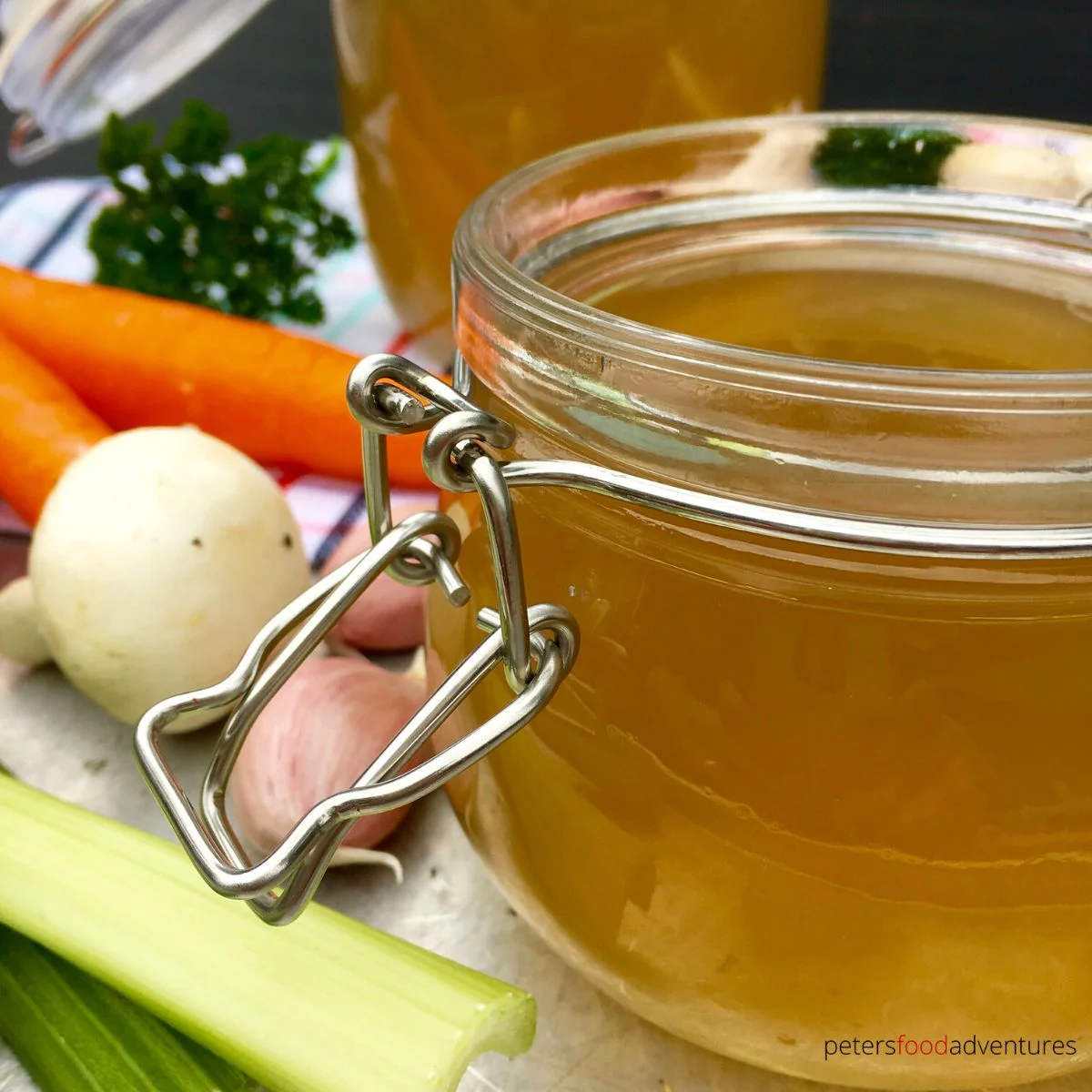
This homemade vegetable broth gets its savoury depth from slowly simmered vegetables and herbs. Make a batch to use as the base for soups, or freeze any extra for another meal.
Ingredients
- 1 tablespoon (15 ml)vegetable oil
- 2 largeonions, quartered
- 3 stalkscelery, leaves attached, roughly chopped
- 3carrots, unpeeled and cut into thirds
- 1 handfulmushrooms
- 5 clovesgarlic, peeled and smashed
- 1 tablespoonwhole peppercorns
- 1bay leaf
- A few sprigsfresh herbs, such as thyme, parsley, oregano or sage
- As neededwater
Instructions
- 1
Brown the vegetables
Heat the oil in a stockpot. Add the onions, carrots, celery, mushrooms and garlic, and cook until caramelised.
- 2
Add water
Fill the pot with water, then add the herbs and spices. Bring to the boil.
- 3
Simmer the stock
Once boiling, reduce the heat and simmer gently for 2 hours with the lid partly on. The stock can simmer longer if you wish.
- 4
Strain the broth
Set a colander over a large bowl and pour the stock through it to remove the vegetables.
- 5
Strain again
For a clearer broth, strain it a second time through cheesecloth. This step is optional.
- 6
Use or freeze
The stock is ready to use in soup. Freeze any excess for another meal.
What is vegetable broth?
Vegetable broth is a savoury cooking liquid made by simmering vegetables, herbs and spices in water. Stocks and broths are found in many cuisines, and this version builds flavour by first browning its vegetables.
Onions, carrots and celery provide a classic aromatic base, while mushrooms add a deeper savoury note. The result is a versatile, meat-free foundation for soups and other dishes.
Nutrition and macros by portion
The nutrition label shows one serving as written: 25 calories, 1g protein, 4g carbs, 1g fat.
| Portion | Adjustment | kcal | Protein | Carbs | Fat |
|---|---|---|---|---|---|
| Lighter | Use less vegetable oil | 18 kcal | 1g | 3g | 1g |
| This serving | As written | 25 kcal | 1g | 4g | 1g |
| Hungry | Serve a larger bowl | 38 kcal | 2g | 6g | 2g |
The vegetables contribute most of the broth’s carbohydrates, while the oil provides most of its fat; straining removes the vegetables, so the amount retained in each serving will vary. This stock contains little protein on its own, so pair a soup made with it with beans, lentils or another protein-rich ingredient.
Build flavour before simmering
Browned vegetables: let the onions, carrots, celery, mushrooms and garlic caramelise in the oil before adding water. This gives the broth a fuller flavour than simply simmering everything from the start.
Even pieces: the vegetables do not need to be finely chopped, but keep the pieces roughly similar in size so they cook at a similar pace.
Choose your herbs
Fresh herbs: thyme, parsley, oregano and sage are suggested options; use a few sprigs of the herbs you have. A bay leaf and whole peppercorns add background aroma.
Mushrooms: include them for extra savouriness, or leave them out if preferred. The recipe’s note says to skip them for a vegan version, though mushrooms themselves are plant-based.
Keep the simmer gentle
Low heat: after bringing the pot to the boil, reduce the heat so the liquid simmers gently for 2 hours. Keep the lid partly on as directed.
Long cooking: the recipe notes that a longer simmer can be used. Check occasionally that the pot is still gently simmering and has not boiled vigorously.
Strain for the finish you want
Colander: pour the stock through a colander set over a large bowl to separate out the cooked vegetables. Take care when handling the hot liquid.
Clearer broth: pass it through cheesecloth for an optional second strain. Skip this if a little natural cloudiness does not bother you.
Ways to use it
Soup base: use the broth wherever a recipe calls for stock, or build a soup around it with vegetables, beans, grains or noodles.
Serving idea: pair a broth-based soup with bread or a sandwich for a more substantial meal. The stock itself is a useful starting point rather than a complete meal.
Recipe notes & tips
- Use a large stockpot so the vegetables and water fit comfortably.
- Keep the celery leaves attached, as directed, when chopping the stalks.
- Smash the garlic cloves to expose more of their surface to the broth.
- Keep the pot at a gentle simmer rather than a rolling boil.
- Set a heatproof bowl beneath the colander before straining.
- Freeze extra stock in portions that suit the recipes you make most often.
Variations
- Herb mix: use a few sprigs of any combination of thyme, parsley, oregano and sage.
- Mushroom-free: leave out the mushrooms for a lighter-tasting version.
- Peppery broth: add the whole peppercorns as listed for a gentle spice note.
- Clear finish: strain the stock a second time through cheesecloth.
- Longer simmer: let the stock cook for longer than 2 hours for a more developed flavour.
Common mistakes to avoid
- Skipping the browning: the broth may taste less developed; caramelise the vegetables before adding water.
- Boiling too hard: vigorous boiling can make the stock cloudy; lower the heat once it reaches the boil.
- Leaving the lid fully on: use a semi-covered lid as directed during the simmer.
- Rushing the simmer: give the stock the full 2 hours for the flavours to infuse.
- Pouring without a bowl: place a large bowl beneath the colander before straining the hot stock.
How to store
Cool the stock promptly, then refrigerate it in a covered container and use within 3–4 days. Freeze any extra in airtight containers; thaw in the fridge and reheat in a saucepan until hot.
Frequently asked questions
Can I make this broth without mushrooms?
Yes. The recipe lists mushrooms as optional, so you can leave them out.
How much water should I add?
The recipe does not give a measured amount; it says to fill the pot with water. Use enough to cover the vegetables while leaving room for the liquid to simmer safely.
Can I simmer the stock for longer than 2 hours?
Yes. The method says that a longer simmer is possible. Keep the heat low and check the pot from time to time.
Do I need to use cheesecloth?
No. The second strain is optional and is only suggested if you want a clearer broth. A colander is used for the first strain.
Can I freeze the broth?
Yes. The recipe recommends freezing any excess for another meal. Cool it before transferring it to a suitable airtight container.
Is this recipe vegan?
The listed ingredients are plant-based, including the mushrooms. Check that your vegetable oil and any ingredients used alongside the stock are also suitable for your needs.
Cook it from the original
This recipe comes from petersfoodadventures.com. Their page has the author’s own photos, notes and tips — the best place to cook it from.
Open the recipe on petersfoodadventures.com