
Coke Pork Adobo
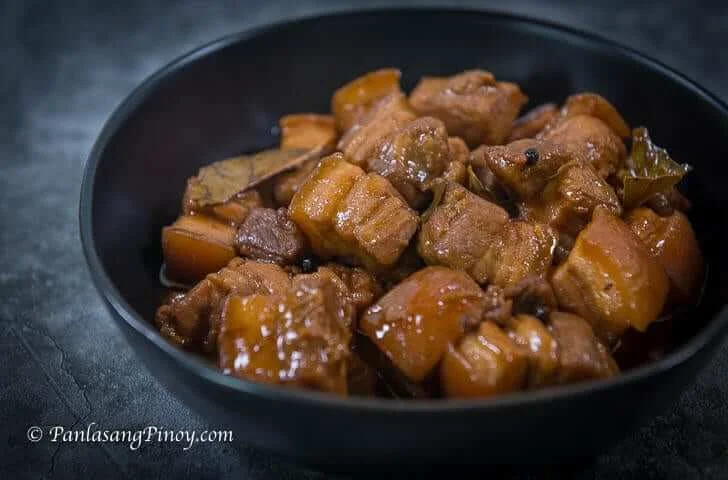
Coke pork adobo is a Filipino-style pork belly braise that combines vinegar, soy sauce, garlic and cola. It is a rich, savoury-sweet dish for when you want tender pork and a glossy, flavourful sauce.
Ingredients
- 1,134 g (2 1/2 lb)pork belly, cubed
- 150 ml (10 tablespoons)white vinegar
- 45 ml (3 tablespoons)soy sauce
- 5 clovesgarlic, crushed
- 355 ml (12 oz)cola
- 2 teaspoonswhole peppercorns
- 4dried bay leaves
- Optionalsalt
- As neededwater
Instructions
- 1
Sear the pork
Heat a pan and sear the pork belly, stirring continuously, until browned and enough fat has rendered.
- 2
Cook the garlic
Push the pork to one side of the pan. Add the garlic to the cleared area and sauté for 30 seconds. Mix it with the pork and cook for 1 minute.
- 3
Add the sauces
Pour in the soy sauce and vinegar. Bring the mixture to a boil, stir, and cook for 2 minutes.
- 4
Add the spices
Add the whole peppercorns and dried bay leaves.
- 5
Braise with cola
Pour in the cola and bring it to a boil. Cover the pan and continue cooking over low heat until the pork is tender, adding water if needed.
- 6
Season to taste
Add salt if desired.
- 7
Serve the adobo
Transfer the pork and sauce to a serving bowl and serve.
What is pork adobo?
Adobo is a Filipino way of cooking ingredients in a seasoned mixture that commonly includes vinegar, garlic and soy sauce. Its name comes from a Spanish word for seasoning or marinade, while Filipino adobo has its own varied regional traditions.
This version uses pork belly and cola, which adds sweetness to the sharp vinegar and savoury soy. Slow, covered cooking gives the pork time to become tender and lets the flavours mingle.
Nutrition and macros by portion
The nutrition label shows one serving as written: 1530 calories, 28g protein, 12g carbs, 150g fat.
| Portion | Adjustment | kcal | Protein | Carbs | Fat |
|---|---|---|---|---|---|
| Lighter | Smaller pork portion | 1071 kcal | 20g | 8g | 105g |
| This serving | As written | 1530 kcal | 28g | 12g | 150g |
| Hungry | Larger pork portion | 2295 kcal | 42g | 18g | 225g |
The pork belly supplies most of the fat and protein, while the cola contributes carbohydrates and sugar; the soy sauce also adds sodium. Serve a moderate portion with rice and vegetables, adjusting the rice to suit how substantial you want the meal to be.
Why pork belly works
Pork belly: its fat renders as the cubes brown, giving the dish a rich base. Stir as it sears so the pieces brown more evenly and are less likely to stick.
Balancing the sauce
Vinegar and soy: vinegar brings acidity, while soy sauce contributes saltiness and savoury depth. The cola adds sweetness, so the finished sauce has a rounded sweet-and-tangy character.
The key cooking cues
Searing: look for browned surfaces and rendered fat before moving on. The method calls for stirring continuously during this stage.
Braising: keep the pan covered over low heat until the pork is tender. Add water if needed, as the recipe directs, to keep the mixture from becoming too dry.
Garlic and aromatics
Garlic: sauté it in the cleared part of the pan for 30 seconds, then mix it through the pork and cook for 1 minute. This short cooking stage lets it flavour the rendered fat without leaving it to cook alone for too long.
Pepper and bay: whole peppercorns and dried bay leaves go in before the cola. They infuse the braising liquid as the pork cooks.
Serving the pork
Rice: serve the pork and sauce with steamed rice to soak up the rich, tangy-sweet juices. A simple side of greens or vegetables can bring freshness to the plate.
Recipe notes & tips
- Cut the pork belly into similarly sized cubes so it sears and braises at a similar pace.
- Stir continuously while searing, as the method specifies, to help the pork brown evenly.
- Keep the heat low and the pan covered during the braise.
- Add water only as needed if the pan looks too dry before the pork is tender.
- Taste before adding optional salt, since the soy sauce is already salty.
Variations
- More garlic: add extra crushed garlic for a stronger savoury aroma.
- Less sweet: use less cola and add water to make up the braising liquid.
- Extra tang: add a little more vinegar to sharpen the sauce.
- Chilli heat: add sliced chilli while the pork braises.
- Vegetable side: serve with quickly cooked greens for contrast.
Common mistakes to avoid
- Crowding the pan: the pork may brown unevenly; sear in batches if the pieces cannot sit comfortably.
- Skipping the stirring: pork can catch on the pan; keep it moving as it sears.
- Cooking too hot: the sauce can reduce before the pork is tender; maintain low heat during the covered braise.
- Adding salt too soon: the soy sauce already seasons the dish; taste before adding any.
- Leaving the pan dry: add water as needed during cooking to keep the braise from drying out.
How to store
Refrigerate leftovers in a covered container once cooled, and use within 3 days. Reheat gently in a pan until piping hot, adding a splash of water if the sauce has thickened.
Frequently asked questions
Can I use another cut of pork?
Yes, though the result will be less rich if you use a leaner cut. Check for tenderness during the braise, as cooking time can vary.
Can I make this without cola?
You can omit it, but the sauce will lose the sweetness and character it brings. The recipe does not specify a substitute.
How do I know when the pork is tender?
It should be easy to pierce with a fork and yield readily when pressed. Continue cooking over low heat if it is still firm.
Should I add water while it cooks?
Only if needed. Add some if the pan looks too dry while the pork is braising.
What should I serve with pork adobo?
Steamed rice is a natural partner for the sauce. Greens or other simply cooked vegetables add a fresh contrast.
Cook it from the original
This recipe comes from panlasangpinoy.com. Their page has the author’s own photos, notes and tips — the best place to cook it from.
Open the recipe on panlasangpinoy.com