
Baked marinated chicken with vegetables
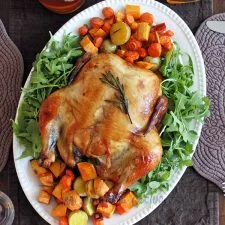
Whole chicken is marinated overnight in soy sauce and rosemary, then roasted until golden alongside a tray of potatoes and carrots. It makes a generous centrepiece with savoury, herby flavour and vegetables cooked separately for better browning.
Ingredients
- 1 wholewhole chicken
- 240 ml (1 cup)soy sauce
- to tastesprigs of rosemary
- 60 ml (4 tablespoons)olive oil
- 30 g (2 tablespoons)butter
- to tastesalt and pepper
- 1 largeZiploc bag, or a bowl
- to your likingmixed vegetables, such as sweet potatoes, yellow potatoes and carrots; arugula to decorate
Instructions
- 1
Marinate the chicken
Put a clean, dry whole chicken in a large Ziploc bag or bowl. Cover it completely with the soy sauce and some rosemary sprigs, then leave it to marinate overnight.
- 2
Preheat the oven
Heat the oven to 220°C (425°F).
- 3
Oil the dish
Coat a Pyrex baking dish with 1 tablespoon of olive oil.
- 4
Add the chicken
Set the chicken in the prepared dish and pour in the marinade, including the soy sauce and rosemary.
- 5
Season the chicken
Season the chicken with salt and pepper to taste.
- 6
Brown the chicken
Bake for 30 minutes, then check its colour. If it is not golden yet, continue baking until it is, then cover the chicken with aluminium foil.
- 7
Finish roasting
Reduce the oven temperature to 200°C (400°F) and bake for about 30–40 minutes.
- 8
Roast the vegetables
On another baking tray, toss diced potatoes and carrots with olive oil, rosemary, salt and pepper. Bake at 180°C (350°F) for 25–30 minutes.
What is baked marinated chicken with vegetables?
This is a roast-chicken meal built around a whole bird marinated in soy sauce and rosemary, with potatoes and carrots roasted alongside it. It follows the familiar approach of serving a roast as the centre of a shared meal, while the soy marinade gives the chicken a savoury flavour.
The vegetables cook on a separate tray, so they can roast rather than sit in the chicken’s marinade. Arugula is suggested as a fresh garnish.
Nutrition and macros by portion
The nutrition label shows one serving as written: 650 calories, 48g protein, 35g carbs, 34g fat.
| Portion | Adjustment | kcal | Protein | Carbs | Fat |
|---|---|---|---|---|---|
| Lighter | More vegetables, less skin | 455 kcal | 34g | 25g | 24g |
| This serving | As written | 650 kcal | 48g | 35g | 34g |
| Hungry | Larger chicken portion | 975 kcal | 72g | 53g | 51g |
Chicken provides most of the protein, while the potatoes and carrots contribute much of the carbohydrate. The chicken, olive oil and butter account for much of the fat; soy sauce contributes a substantial share of the sodium. Balance a serving with extra vegetables or salad, and keep the added salt modest.
The marinade and seasoning
Soy sauce: it seasons the chicken throughout its overnight rest and brings a salty, savoury base. Since soy sauce is already salty, go lightly when adding the recipe’s extra salt.
Rosemary: sprigs infuse the marinade and the roasting dish with a woody, herbal note. Keep some for the vegetables if you like their flavours to match.
Getting the chicken ready
Dry the bird: the recipe starts with a clean, dry chicken, which helps the marinade coat it evenly. Turn it in the bag or bowl so the soy sauce reaches all sides.
Allow time: the overnight marinating happens before the stated oven time, so plan for it separately. If using a bowl, keep the chicken covered while it marinates.
Roasting for colour and doneness
First stage: the chicken starts in a 220°C oven for 30 minutes, with a check for browning afterwards. If it still looks pale, continue until golden before covering it with foil.
Second stage: lower the oven to 200°C and roast for a further 30–40 minutes. Because whole chickens vary in size, check that the thickest part is cooked through; a food thermometer should read 74°C, avoiding the bone.
Roasting the vegetables
Cut: dice the potatoes and carrots into similar-sized pieces so they cook at a similar pace. The recipe also suggests sweet potatoes as an option.
Tray: spread the vegetables out on their own baking tray and season with olive oil, rosemary, salt and pepper. Roast them at 180°C for 25–30 minutes, checking that the pieces are tender.
Timing the two trays
The chicken and vegetables are assigned different oven temperatures, so they may need separate turns in the oven unless you have another oven available. Roast the vegetables at 180°C as directed, then keep them warm while the chicken finishes.
The chicken’s listed roasting stages total about 60–70 minutes, in addition to the overnight marinade. Its size and oven performance can affect the time it needs.
Serving the roast
Rest the cooked chicken briefly before carving so it is easier to portion. Serve it with the roasted potatoes and carrots, and use arugula as a fresh garnish.
A simple green salad or another lightly dressed vegetable would round out the plate without competing with the soy and rosemary flavours.
Recipe notes & tips
- Keep the marinating chicken covered and chilled overnight.
- Turn the chicken in its marinade if it is not fully submerged.
- Pat the chicken dry before roasting if you want to encourage browning.
- Cut the vegetables into evenly sized pieces for more consistent cooking.
- Use a food thermometer to check the thickest part of the chicken without touching bone.
- Let the chicken rest briefly before carving and serving.
Variations
- Add sweet potatoes: include diced sweet potatoes with the potatoes and carrots.
- Use different vegetables: swap in other sturdy vegetables that roast well.
- Boost the herbs: add extra rosemary to the vegetable tray.
- Add citrus: serve with lemon wedges for a bright contrast to the soy marinade.
- Finish with greens: scatter arugula over the plated vegetables just before serving.
Common mistakes to avoid
- Skipping the overnight rest: the chicken will have less time to take on the marinade; plan ahead and marinate it overnight.
- Adding too much salt: soy sauce is already salty; season cautiously and taste the vegetables before adding more.
- Crowding the vegetable tray: piled-up pieces may soften rather than roast; spread them in a single layer.
- Using uneven vegetable pieces: they can finish at different times; dice them to a similar size.
- Relying only on colour: browned skin does not confirm the centre is cooked; check the thickest part with a thermometer.
- Forgetting the temperature change: the chicken uses two oven settings; lower the oven to 200°C after its initial browning stage.
How to store
Refrigerate leftover chicken and vegetables in covered containers within 2 hours, and use within 3–4 days. Reheat until steaming hot throughout; add a splash of water or stock to help keep the chicken moist.
Frequently asked questions
How long should the chicken marinate?
The recipe calls for an overnight marinade. Keep it covered and refrigerated while it rests.
Can I marinate the chicken in a bowl?
Yes. The recipe allows either a large bag or a bowl; cover the bowl and turn the chicken so the marinade coats it.
Can the chicken and vegetables roast at the same time?
The recipe gives them different temperatures: 200°C for the chicken’s second stage and 180°C for the vegetables. For the closest match to the directions, roast them separately and keep the vegetables warm.
How can I tell when the chicken is cooked?
Check the thickest part of the meat without touching the bone; it should reach 74°C. The time can vary with the size of the bird.
Can I use other vegetables?
Yes. The recipe leaves the vegetable choice flexible and suggests sweet potatoes, yellow potatoes and carrots. Choose vegetables that can roast in a similar amount of time.
What should I serve with it?
Serve the chicken with the roasted vegetables and arugula as a garnish. A simple salad or another green vegetable also works well.
Cook it from the original
This recipe comes from midiariodecocina.com. Their page has the author’s own photos, notes and tips — the best place to cook it from.
Open the recipe on midiariodecocina.com