
Homemade Ramen Noodles
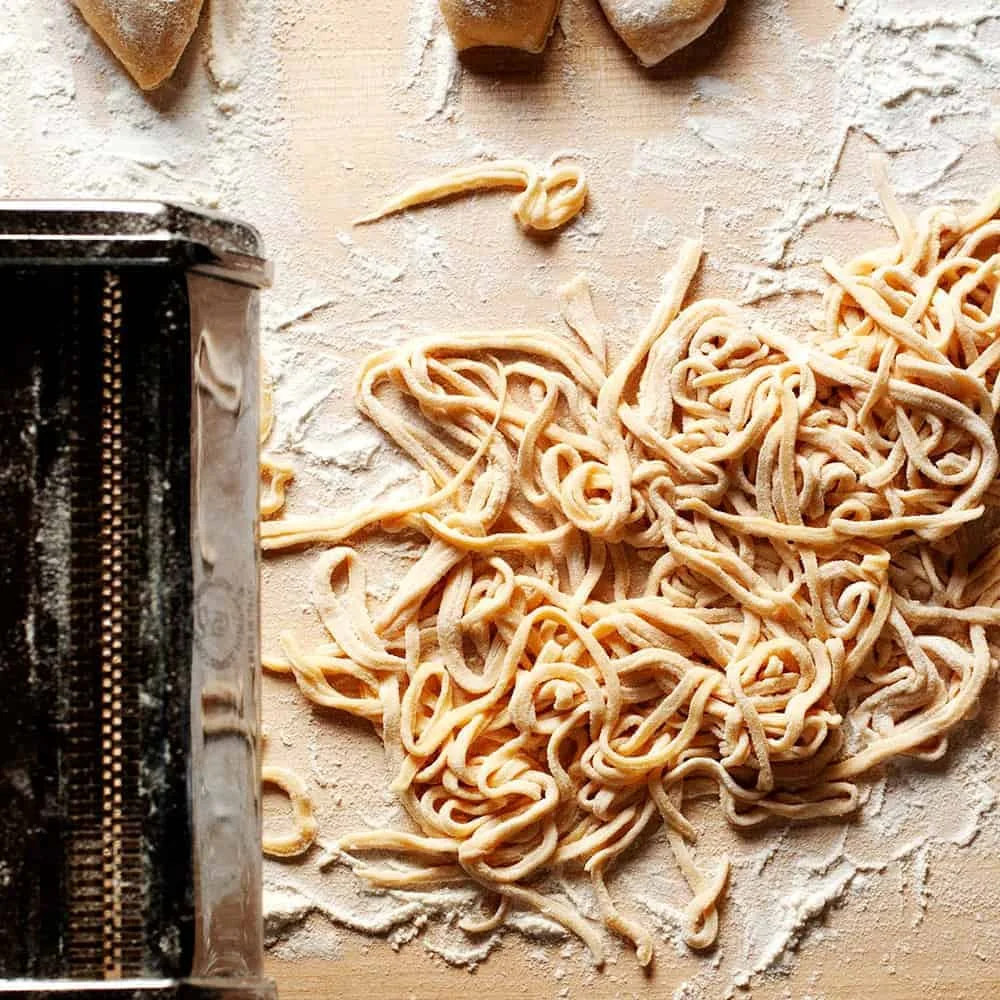
These homemade ramen noodles are made from a simple egg-and-flour dough, then rolled thin and cut with a pasta machine. Make a batch for soup or stir-fries, and freeze any noodles you do not need straight away.
Ingredients
- 408 g (3 cups)plain flour
- 1 teaspoonfine sea salt
- 1 teaspoonbicarbonate of soda
- 2 largeeggs, beaten
- 120 ml (1/2 cup)warm water
Instructions
- 1
Mix the ingredients
Whisk the flour, salt and bicarbonate of soda together in the bowl of a stand mixer. Add the beaten eggs and warm water.
- 2
Knead the dough
Fit the bowl to the stand mixer and attach the dough hook. Mix on the lowest speed until everything is moistened, then raise the speed by one or two settings and mix until the dough comes together. Once it forms a ball, knead with the hook for 5 minutes, until smooth.
- 3
Chill the dough
Turn the dough out onto a floured surface and shape it into a rectangle. Cover with cling film and refrigerate for at least 1 hour, but no longer than overnight.
- 4
Flour a tray
Generously dust a rimmed baking tray with flour.
- 5
Roll the dough
Take the dough from the fridge and divide it into 6 equal pieces on a floured work surface. Loosely cover the pieces with cling film. Flatten one piece with your palm into a rough rectangle about 1.3 cm (1/2 inch) thick, then rub it all over with flour. Feed one end through a manual pasta machine on its thickest setting, number 1. Move to setting 2 and pass the dough through again, then repeat on settings 3 and 4. For shorter noodles, cut the dough in half crosswise before using the pasta cutter.
- 6
Cut the noodles
Attach the pasta-cutting attachment and lightly flour its blades. Pass the dough through the finest cutter, ideally a spaghetti-sized one. Dust the cut noodles with flour so they are coated and separated, then place them on the prepared tray. Repeat with the remaining dough.
- 7
Cook or freeze
Cook the noodles in plenty of water or broth for 1 to 2 minutes, until cooked through. Alternatively, freeze them; add frozen noodles directly to boiling liquid and cook for about 30 seconds longer than fresh noodles.
- 8
Serve the noodles
Use the noodles in your favourite soups and stir-fries.
What are ramen noodles?
Ramen noodles are wheat noodles commonly served in Japanese ramen soup, a dish with roots in Chinese-style wheat noodle soups. Their springy bite comes in part from alkaline ingredients; this home version uses bicarbonate of soda alongside flour, eggs and water.
The dough is rolled through a pasta machine and cut into fine strands, making the method manageable without specialised ramen equipment.
Nutrition and macros by portion
The nutrition label shows one serving as written: 127 calories, 4g protein, 23g carbs, 1g fat.
| Portion | Adjustment | kcal | Protein | Carbs | Fat |
|---|---|---|---|---|---|
| Lighter | Smaller noodle portion | 89 kcal | 3g | 16g | 1g |
| This serving | As written | 127 kcal | 4g | 23g | 1g |
| Hungry | Larger noodle portion | 191 kcal | 6g | 35g | 2g |
The flour provides most of the carbohydrates, while the eggs contribute protein and a little fat. For a more balanced bowl, serve a portion with vegetables and a protein-rich topping such as tofu, egg or chicken.
The dough ingredients
Flour: plain flour forms the structure of the noodles. Weighing it helps keep the dough consistent.
Bicarbonate of soda: this supplies the alkaline element in the recipe. Measure it carefully so its flavour does not dominate.
Eggs and water: the eggs enrich the dough, while warm water helps bring the ingredients together. Add them in the quantities given rather than adjusting by eye.
Why the dough rests
Chilling: the dough needs at least 1 hour in the fridge, even though the listed total time is 32 minutes. Allow for this resting time when planning the recipe.
Covering: keep the dough wrapped while it rests and while you work through the other pieces. This helps prevent its surface from drying out.
Rolling with a pasta machine
Start thick: flatten each portion before feeding it through the thickest setting, then work down through settings 2, 3 and 4. Flour the dough as directed so it is easier to handle.
Keep portions covered: roll and cut one piece at a time while the rest stay loosely covered. If you prefer shorter strands, halve each sheet crosswise before cutting.
Cutting and checking doneness
Fine strands: a spaghetti-sized cutter is the suggested choice. A light dusting of flour helps keep the cut noodles from sticking together on the tray.
Quick cooking: fresh noodles need just 1 to 2 minutes in plenty of boiling water or broth. Check that they are cooked through before draining or serving.
Serving ideas
Soup: add the noodles to your favourite soup, cooking them in water or broth as directed. A generous amount of liquid gives them room to cook.
Stir-fry: the recipe also suggests using the noodles in stir-fries. Pair them with vegetables and a source of protein for a more complete meal.
Recipe notes & tips
- Weigh the flour for a more consistent dough.
- Keep unused dough pieces loosely covered while rolling and cutting.
- Flour the pasta cutter lightly before feeding the dough through it.
- Dust the cut noodles with flour and separate them before placing them on the tray.
- Cook fresh noodles for 1 to 2 minutes, checking for doneness.
- For frozen noodles, add about 30 seconds to the fresh cooking time.
Variations
- Shorter strands: halve each rolled sheet crosswise before passing it through the cutter.
- Soup noodles: cook the strands in broth and serve them in your preferred soup.
- Stir-fry noodles: cook the strands, then use them in a favourite stir-fry.
- Batch cooking: make the full quantity and freeze the noodles you will not use fresh.
Common mistakes to avoid
- Skipping the rest: chill the dough for at least 1 hour before rolling.
- Letting portions dry: keep the pieces you are not rolling loosely covered with cling film.
- Starting too thin: begin at setting 1, the thickest setting, and move through the settings in order.
- Sticky strands: dust the noodles with flour after cutting and separate them on the tray.
- Overcooking: begin checking fresh noodles after 1 minute, as the stated cooking time is only 1 to 2 minutes.
How to store
Freeze the noodles for longer storage, as suggested in the recipe. Add them straight from the freezer to boiling water or broth and cook for about 30 seconds longer than fresh noodles. The recipe does not specify a refrigerated storage time for uncooked noodles.
Frequently asked questions
How long should the dough chill?
Refrigerate it for at least 1 hour and no longer than overnight.
Can I make the noodles without a pasta machine?
The method is written for a manual pasta machine and its cutting attachment. It does not give an alternative hand-rolling or cutting method.
How long do fresh noodles take to cook?
Cook them in plenty of water or broth for 1 to 2 minutes, until cooked through.
Can I cook the noodles from frozen?
Yes. Add them directly to boiling liquid and cook for about 30 seconds longer than you would cook them fresh.
How can I make shorter ramen noodles?
Cut the rolled dough in half crosswise before passing it through the pasta cutter.
What should I use the noodles in?
The recipe suggests using them in your favourite soups or stir-fries.
Cook it from the original
This recipe comes from pinchandswirl.com. Their page has the author’s own photos, notes and tips — the best place to cook it from.
Open the recipe on pinchandswirl.com