
Roast leg of pork with perfect crackling and ambrosia
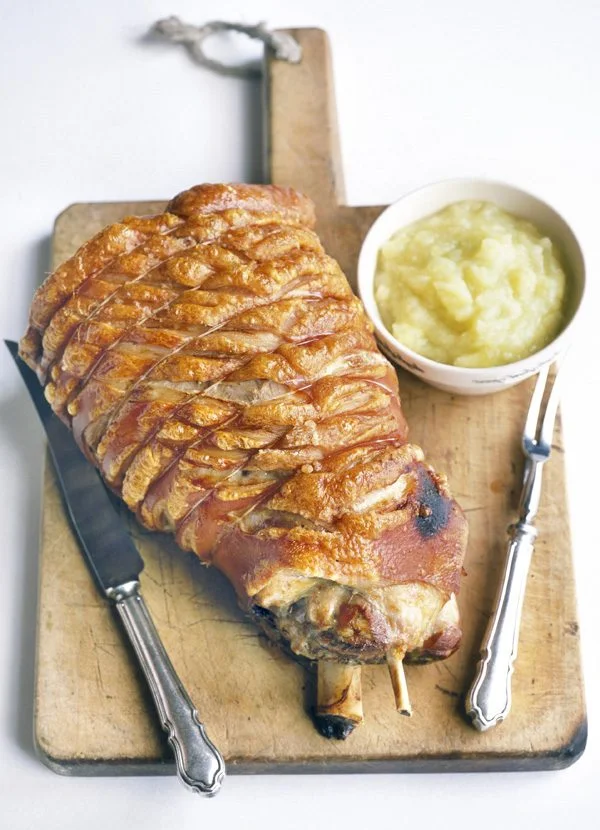
A slow-roasted leg of pork with crisp crackling, served with a simple Bramley apple sauce and gravy. The overnight drying and vinegar rub help prepare the skin for its final blast of high heat.
Ingredients
- 3–4 kgpiece of pork leg, with the skin well scored
- 200 mlwhite wine vinegar
- 2 tbsp (30 ml)vegetable oil
- 1lemon, juiced
- 2 tspsalt
- 4 largepotatoes, peeled and halved
- 1 tbspplain flour
- 500 mlchicken stock or water, for the gravy
- 4Bramley apples, peeled and chopped
- 1 large knobbutter
Instructions
- 1
Dry and season
Start the day before roasting. Scald the pork skin by pouring freshly boiled water over the joint in a clean sink, then drain it and leave it to dry for at least 10 minutes. Put the pork in a large dish. Mix the vinegar, 2 tbsp vegetable oil, lemon juice and salt, pour the mixture over the pork and rub it all over. Refrigerate uncovered overnight so the skin can dry.
- 2
Roast slowly
The next day, heat the oven to 150°C (130°C fan, gas mark 2). Arrange the potatoes in a roasting tin to make a trivet, then set the pork on top. Pour 120 ml (½ cup) water into the tin, cover the whole tin with foil and roast for 3 hours.
- 3
Crisp the crackling
Remove the foil and raise the oven temperature to 220°C (200°C fan, gas mark 6). Roast for a further hour, or until the skin has crackled properly.
- 4
Cook the apples
Put the apples, a large knob of butter and 100 ml water in a pan. Cover and cook gently for 15–20 minutes, until the apples have broken down into a sauce.
- 5
Rest the pork
Take the pork out of the oven and leave it to rest for 30 minutes. Remove the potatoes from the roasting tin and discard them, or keep them to eat later with a fried egg and chopped chilli.
- 6
Make the gravy
Set the roasting tin over a medium heat and spoon away most of the fat. Add 1 tbsp flour and stir well, scraping up the browned bits and mixing them with the fat. Gradually pour in the stock or water, raise the heat until the gravy simmers, and keep stirring. Simmer for 10 minutes, then season if needed. Serve the pork with the gravy and apple sauce.
What is roast leg of pork?
Roast pork is a familiar centrepiece for a British Sunday lunch, often served with gravy and a fruit sauce. This version pairs the savoury meat with Bramley apples, whose sharp flavour softens as they cook.
The method combines a long, covered roast with a final hour at high heat. Drying the skin overnight and finishing it uncovered are the key moves for crackling.
Nutrition and macros by portion
The nutrition label shows one serving as written: 763 calories, 74g protein, 26g carbs, 41g fat.
| Portion | Adjustment | kcal | Protein | Carbs | Fat |
|---|---|---|---|---|---|
| Lighter | Trim visible fat | 534 kcal | 52g | 18g | 29g |
| This serving | As written | 763 kcal | 74g | 26g | 41g |
| Hungry | Add extra potatoes | 1145 kcal | 111g | 39g | 62g |
Most of the protein comes from the pork, while the potatoes and apples provide much of the carbohydrate. The pork and added oil contribute most of the fat; serve with plenty of vegetables to round out the plate.
Prepare the skin
Scalding: Pouring boiling water over the scored skin is the first part of the preparation. Let the pork drain and dry before rubbing on the vinegar mixture.
Overnight drying: Leave the joint uncovered in the fridge so the surface can dry out. Keep it in a dish to catch any liquid from the seasoning.
Build the roasting base
Potato trivet: The halved potatoes support the pork in the tin, while the small amount of water provides moisture during the covered roasting stage. They are removed at the end rather than served as the finished side dish.
Covered roast: Foil keeps the joint covered for the first 3 hours at 150°C. Take care when removing it, as steam will escape.
Watch the crackling
High heat: After the slow roast, uncover the pork and raise the oven to 220°C. The recipe allows a further hour for the skin to crackle.
Doneness cue: Look for skin that has crackled properly before taking the joint out. If it needs longer, keep an eye on it so the crackling does not burn.
Make the apple sauce
Bramley apples: These cooking apples soften into a sauce as they simmer with butter and water. Keep the heat gentle and the pan covered for 15–20 minutes.
Texture: The apples should have collapsed by the end of cooking. Stir them to bring the sauce together before serving.
Finish the gravy
Roasting tin: Spoon away most of the fat, then stir the flour into the remaining fat and browned bits. Scrape the base of the tin as you mix.
Stock or water: Add the liquid gradually while stirring, then simmer the gravy for 10 minutes. Taste before serving and season only if it needs it.
Plan the timing
The preparation begins the night before, with the pork left uncovered in the fridge. On roasting day, allow 3 hours covered, 1 hour uncovered and 30 minutes of resting time.
The apple sauce can be cooked while the pork is roasting. Make the gravy after the joint comes out, using the roasting tin.
Serve it for Sunday lunch
Serve slices of pork with crackling, apple sauce and gravy. Add vegetables such as carrots, cabbage or green beans to make a fuller plate.
The potatoes used as a trivet can be discarded as directed, or saved for another meal with a fried egg and chopped chilli.
Recipe notes & tips
- Dry the pork skin thoroughly after scalding and before applying the vinegar mixture.
- Leave the joint uncovered in the fridge overnight as directed.
- Pour the water into the bottom of the roasting tin without washing the seasoning off the pork.
- Use a large enough roasting tin to hold the pork and potatoes comfortably.
- Stir the gravy continuously as you add the stock or water to help keep it smooth.
- Give the pork the full 30 minutes of resting time before carving.
Variations
- Season the apples: Add a pinch of ground cinnamon for a warmly spiced sauce.
- Use cider: Replace the gravy liquid with cider for a different flavour.
- Add herbs: Scatter rosemary or sage around the pork while it roasts.
- Serve with greens: Add steamed cabbage or green beans alongside the pork.
- Keep the potatoes: Save the trivet potatoes for a separate meal with a fried egg and chopped chilli.
Common mistakes to avoid
- Damp skin: Leave the pork uncovered in the fridge overnight so the surface has time to dry.
- Skipping the foil: Cover the tin for the first 3 hours to follow the slow-roasting method.
- Crowded tin: Choose a roasting tin large enough to fit the potatoes and pork without squeezing them in.
- Rushing the apples: Cook them gently, covered, for 15–20 minutes until they collapse.
- Lumpy gravy: Add the stock or water gradually and stir continuously.
- Carving too soon: Rest the pork for 30 minutes before slicing.
How to store
Refrigerate leftover pork, apple sauce and gravy in separate covered containers and use within 3 days. Reheat the pork and gravy until piping hot; the crackling may soften in storage, so reheat it separately in a hot oven if you want to crisp it again.
Frequently asked questions
Can I prepare the pork on the day?
The recipe starts the day before so the skin can dry uncovered overnight. For the best chance of crisp crackling, allow that drying time.
Can I use water instead of chicken stock for the gravy?
Yes. The recipe gives 500 ml of chicken stock or water as alternatives.
How long should the pork rest?
Rest it for 30 minutes after taking it out of the oven, before carving.
How do I know when the crackling is ready?
The recipe says to roast uncovered for a further hour, or until the skin has crackled properly. Keep an eye on it during this final high-heat stage.
Can I keep the potatoes from the roasting tin?
Yes. The recipe suggests discarding them or saving them to eat later with a fried egg and chopped chilli.
Can I make the apple sauce ahead?
Yes. Cook it until the apples have collapsed, then cool and refrigerate it in a covered container. Reheat gently before serving.
Cook it from the original
This recipe comes from olivemagazine.com. Their page has the author’s own photos, notes and tips — the best place to cook it from.
Open the recipe on olivemagazine.com