
German Cheesecake
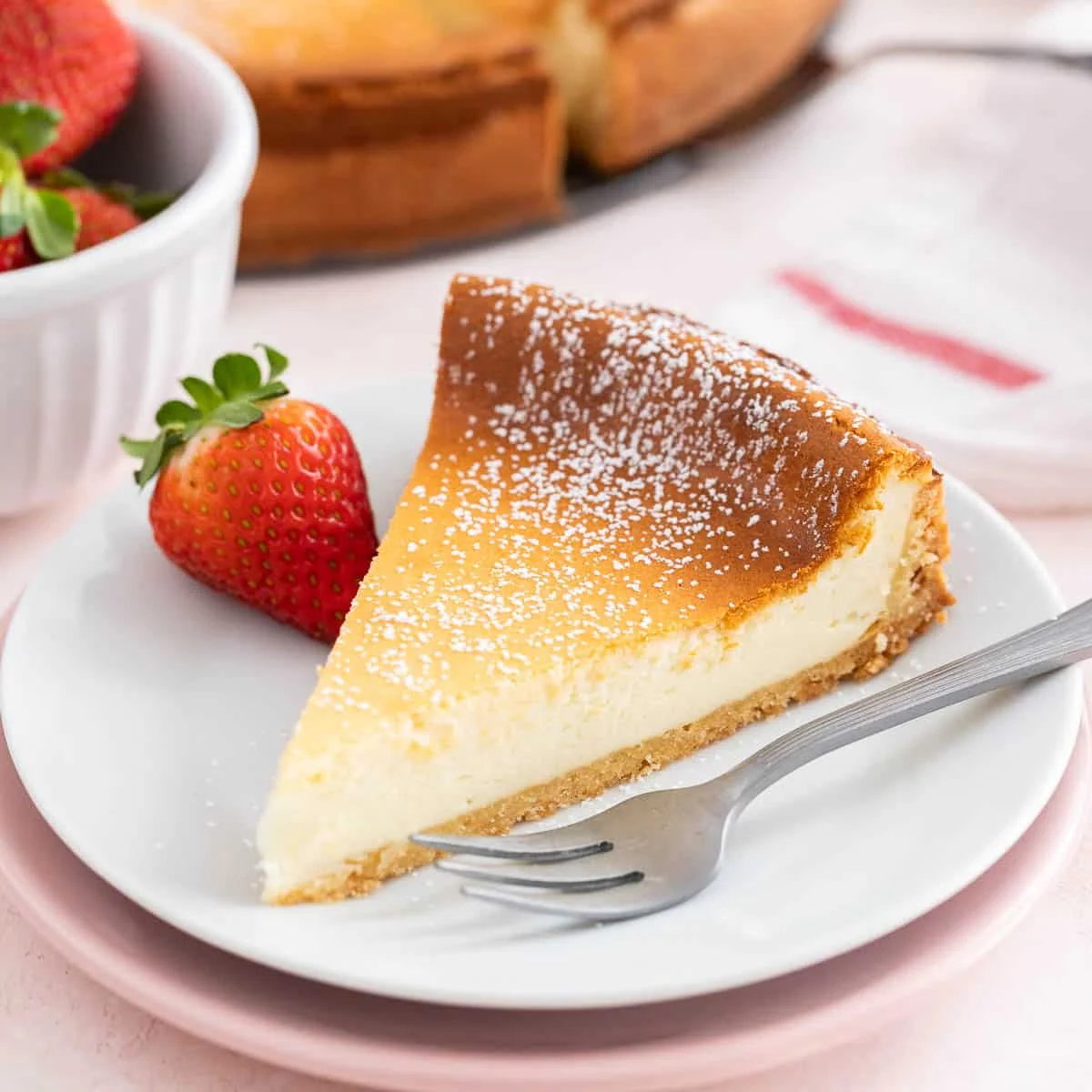
German Käsekuchen is a light, fluffy cheesecake made with a tender pastry crust and a quark-based filling. This version is baked in a springform pan and can use strained Greek yoghurt if quark is unavailable.
Ingredients
- 156 g (1 1/4 cups)plain flour
- 67 g (1/3 cup)sugar
- 1 tspvanilla sugar or vanilla extract
- 1/4 tspsalt
- 1 largeegg
- 70 g (5 tbsp), softenedunsalted butter
- 2 largeeggs, separated
- 180 ml (3/4 cup)whipping cream
- 500 g (17.6 oz)quark or strained Greek yoghurt
- 100 g (1/2 cup)sugar
- 15 ml (1 tbsp)lemon juice
- 32 g (1/4 cup)cornflour
Instructions
- 1
Preheat the oven
Heat the oven to 200°C (400°F). Grease the base of a 23 cm (9-inch) springform pan.
- 2
Bake the base
Put all the crust ingredients in a stand mixer fitted with the paddle attachment and mix on medium-high until a dough forms. Roll out two-thirds of the dough to cover the pan base, keeping the sides for later, and prick it several times with a fork. Bake the base with the springform sides attached for 10 minutes in the lower third of the oven.
- 3
Cool the crust
Remove the pan and leave it on a cooling rack. Reduce the oven temperature to 160°C (320°F).
- 4
Line the sides
Roll the remaining dough into a long sausage shape and fit it around the sides of the pan. Press it about 2.5 cm (1 inch) up the sides.
- 5
Mix the filling
Separate the eggs. In a clean bowl, whip the egg whites to soft peaks and set aside, then whip the cream. In a large bowl, stir the quark, sugar, lemon juice, cornflour and egg yolks until smooth. Fold in the whipped cream and egg whites.
- 6
Bake the cheesecake
Transfer the filling to the springform pan and smooth the top. Bake in the lower third of the oven for about 70 minutes.
- 7
Cool it gently
When the cheesecake is done, leave it in the switched-off oven for 15 minutes with the door slightly ajar. Carefully move it to a cooling rack and let it cool completely in the pan.
What is German cheesecake?
Käsekuchen is a German cheesecake traditionally made with quark, a fresh dairy product with a mild tang and a texture between yoghurt and soft cheese. It is usually baked in a pastry crust rather than on a biscuit base.
This version builds a simple dough crust on the base and sides of a springform pan. Whipped cream and beaten egg whites lighten the quark filling, giving it a soft, airy texture.
Nutrition and macros by portion
The nutrition label shows one serving as written: 249 calories, 8g protein, 29g carbs, 11g fat.
| Portion | Adjustment | kcal | Protein | Carbs | Fat |
|---|---|---|---|---|---|
| Lighter | Smaller cheesecake slice | 174 kcal | 6g | 20g | 8g |
| This serving | As written | 249 kcal | 8g | 29g | 11g |
| Hungry | Larger cheesecake slice | 374 kcal | 12g | 44g | 17g |
The flour and sugars provide most of the carbohydrates, while butter and whipping cream contribute much of the fat. Quark, eggs and cream supply protein; serve a slice with fresh fruit for a more balanced plate.
The pastry crust
Base first: bake the bottom crust before adding the sides and filling. Pricking the dough with a fork gives steam a way to escape as it bakes.
Side wall: reserve one-third of the dough, roll it into a long rope and press it around the pan. Keep the wall even and about 2.5 cm high so it supports the filling.
Choosing the filling ingredients
Quark: its gently tangy flavour is the classic choice for this style of cheesecake. If you use strained Greek yoghurt instead, make sure it is thick so the filling does not become too loose.
Cornflour: this helps the filling set as it bakes. Lemon juice adds a fresh note to balance the dairy and sugar.
Keeping the filling light
Egg whites: beat them in a clean bowl until they hold soft peaks, then fold them in gently so you keep as much air as possible.
Whipped cream: fold this in before the egg whites, using a broad, gentle motion. Stop once the mixture looks evenly combined rather than stirring it vigorously.
Baking and cooling cues
Bake: the cheesecake cooks at 160°C for about 70 minutes in the lower third of the oven. Follow the stated timing and avoid opening the oven unnecessarily while it bakes.
Cool: leaving it in the switched-off oven with the door slightly open for 15 minutes eases the transition to room temperature. Let it finish cooling in the pan on a rack before slicing.
How to serve it
Serve slices once the cheesecake has cooled completely; the filling will be easier to cut cleanly after it has had time to settle. A little extra lemon zest or fresh fruit can add a bright contrast.
For a simple afternoon tea or dessert, pair it with unsweetened tea or coffee. If serving fruit alongside, choose something tart to complement the creamy filling.
Recipe notes & tips
- Use softened butter so it incorporates evenly into the crust dough.
- Make sure the mixer bowl for the egg whites is clean and dry before whipping.
- If using Greek yoghurt, strain it until thick before measuring.
- Fold the cream and egg whites in gently to preserve the filling's airy texture.
- Let the cheesecake cool fully in the pan before removing the springform sides.
Variations
- Vanilla extract: use it instead of vanilla sugar for a more pronounced vanilla aroma.
- Citrus zest: add finely grated lemon zest for a brighter flavour.
- Berry topping: serve with fresh berries for a tart contrast.
- Quark substitute: use thick strained Greek yoghurt in place of quark.
- Fruit filling: fold a small amount of drained fruit into the filling for a fruity variation.
Common mistakes to avoid
- Runny yoghurt: strain it until thick before using so the filling keeps its structure.
- Overmixed egg whites: stop at soft peaks so they remain easy to fold into the filling.
- Deflated filling: fold in the whipped cream and egg whites gently rather than beating them in.
- Uneven crust wall: press the dough to a consistent height so the filling is supported around the edge.
- Warm slicing: wait until the cheesecake is completely cool before cutting for neater portions.
How to store
Cover and refrigerate the cooled cheesecake for up to 3 days. Serve chilled, or let a slice stand briefly at room temperature before eating; avoid reheating, which can soften the filling.
Frequently asked questions
Can I make this without quark?
Yes. The recipe allows for strained Greek yoghurt as a substitute. Use it thick, rather than straight from a runny tub.
Why are the eggs separated?
The whites are whipped to soft peaks and folded into the filling to make it lighter. The yolks are mixed with the quark and other filling ingredients.
Can I prepare the cheesecake ahead?
Yes. Bake it and let it cool completely in the pan, then cover and refrigerate it. Allow time for the full cooling process before serving.
How do I know when it has baked for long enough?
Use the recipe's guide of about 70 minutes at 160°C in the lower third of the oven. It then rests for 15 minutes in the switched-off oven with the door slightly ajar.
When should I remove the springform ring?
Wait until the cheesecake has cooled completely in the pan. Then release the ring carefully to help the sides keep their shape.
Cook it from the original
This recipe comes from platedcravings.com. Their page has the author’s own photos, notes and tips — the best place to cook it from.
Open the recipe on platedcravings.com