
Pork Tenderloin Medallions in Honey Mustard Cream Sauce
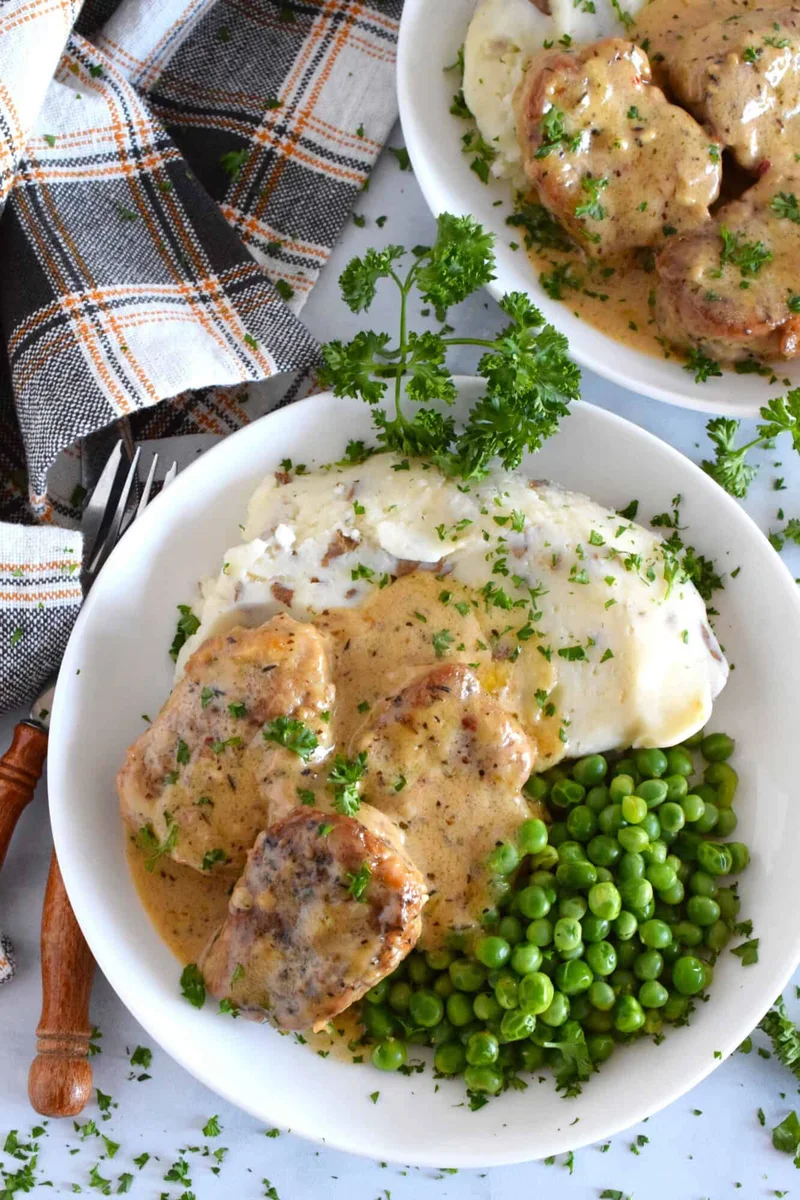
Pork tenderloin medallions are seared and finished in a creamy honey mustard sauce with garlic, herbs and a gentle chilli warmth. This North American-style skillet dinner brings together quick cooking and a rich sauce that suits a weeknight meal.
Ingredients
- 907 g (2 lb), cut into 2.5 cm (1-inch) slicespork tenderloin
- ½ teaspoonsalt
- ½ teaspoonground black pepper
- 30 g (¼ cup)plain flour
- 1 tablespoonolive oil
- 2 tablespoonsbutter
- 4 cloves, mincedgarlic
- 3 tablespoonshoney mustard
- ½ teaspoondried red pepper flakes
- 120 ml (½ cup)vegetable broth
- ½ teaspoondried oregano
- ½ teaspoondried basil
- ¼ teaspoondried thyme
- 473 ml (2 cups)double cream
- 2 tablespoons, finely choppedfresh parsley
Instructions
- 1
Measure the flour
Put the flour in a wide, shallow bowl.
- 2
Season the pork
Season both sides of the pork medallions with salt and pepper, then coat them in the flour. Set aside.
- 3
Heat the fats
Set a large frying pan over medium-high heat and melt the butter into the olive oil.
- 4
Add the medallions
Carefully arrange the pork in the pan, leaving about 2.5 cm (1 inch) between pieces.
- 5
Sear the pork
Cook the medallions for 3–4 minutes on each side, until golden and well seared. Work in batches if needed to avoid crowding the pan. Transfer the seared pork to a plate and set aside.
- 6
Build the sauce
Add the garlic, honey mustard, dried red pepper flakes, vegetable broth, oregano, basil and thyme to the pan. Stir with a wooden spoon, scraping up the browned bits, and cook for 2 minutes.
- 7
Add the cream
Pour the cream into the pan and stir to combine. Let it bubble and cook for 2 minutes.
- 8
Finish the pork
Return the pork to the pan and turn the pieces to coat them in the cream sauce. Cook for a further 6–8 minutes.
- 9
Check and serve
When the pork is fully cooked and has reached an internal temperature of at least 63°C (145°F), sprinkle over the chopped parsley. Turn off the heat and serve immediately.
What are pork tenderloin medallions?
Medallions are slices cut across a tenderloin, giving you compact pieces that cook quickly in a frying pan. This North American-style dish pairs them with a creamy honey mustard sauce, garlic and dried herbs.
The method works by browning the pork first, then using the same pan to make the sauce. The browned bits left behind add savoury depth, while the pork finishes cooking gently in the cream.
Nutrition and macros by portion
The nutrition label shows one serving as written: 409 calories, 26g protein, 8g carbs, 30g fat.
| Portion | Adjustment | kcal | Protein | Carbs | Fat |
|---|---|---|---|---|---|
| Lighter | Less cream, more vegetables | 286 kcal | 18g | 6g | 21g |
| This serving | As written | 409 kcal | 26g | 8g | 30g |
| Hungry | Larger pork portion | 614 kcal | 39g | 12g | 45g |
The pork supplies most of the protein, while the flour and honey mustard contribute some of the carbohydrates. The butter, olive oil and cream account for much of the fat. Serve with a generous portion of vegetables and a measured helping of potatoes, rice or pasta to balance the plate.
Choosing the pork and coating
Tenderloin: cut it into even 2.5 cm slices so the medallions cook at a similar pace. Season both sides before coating.
Flour: a light dredge helps the pork brown and gives the sauce a little body. Shake off any excess so the pieces do not become heavily coated.
Getting a good sear
Pan space: leave about 2.5 cm between pieces, as the recipe directs. If the pan is crowded, sear the pork in batches rather than fitting everything in at once.
Colour: wait for a golden crust before turning each medallion. Move the seared pieces to a plate while you prepare the sauce.
Making the honey mustard cream sauce
Pan base: scrape the browned pork bits into the broth as you stir in the garlic, mustard, chilli and herbs. This brings those savoury deposits into the sauce.
Cream: once added, stir it through and let it bubble for 2 minutes. Keep the sauce at a gentle bubble rather than letting it boil vigorously.
How to tell when the pork is done
Timing: after returning the medallions to the sauce, cook them for another 6–8 minutes. The exact time can vary with the thickness of the slices and the heat of the pan.
Temperature: check that the centre of the pork has reached at least 63°C (145°F), as specified in the method. Finish with parsley and serve straight away.
What to serve alongside
A simple choice: serve the medallions with potatoes, rice or pasta to make use of the creamy sauce. Add a green vegetable or salad for freshness and contrast.
For a lighter-feeling plate, pair a smaller portion of the rich sauce with plenty of vegetables. For a more substantial meal, choose a generous portion of a starchy side.
Recipe notes & tips
- Cut the tenderloin into evenly sized medallions so they cook at a similar rate.
- Use a wide pan or sear the pork in batches to leave room for browning.
- Scrape the browned bits into the sauce as you stir in the broth.
- Let the cream bubble for the full 2 minutes before returning the pork to the pan.
- Check the thickest medallion with a food thermometer and look for at least 63°C (145°F).
- Chop the parsley finely so it spreads evenly over the finished dish.
Variations
- Milder sauce: leave out the dried red pepper flakes for less heat.
- More mustard: add extra honey mustard for a stronger sweet-and-tangy flavour.
- Fresh herbs: use fresh oregano, basil or thyme in place of the dried herbs, adjusting to taste.
- Extra garlic: add another minced clove for a more pronounced garlic flavour.
- Vegetable side: serve with steamed green beans or broccoli to add colour and freshness.
Common mistakes to avoid
- Crowded pan: the pork may steam rather than sear; cook it in batches with about 2.5 cm between pieces.
- Uneven slices: medallions of different thickness finish at different times; cut them as evenly as possible.
- Skipping the pan scrape: browned bits add flavour to the sauce; loosen them with the wooden spoon as you stir.
- Vigorous boiling: the cream can reduce too quickly; keep it to a gentle bubble.
- Guessing doneness: check the centre of the pork with a thermometer and cook to at least 63°C (145°F).
How to store
Refrigerate leftovers in a covered container for up to 3 days. Reheat gently in a pan until hot throughout, stirring the sauce; avoid prolonged high heat, which can make the pork tough.
Frequently asked questions
Can I make this without honey mustard?
Honey mustard is a key flavour in the sauce. The recipe does not specify a substitute, so changing it will alter the balance of sweetness and tang.
Can I use pork loin instead of tenderloin?
Pork loin can be sliced into medallions, but it may cook differently from tenderloin. Keep the slices even and use the stated internal temperature as your doneness guide.
Why should I cook the pork in batches?
Space between the pieces helps them sear rather than steam. Batches are useful if all the medallions will not fit with about 2.5 cm between them.
How do I know the pork is cooked?
Check the centre of a medallion with a food thermometer. The recipe calls for at least 63°C (145°F).
Can I prepare the sauce ahead?
The method is designed to make the sauce in the same pan after searing the pork. For the best result, finish the pork in the sauce and serve immediately.
What goes well with the medallions?
Potatoes, rice or pasta work well with the creamy sauce. A green vegetable or salad makes a fresh side.
Cook it from the original
This recipe comes from lordbyronskitchen.com. Their page has the author’s own photos, notes and tips — the best place to cook it from.
Open the recipe on lordbyronskitchen.com