
Mom's Lemon Meringue Pie
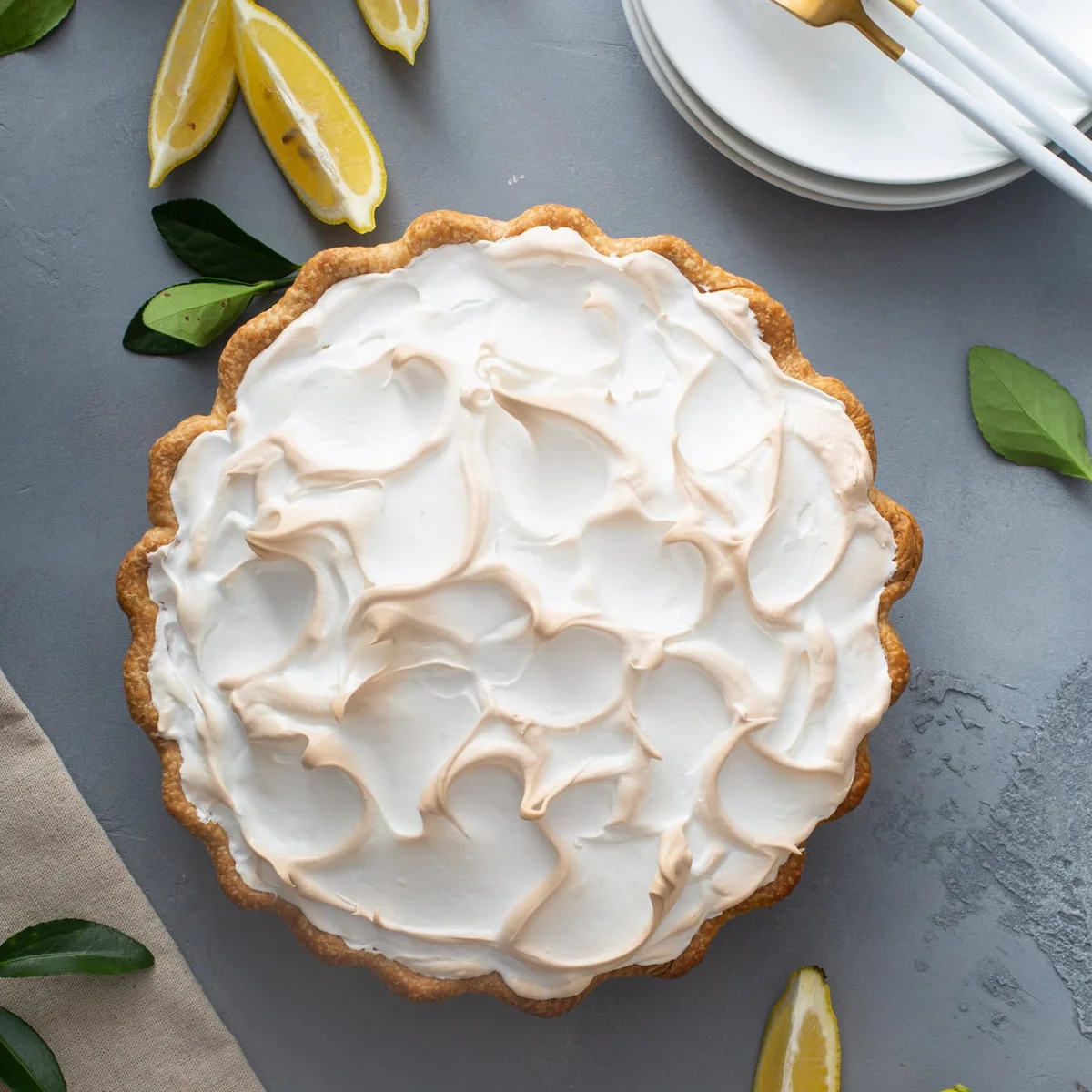
Mom’s lemon meringue pie combines a crisp, blind-baked pastry shell with a smooth lemon filling and a toasted meringue topping. It makes a bright, impressive dessert that can be served at room temperature or chilled.
Ingredients
- 1all-butter pie crust
- 1egg white
- 5 ml (1 teaspoon)water
- 160 ml (⅔ cup) EZ Gel, or 40 g (⅓ cup) cornflourEZ Gel or cornflour
- 2.5 ml (½ teaspoon)salt
- 200 g (1 cup)sugar
- 320 ml (1⅓ cups)hot water
- 2.5 teaspoonslemon zest (about 1½ lemons)
- 80 ml (⅓ cup)lemon juice (about 2 lemons; see note)
- 4egg yolks (reserve the whites for the meringue)
- 28 g (2 tablespoons)butter
- 6egg whites, at room temperature
- ⅛ teaspoonsalt
- ¼ teaspooncream of tartar
- 100 g (½ cup)sugar
Instructions
- 1
Chill the crust
Prepare the pie crust, place it in a 23 cm (9-inch) glass or ceramic pie dish and chill the dough for about 30 minutes.
- 2
Heat the oven
Preheat the oven to 220°C (425°F). For extra protection against a soggy base, put a baking tray in the oven as it heats; this is optional.
- 3
Prepare for baking
Prick the base and sides of the pastry about 8–10 times. Cover with baking parchment and fill the dish halfway to two-thirds full with pie weights or dried beans.
- 4
Bake the crust
Bake for 17–20 minutes, then remove the dish from the oven and take out the weights and parchment. Bake for another 5–10 minutes.
- 5
Seal the pastry
Whisk the egg white with 5 ml (1 teaspoon) water and brush it over the crust. Bake for 1–2 minutes more to seal it.
- 6
Mix dry ingredients
In a large saucepan or stockpot, combine the EZ Gel or cornflour with ½ teaspoon salt and 200 g (1 cup) sugar.
- 7
Add the water
Gradually blend in 320 ml (1⅓ cups) hot water until the mixture is smooth.
- 8
Thicken the filling
Cook over medium heat, stirring constantly, for 5–8 minutes, until the mixture is thick and clear. Remove it from the heat.
- 9
Add the lemon
Stir in the lemon juice and zest, then cook for 2 minutes.
- 10
Temper the yolks
Whisk a small amount of the hot filling into the egg yolks quickly, warming them gradually so they do not cook too fast.
- 11
Finish the filling
Return the yolk mixture to the pan and cook for 2 minutes, stirring constantly. Take the pan off the heat and stir in the butter.
- 12
Fill the pastry
Pour the filling straight into the baked pie shell.
- 13
Seal the edge
Spread a large spatulaful of meringue around the outer edge of the pie, pressing it against the pastry to seal the two together. Pile the rest of the meringue in the centre as a dome, then use the back of a small spoon to make swirls and peaks.
- 14
Toast the meringue
Bake at 190°C (375°F) for 10–12 minutes, until the meringue is golden brown in the valleys.
- 15
Beat the whites
Beat the egg whites with ⅛ teaspoon salt and the cream of tartar on high speed until soft peaks form.
- 16
Add the sugar
Gradually add 100 g (½ cup) sugar while continuing to beat.
- 17
Whip to stiff peaks
Continue beating until stiff peaks form.
- 18
Top the filling
Spread the meringue over the hot lemon filling, using the back of a spoon or a spatula to shape peaks.
- 19
Bake as directed
Bake as directed above, at 190°C (375°F) for 10–12 minutes, until the meringue is golden brown in the valleys.
- 20
Serve the pie
Serve at room temperature or chilled. Keep any leftovers in the fridge.
What is lemon meringue pie?
Lemon meringue pie is a dessert of pastry, sharp lemon custard and a light, sweet meringue topping. It belongs to a long tradition of lemon custard and meringue desserts, with versions that became popular in Britain and North America.
This version pairs a homemade all-butter crust with a filling thickened on the hob and meringue baked until lightly browned. Sealing the meringue to the pastry helps keep the topping in place.
Nutrition and macros by portion
The nutrition label shows one serving as written: 215 calories, 2g protein, 42g carbs, 5g fat.
| Portion | Adjustment | kcal | Protein | Carbs | Fat |
|---|---|---|---|---|---|
| Lighter | Smaller slice, fresh berries | 151 kcal | 1g | 29g | 4g |
| This serving | As written | 215 kcal | 2g | 42g | 5g |
| Hungry | Larger slice | 323 kcal | 3g | 63g | 8g |
The sugar and pastry provide most of the carbohydrates, while the butter and pastry contribute fat. Egg yolks and whites provide some protein, though this pie is mainly a dessert rather than a protein-rich dish. Pair a slice with fresh fruit or yoghurt for a more balanced plate.
The pastry base
Chilling: Resting the dough in the pie dish for about 30 minutes helps it hold its shape as it bakes.
Blind baking: The weights hold the pastry down while the base sets. Removing them for the second bake lets the bottom dry out and colour.
A smooth lemon filling
Thickener: EZ Gel or cornflour gives the filling its body. Blend the powder with the sugar and salt before adding water to reduce the chance of lumps.
Egg yolks: Whisking a little hot filling into the yolks first warms them gradually. Keep stirring as you return them to the pan so they thicken without scrambling.
Build the meringue
Soft peaks: Start with room-temperature egg whites, salt and cream of tartar, and beat until the whites hold soft peaks.
Stiff peaks: Add the sugar gradually, then keep beating until the meringue holds firm peaks. Spread it over the filling while the filling is hot, as the method directs.
Seal and shape the topping
Sealed edge: Press a ring of meringue against the pastry all around the rim. This joins the topping to the crust rather than leaving an open edge.
Peaks: A spoon’s back makes swirls and raised tips that brown attractively. Watch for golden colour in the valleys as the cue that the topping is ready.
Timing and doneness
The crust and filling are prepared in stages, so have the filling ready to pour as soon as it is finished. Add the meringue to the hot filling and bake it for 10–12 minutes at 190°C (375°F).
The filling should look thick and clear after its initial 5–8 minutes of cooking. The meringue is done when its valleys have turned golden brown.
How to serve it
Let the pie come to room temperature or chill it before serving, depending on whether you prefer a softer or firmer filling. Use a sharp knife to cut through the meringue cleanly.
Serve it on its own or alongside fresh berries. A small spoonful of unsweetened yoghurt can add a cool, tangy contrast.
Recipe notes & tips
- Use a glass or ceramic pie dish for chilling and baking the crust.
- Keep stirring the filling while it cooks so it thickens evenly.
- Add the hot filling to the yolks gradually, whisking as you do so.
- Spread the meringue right to the pastry edge to seal it in place.
- Check the meringue during its final bake, as browning can happen quickly.
Variations
- Extra lemon: Add more finely grated zest for a more pronounced citrus aroma.
- Lime twist: Replace some of the lemon juice with lime juice for a different citrus note.
- Berry serving: Add fresh raspberries or blueberries alongside each slice.
- Cornflour option: Use the listed ⅓ cup of cornflour in place of EZ Gel.
- Individual pies: Divide the pastry and filling among smaller pie dishes, adjusting baking times to suit.
Common mistakes to avoid
- Skipping the chill: The pastry may lose its shape; chill it in the dish for about 30 minutes.
- Too few weights: The base can puff up; fill the lined shell halfway to two-thirds full.
- Lumpy thickener: The filling may not turn smooth; blend the dry ingredients with water until smooth before cooking.
- Adding yolks too quickly: They can cook in the hot mixture; whisk a small amount of filling into them first.
- Unsealed meringue: The topping may separate from the edge; press a border of meringue against the pastry.
- Overbaking the topping: It can become too dark; check for golden valleys after 10 minutes.
How to store
Cover and store leftover pie in the fridge, as directed in the recipe. Serve chilled or let a slice stand until it is closer to room temperature; the recipe does not specify a storage duration or reheating method.
Frequently asked questions
Can I use cornflour instead of EZ Gel?
Yes. The ingredient list gives ⅓ cup of cornflour as the alternative to ⅔ cup EZ Gel.
Why do I need to temper the egg yolks?
Whisking a little hot filling into the yolks warms them gradually. This helps avoid cooking them too quickly when they go back into the pan.
Can I skip the baking tray under the pie dish?
Yes. The method says the tray is an optional extra precaution against a soggy crust.
How do I know when the meringue is ready?
Look for golden-brown colour in the valleys of the meringue after 10–12 minutes at 190°C (375°F).
Should I serve the pie warm or cold?
The recipe suggests serving it at room temperature or chilled.
How should I store leftovers?
Keep leftover pie in the fridge.
Cook it from the original
This recipe comes from ohsweetbasil.com. Their page has the author’s own photos, notes and tips — the best place to cook it from.
Open the recipe on ohsweetbasil.com