
Spicy cabbage
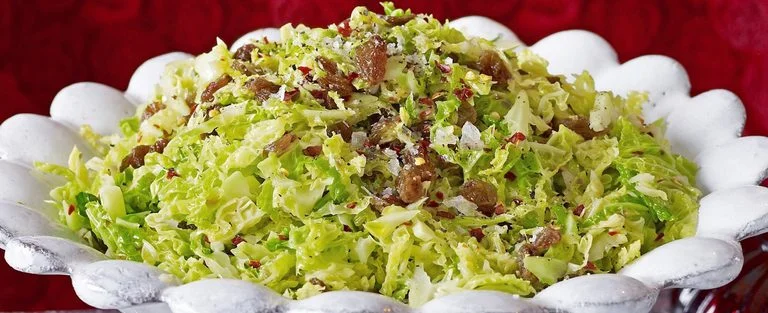
Savoy cabbage is quickly stir-fried with ginger, chilli, star anise and allspice, then finished with sweet-sharp vinegar and sherry. Serve it as a bold side dish or enjoy it on its own.
Ingredients
- 1 handfulgolden sultanas
- 1 smallSavoy cabbage
- 50 mlsesame oil
- 1 tbspolive oil
- 1 thumb-sized pieceroot ginger, finely shredded
- ½ tspchilli flakes
- 2star anise
- ¼ tspallspice
- 1 tbspicing sugar
- 100 mlwhite wine vinegar
- 50 mlsweet sherry
- to tastesalt
- to tasteblack pepper
Instructions
- 1
Soak the sultanas
About an hour before cooking, put the sultanas in a bowl and cover them with hot water.
- 2
Shred the cabbage
Trim off the stalk and any unwanted outer leaves, then halve the cabbage. Place each half cut-side down on a board and shred it as finely as possible. Rinse and drain in a colander.
- 3
Stir-fry and finish
Heat the sesame oil and 1 tbsp olive oil in a large pan until very hot, leaving enough room for the cabbage to move freely. Add the cabbage, ginger, chilli, star anise, allspice and drained sultanas. Stir vigorously for about 5–6 minutes, allowing the cabbage to colour. Sprinkle in the icing sugar and keep stirring. Once it begins to caramelise, add the vinegar and sherry. Continue cooking until the liquid has evaporated, then season generously with salt and black pepper.
What is spicy cabbage?
This is a quick, boldly seasoned cabbage dish rather than a long-simmered braise. Savoy cabbage is tossed over high heat with warm spices, chilli and ginger, then glazed with vinegar and sherry.
Its precise origin is not specified, but the mix of sweet, sour and aromatic flavours gives it a distinctive character. The fast cooking keeps the cabbage lively, while sultanas add little bursts of sweetness.
Nutrition and macros by portion
The nutrition label shows one serving as written: 221 calories, 4g protein, 17g carbs, 15g fat.
| Portion | Adjustment | kcal | Protein | Carbs | Fat |
|---|---|---|---|---|---|
| Lighter | Use less sesame oil | 155 kcal | 3g | 12g | 11g |
| This serving | As written | 221 kcal | 4g | 17g | 15g |
| Hungry | Serve a larger portion | 332 kcal | 6g | 26g | 23g |
The cabbage and sultanas provide most of the carbohydrate, while sesame oil and olive oil account for much of the fat. The dish contains relatively little protein, so balance the plate with a protein-rich accompaniment such as beans or lentils.
The cabbage and aromatics
Fine shreds: slice the cabbage as finely as you can so it cooks quickly and can take on the seasoning. Rinsing and draining it in a colander leaves it lightly damp, as the method intends.
Fresh ginger: finely shredded ginger spreads through the pan and brings a fresh, peppery warmth. Chilli flakes add heat, so keep their quantity as written for the intended balance.
Build the spice balance
Whole spices: star anise gives the dish a fragrant, liquorice-like note, while allspice adds warmth. They cook alongside the cabbage, infusing the oil as everything is stirred.
Sweet notes: sultanas and icing sugar soften the sharpness of the vinegar. Drain the soaked sultanas before adding them so they do not bring excess soaking water into the pan.
Get the pan properly hot
Hot oil: heat both oils until really hot before adding the cabbage. A large pan gives the shreds space to move and helps them colour rather than sit in a crowded heap.
Active stirring: keep the cabbage moving vigorously for about 5–6 minutes. Once the sugar starts to caramelise, add the vinegar and sherry and cook until the liquid has evaporated.
Look for colour and bite
The cabbage should soften while retaining some texture, with a little colour from contact with the hot pan. Stirring regularly helps it cook evenly without leaving the shreds to scorch.
The finishing liquid should reduce away rather than leave the cabbage sitting in a pool. Taste at the end and season with the generous salt and black pepper specified in the method.
Serve it with
This cabbage can stand alone as a vegetable dish, or sit beside a simple main where its sweet-sour spice provides contrast. It pairs particularly well with plain grains or potatoes that can soak up the flavours.
For a fuller plate, add a source of protein alongside it, such as beans or a suitable main of your choice. Serve soon after cooking, while the cabbage still has a lively texture.
Recipe notes & tips
- Soak the sultanas about an hour ahead, as directed, so they are ready when you start cooking.
- Shred the cabbage finely and evenly to help it cook at the same pace.
- Use a large pan so the cabbage has room to move while you stir.
- Have the vinegar and sherry ready before you start frying, as the pan will be very hot.
- Drain the sultanas well before adding them to the pan.
- Remove the star anise before serving if you prefer not to have whole spices on the plate.
Variations
- Adjust the heat: Use fewer chilli flakes for a milder result.
- Add more ginger: Increase the finely shredded ginger for a sharper, warmer flavour.
- Try another cabbage: Use another firm cabbage variety, shredding it finely and checking the texture as it cooks.
- Make it more substantial: Serve with cooked beans or lentils for a heartier vegetable meal.
- Add a finishing crunch: Scatter toasted seeds over the cooked cabbage just before serving.
Common mistakes to avoid
- Crowding the pan: The cabbage can steam instead of colouring; use a large pan that lets you stir it freely.
- Starting with cool oil: The cabbage will not get the intended quick, lively fry; heat the oils until really hot first.
- Leaving the cabbage in thick wedges: It will cook less evenly; shred it as finely as possible.
- Adding the soaking water: It can leave excess liquid in the pan; drain the sultanas before cooking.
- Stopping before the liquid evaporates: The finish will be watery; keep cooking until the vinegar and sherry have evaporated.
- Walking away while frying: The high heat needs attention; stir vigorously to help the cabbage colour without scorching.
How to store
Cool leftovers promptly and store them in an airtight container in the fridge for up to 3 days. Reheat in a pan over a medium heat until piping hot, stirring regularly; the cabbage may be softer after reheating.
Frequently asked questions
Do I need to soak the sultanas for a full hour?
The method calls for soaking them in hot water about an hour before preparing the cabbage. This makes them plumper; drain them before adding them to the pan.
Can I make this without star anise?
Star anise contributes a distinctive aromatic flavour. You can leave it out, but the finished dish will taste different.
How do I know when the cabbage is cooked?
After about 5–6 minutes of vigorous stirring, it should be softened and starting to colour while retaining some bite. Cook the final stage until the vinegar and sherry have evaporated.
Can I prepare the cabbage ahead?
You can shred and rinse the cabbage ahead, then drain it well and keep it chilled until cooking. For the best texture, stir-fry it shortly before serving.
Is this dish suitable as a main?
It can be served on its own as a vegetable dish, as suggested, but it has little protein. Add beans or lentils alongside it to make the meal more substantial.
Cook it from the original
This recipe comes from olivemagazine.com. Their page has the author’s own photos, notes and tips — the best place to cook it from.
Open the recipe on olivemagazine.com