
Lechon Carajay Recipe
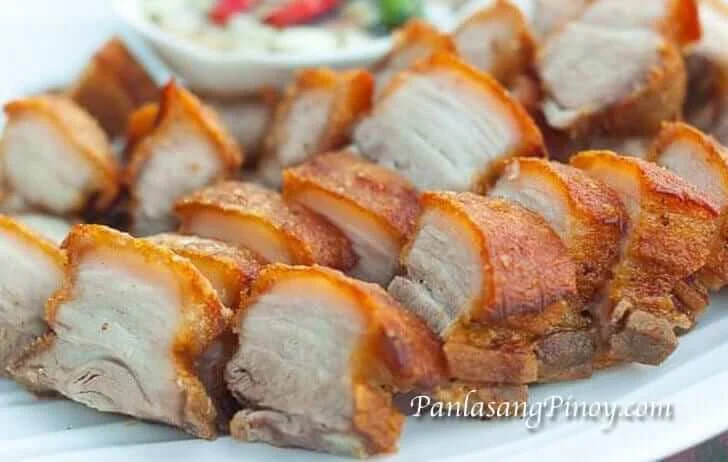
Lechon Carajay is Filipino pork belly that is simmered with aromatics, seasoned, then deep-fried until its skin is crisp. The two-stage cooking builds flavour and makes it a festive, shareable centrepiece.
Ingredients
- 907 g (2 lb)pork belly
- 6dried bay leaves
- 6 cloves, peeledgarlic
- 1 medium, slicedred onion
- 6 teaspoonssalt
- ½ tablespoongarlic powder
- ½ teaspoonground black pepper
- 1.18–1.42 litres (5–6 cups)water
- 946 ml–1.18 litres (4–5 cups)cooking oil, for deep-frying
Instructions
- 1
Boil the water
Bring the water to a boil in a cooking pot.
- 2
Add the aromatics
Add the garlic, onion, dried bay leaves and 3 teaspoons of salt. Boil for 3 minutes.
- 3
Simmer the pork
Add the pork belly, cover the pot and boil over medium heat for 40 minutes.
- 4
Cool the belly
Lift the pork belly out of the pot and set it on a clean plate. Leave it to cool for a few minutes.
- 5
Season and chill
Rub the remaining salt over the belly with the garlic powder and ground black pepper. Cover and refrigerate for at least 2 hours so the seasoning can flavour the meat.
- 6
Deep-fry the pork
Heat the cooking oil in a large pot or deep fryer to around 190°C (375°F). Fry the pork belly in batches until golden brown with crisp skin, taking extra care around the hot oil.
- 7
Drain the excess
Remove the belly from the fryer and let excess oil drip away.
- 8
Slice and serve
Cut the deep-fried lechon carajay into bite-sized pieces and arrange on a serving plate. Serve with a dip made from chopped onion, soy sauce, vinegar and chilli peppers.
- 9
Enjoy together
Serve and share.
What is lechon carajay?
Lechon is associated with Filipino celebrations and roast pork, while carajay refers to a wok-like cooking vessel. This version takes a different route: pork belly is simmered, seasoned and deep-fried rather than roasted whole.
Simmering with garlic, onion and bay leaves seasons the meat before frying. The final hot-oil cook gives the outside its defining crispness.
Nutrition and macros by portion
The nutrition label shows one serving as written: 900 calories, 18g protein, 2g carbs, 92g fat.
| Portion | Adjustment | kcal | Protein | Carbs | Fat |
|---|---|---|---|---|---|
| Lighter | Smaller pork portion | 630 kcal | 13g | 1g | 64g |
| This serving | As written | 900 kcal | 18g | 2g | 92g |
| Hungry | Add rice and vegetables | 1350 kcal | 27g | 3g | 138g |
Pork belly provides most of the energy, fat and protein, while the small amount of garlic and onion contributes most of the carbohydrates. The oil used for deep-frying can add further fat, and the salt is the main source of sodium. Serve a moderate portion with rice and plenty of vegetables to balance the plate.
Why simmer the pork first?
Gentle boiling cooks the thick belly before it goes into the fryer and gives the aromatics time to flavour it. Keep the pot covered and maintain a steady medium boil for the stated 40 minutes.
Seasoning and chilling
Salt, garlic powder and black pepper are rubbed over the cooked belly after it has cooled briefly. Refrigerating it for at least 2 hours gives the seasoning time to settle into the meat.
Dry the surface before frying if it is visibly wet; moisture meeting hot oil can cause splattering.
Frying for crisp skin
Oil temperature matters: the recipe specifies around 190°C (375°F). Fry in batches so the pieces have room and the oil temperature is less likely to drop sharply.
Look for golden-brown colouring and crisp skin as the cues to remove each batch. Handle the pork carefully, as moisture and hot oil can splatter.
Serving the pork
Cut the belly into bite-sized pieces after frying, then serve while the skin is crisp. The recipe suggests a dip of chopped onion, soy sauce, vinegar and chilli peppers.
Rice and a fresh, sharp side such as sliced cucumber or pickled vegetables make useful accompaniments to the rich pork.
Planning the timing
The recipe lists a total time of 138 minutes, but the pork needs at least 2 hours of refrigeration after cooking and seasoning, before frying. Allow for that chilling period when planning; the frying stage also takes longer if working in several batches.
Recipe notes & tips
- Use a pot large enough to keep the pork belly covered by the simmering water.
- Let the pork cool before rubbing on the seasoning so it is easier to handle.
- Pat any surface moisture away before placing the pork in hot oil.
- Check the oil temperature with a thermometer if you have one.
- Fry in batches rather than crowding the pot.
- Keep a close eye on the pork as it browns, since the skin can crisp quickly.
Variations
- Adjust the heat: serve sliced chilli on the side for a spicier dip.
- Change the aromatics: add more garlic to the dip for a stronger savoury flavour.
- Serve with pickles: add pickled vegetables for a sharp contrast to the pork.
- Make smaller pieces: cut the belly into chunks before frying, keeping a close watch as they cook.
- Add a fresh side: serve with cucumber or a crisp salad alongside the rice.
Common mistakes to avoid
- Skipping the simmer: the pork may not cook through evenly before frying; follow the 40-minute covered boil.
- Frying wet pork: surface moisture can make hot oil splatter; dry the belly carefully first.
- Crowding the pot: the oil temperature can fall and the pork may brown less evenly; fry in batches.
- Using oil that is not hot enough: the skin may not crisp as intended; aim for around 190°C (375°F).
- Leaving the pork unattended: the outside can darken quickly; watch for a golden-brown colour and crisp skin.
- Cutting it too soon: hot fat and juices can make slicing awkward; let excess oil drain before cutting.
How to store
Refrigerate leftovers in a covered container for up to 3 days. Reheat in an oven or air fryer until hot to help the skin regain some crispness; microwaving softens it. Keep any dipping sauce separate and follow the storage guidance for its ingredients.
Frequently asked questions
Can I prepare the pork ahead?
Yes. Simmer and season it, then cover and refrigerate for at least 2 hours as directed. Fry it shortly before serving for the crispest skin.
How can I tell when the pork is done frying?
The recipe's visual cues are golden-brown colour and crisp skin. Fry in batches and check that the centre is hot before serving.
Can I use less oil?
Deep-frying requires enough oil to cook the pork safely and evenly. A smaller, suitably deep pot may let you use less oil, but do not fill it too high.
What if I do not have a deep fryer?
Use a large, heavy cooking pot, as the method allows. Keep it stable and avoid overfilling it with oil.
What should I serve with lechon carajay?
Rice is a straightforward accompaniment. A sharp dip and fresh or pickled vegetables help balance the rich pork.
Why does the method mention a dip that is not in the ingredient list?
The serving step suggests chopped onion, soy sauce, vinegar and chilli peppers, but gives no quantities for them. Prepare those to taste if you want the suggested dip.
Cook it from the original
This recipe comes from panlasangpinoy.com. Their page has the author’s own photos, notes and tips — the best place to cook it from.
Open the recipe on panlasangpinoy.com