
Gluten-Free Orange Chicken
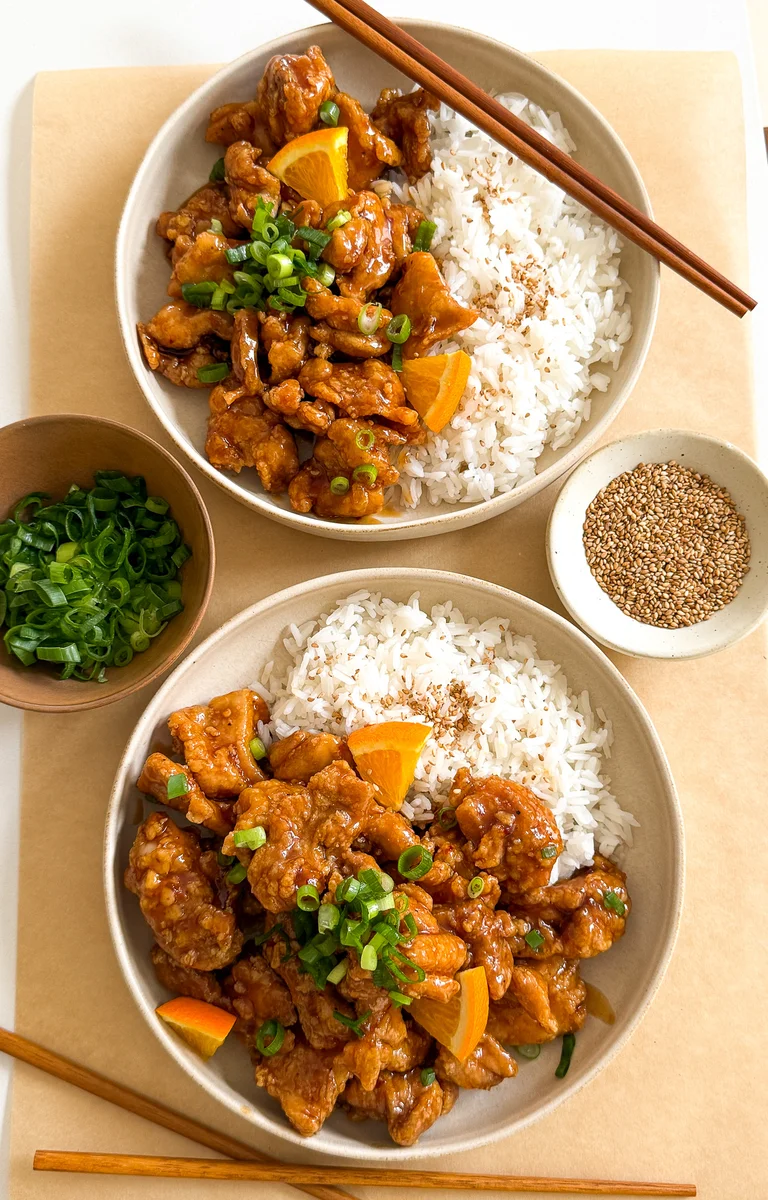
Crispy, bite-sized chicken thighs are coated in a sweet, tangy orange glaze with a little heat. This homemade version uses gluten-free flour and cornstarch for a crunchy coating, making it a satisfying take on takeaway-style orange chicken.
Ingredients
- 680 g (1 1/2 pounds)boneless, skinless chicken thighs
- 120 g (1/2 cup)gluten-free flour
- 120 g (1 cup)cornstarch
- 1 teaspoonsalt
- 1/2 teaspoonblack pepper
- 2 largeeggs
- 1/2 teaspoonsalt
- 1/2 teaspoonblack pepper
- 60 ml (1/4 cup)coconut aminos
- 80 ml (1/3 cup)orange juice
- 80 ml (1/3 cup)rice vinegar
- 200 g (1 cup)brown sugar
- 1/2 tablespoonsesame oil
- 2 teaspoonsminced garlic
- 1 teaspoonginger paste
- 1 teaspoonred pepper flakes
- 60 ml (1/4 cup) water + 24 g (3 tablespoons) cornstarchwater and cornstarch
- For fryingvegetable oil
- To taste, optionalsliced green onions and sesame seeds
Instructions
- 1
Make the glaze
Put the coconut aminos, orange juice, rice vinegar, brown sugar, sesame oil, garlic, ginger paste and red pepper flakes in a saucepan. Bring to a gentle boil over medium heat, then turn the heat down to low.
- 2
Thicken the sauce
Whisk the 60 ml water and 3 tablespoons cornstarch together in a small bowl until smooth. Slowly pour the mixture into the bubbling sauce, stirring as you go.
- 3
Simmer until glossy
Simmer for a few minutes, until the glaze is thick and shiny and coats the back of a spoon. Turn off the heat and set it aside while you fry the chicken.
- 4
Cut the chicken
Cut the boneless, skinless chicken thighs into bite-sized pieces.
- 5
Mix the coating
Add the gluten-free flour, 1 cup cornstarch, 1 teaspoon salt and 1/2 teaspoon black pepper to a large resealable bag. Seal it and shake to combine.
- 6
Dip and coat
Beat the eggs in a bowl and season with the remaining 1/2 teaspoon salt and 1/2 teaspoon black pepper. Dip the chicken pieces in the egg, then transfer them straight to the bag.
- 7
Shake to coat
Seal the bag and shake it until all the chicken pieces are thoroughly coated.
- 8
Fry in batches
Heat vegetable oil in a pot over medium heat to 177°C (350°F). Fry the chicken in batches without overcrowding the pot, cooking each batch for about 5 to 6 minutes until golden, crisp and cooked through. Transfer the pieces to a wire rack or a plate lined with kitchen paper to drain.
- 9
Toss in glaze
When all the chicken is cooked, toss it in the warm orange glaze until every piece is coated and glossy.
- 10
Garnish and serve
Scatter over sliced green onions and sesame seeds, if using. Serve while the chicken is hot and crisp.
What is orange chicken?
Orange chicken is a popular Chinese-American takeaway dish, usually made with crisp-fried chicken tossed in a sweet, tangy citrus sauce. This version takes inspiration from the familiar takeaway style while using gluten-free flour and cornstarch in the coating.
The combination of orange juice, rice vinegar and brown sugar gives the glaze its bright, sweet-sour character. Garlic, ginger and red pepper flakes add savoury depth and a gentle kick.
Nutrition and macros by portion
The nutrition label shows one serving as written: 850 calories, 34g protein, 111g carbs, 29g fat.
| Portion | Adjustment | kcal | Protein | Carbs | Fat |
|---|---|---|---|---|---|
| Lighter | Use less glaze | 595 kcal | 24g | 78g | 20g |
| This serving | As written | 850 kcal | 34g | 111g | 29g |
| Hungry | Add extra rice | 1275 kcal | 51g | 167g | 44g |
The chicken supplies most of the protein, while the flour, cornstarch and brown sugar contribute carbohydrates. The frying oil, sesame oil, eggs and chicken thighs contribute fat; serve with vegetables and a moderate portion of rice for a more balanced plate.
Why this coating works
Flour and cornstarch: the gluten-free flour forms the base of the coating, while cornstarch helps create a crisp exterior. Shake the pieces well so the mixture reaches all sides.
Egg: dipping the chicken in beaten egg helps the dry coating cling to each piece. Let excess egg drip off briefly before adding the chicken to the bag.
Getting the glaze right
Cornstarch slurry: mix the water and cornstarch until completely smooth before adding it to the sauce. Pour it in gradually while stirring so it thickens evenly rather than forming lumps.
Doneness cue: the glaze is ready when it looks glossy and coats the back of a spoon. It will cling to the chicken more readily once tossed while warm.
Frying for crisp chicken
Oil temperature: bring the oil to 177°C before frying. If it is too cool, the coating can turn greasy; if it is too hot, the outside may brown before the chicken is cooked through.
Batch size: fry in batches with room around each piece. Crowding the pot lowers the oil temperature and makes it harder for the coating to crisp.
Keeping the coating crisp
Drain the fried pieces on a wire rack or kitchen paper before glazing. Toss them with the sauce just before serving, since the glaze softens the crunchy coating as it sits.
Make sure the glaze is warm rather than boiling when you coat the chicken. A gentle toss is enough to cover the pieces without knocking off their crust.
What to serve with it
Serve the chicken with steamed rice to soak up the sweet-tangy sauce. Plain rice keeps the plate simple, while brown rice adds a nuttier flavour.
For a fresh contrast, add steamed or stir-fried vegetables such as broccoli or green beans. Check that any sauces or seasonings you use are gluten-free if needed.
Recipe notes & tips
- Cut the thighs into evenly sized pieces so they cook at a similar rate.
- Use a thermometer to check that the frying oil reaches 177°C.
- Work in batches and let the oil return to temperature between them.
- Whisk the cornstarch slurry again if it has been standing before you pour it into the sauce.
- Keep the glaze warm while the chicken fries, then toss everything together just before serving.
- Use a clean wire rack to drain the chicken if you want air to circulate around the coating.
Variations
- Adjust the heat: reduce the red pepper flakes for a milder glaze or add more for extra warmth.
- Add orange zest: stir a little finely grated zest into the finished glaze for a more pronounced citrus aroma.
- Serve with vegetables: add steamed broccoli or green beans alongside the chicken.
- Try chicken breast: cut it into even bite-sized pieces and watch closely so it does not overcook.
- Finish with extra sesame: scatter on more sesame seeds just before serving for added crunch.
Common mistakes to avoid
- Lumpy glaze: whisk the cornstarch and water until smooth before adding the slurry to the sauce.
- Soggy coating: avoid crowding the pot and glaze the chicken only just before serving.
- Uneven cooking: cut the chicken into similarly sized pieces.
- Greasy chicken: allow the oil to reach 177°C and return to temperature between batches.
- Coating that falls off: dip the pieces in egg first, then shake them thoroughly in the dry mixture.
- Overcooked chicken: begin checking the pieces near the end of the 5 to 6 minute frying time.
How to store
Store leftover chicken in an airtight container in the fridge for up to 3 days. Reheat in an oven or air fryer until hot; the coating may be softer after storage, especially once mixed with the glaze.
Frequently asked questions
Is this orange chicken gluten-free?
The recipe uses gluten-free flour and cornstarch, as well as coconut aminos. Check the packaging of these ingredients and any optional garnishes to ensure they are labelled gluten-free.
Can I make the glaze ahead?
Yes. Make it ahead and refrigerate it in a covered container, then warm it gently before tossing it with the freshly fried chicken.
How do I know the chicken is cooked through?
The pieces should be golden and cooked through after about 5 to 6 minutes, depending on their size. For a precise check, use a food thermometer in the thickest piece.
Can I bake the chicken instead of frying it?
This method is designed for frying, which gives the coating its characteristic crispness. Baking will produce a different texture, so follow a tested baked version if you want to use the oven.
Why did my glaze turn too thick?
It may have simmered for too long after adding the cornstarch slurry. Stir in a small splash of water while warming it gently until it reaches a pourable consistency.
Can I use another cut of chicken?
Boneless, skinless chicken thighs are the specified cut and stay tender during frying. Chicken breast can also be used, but cut it evenly and take care not to overcook it.
Cook it from the original
This recipe comes from moribyan.com. Their page has the author’s own photos, notes and tips — the best place to cook it from.
Open the recipe on moribyan.com