
Old Fashioned Soft Boiled Egg Breakfast
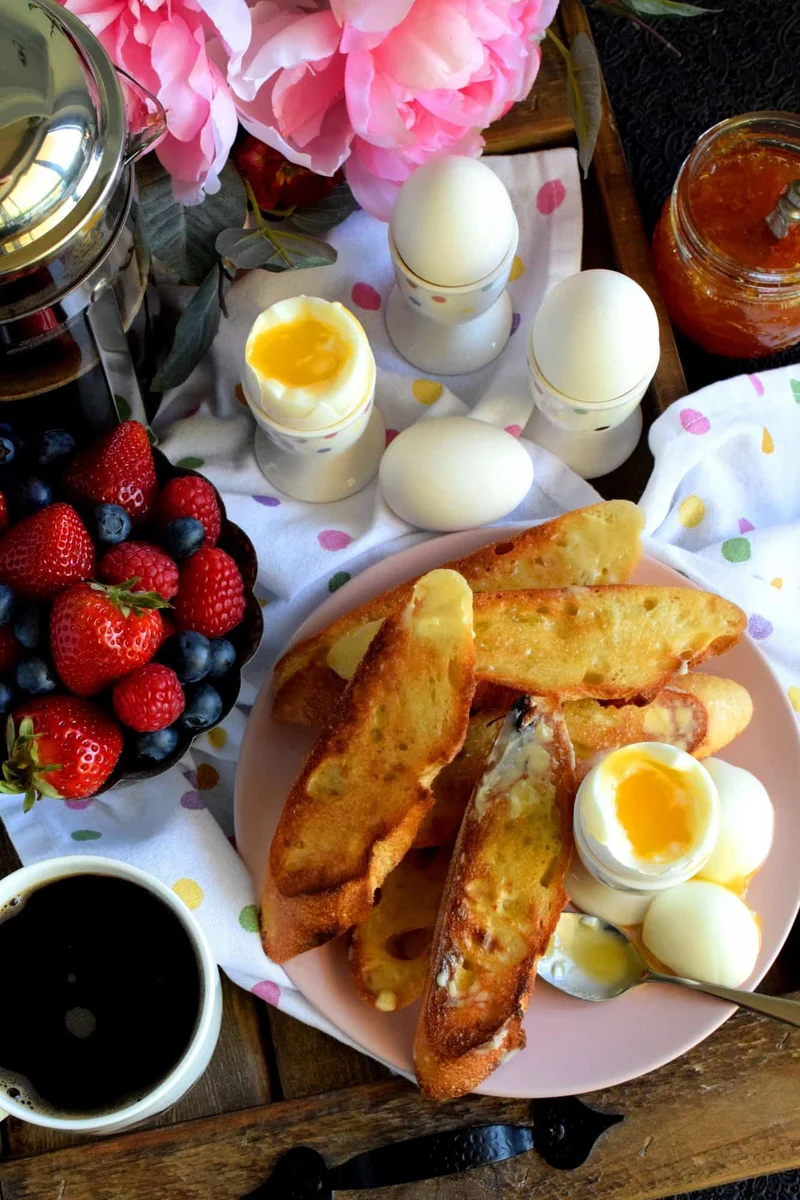
A simple breakfast of cold-start eggs cooked briefly in boiling water, then cooled so they’re easier to handle. Serve them in egg cups with toast or other favourite sides for a comforting start to a chilly morning.
Ingredients
- 4large cold eggs
- 475 ml (2 cups)water
Instructions
- 1
Choose a saucepan
Use a small saucepan that can hold all four eggs in a single layer.
- 2
Measure the water
Add enough water so that, with the eggs in the pan, it reaches 2.5–3.8 cm (1–1.5 inches).
- 3
Bring to boil
Cover the saucepan and bring the water to a boil over a high heat.
- 4
Add the eggs
When the water is boiling, take the eggs from the fridge and carefully lower them into the pan.
- 5
Cook for five
Put the lid back on and let the eggs boil for exactly 5 minutes.
- 6
Cool the eggs
Lift the eggs out of the boiling water and place them straight into a bowl of ice-cold water for 1 minute.
- 7
Serve in cups
Set each egg in an egg cup and serve with sides of your choice.
What are soft-boiled eggs?
Soft-boiled eggs are cooked in their shells until the whites set while the yolks remain soft. They’re a familiar breakfast across many food traditions, and this version keeps the method straightforward: cook cold eggs in boiling water, then cool them briefly.
The short cooking time and ice-water finish make this a useful option when you want a warm, simple breakfast without much preparation.
Nutrition and macros by portion
The nutrition label shows one serving as written: 81 calories, 7g protein, 0g carbs, 5g fat.
| Portion | Adjustment | kcal | Protein | Carbs | Fat |
|---|---|---|---|---|---|
| Lighter | Serve one egg | 57 kcal | 5g | 0g | 4g |
| This serving | As written | 81 kcal | 7g | 0g | 5g |
| Hungry | Add another egg | 122 kcal | 11g | 0g | 8g |
The eggs provide most of the protein and fat in each serving, while the recipe contains no carbohydrate according to the supplied nutrition information. Add toast or fruit for carbohydrates, or serve with vegetables for a more varied plate.
Choosing the pan and water
Single layer: A small saucepan helps keep the eggs together and makes it easier to use just enough water.
Water depth: The recipe calls for 2.5–3.8 cm (1–1.5 inches) of water once the eggs are in the pan. Check the depth before heating so the eggs fit as intended.
Adding eggs carefully
Gentle handling: Lower the cold eggs into the boiling water carefully to reduce the chance of cracking.
Timing: Start the 5-minute count after adding the eggs and replacing the lid, as directed. Keep the boil going during the cooking time.
Getting the texture right
Set whites: At 5 minutes, the whites should be cooked while the yolks remain soft, though the exact result can vary with egg size and starting temperature.
Quick cooling: The 1-minute ice-water bath cools the shells after cooking and makes the eggs easier to handle for serving.
Serving the eggs
Egg cups: Serve each egg upright so the shell can be opened at the table. A small spoon is handy for eating the soft centre.
Breakfast sides: Toast is a natural accompaniment for dipping, while fruit or cooked vegetables can round out the plate.
Keeping the routine simple
Prepare the bowl of ice-cold water while the saucepan heats, so it is ready as soon as the eggs finish cooking.
This recipe makes four eggs in about 10 minutes, making it easy to serve everyone at once when the pan is large enough to hold them in one layer.
Recipe notes & tips
- Use a saucepan that holds all four eggs in a single layer.
- Measure the water depth with the eggs in the pan before heating.
- Have the ice-water bowl ready before the eggs finish cooking.
- Lower the eggs into the boiling water gently.
- Follow the stated 5-minute cooking time for the intended soft texture.
Variations
- Add toast: Serve with soldiers or strips of toast for dipping.
- Add herbs: Finish the opened egg with a little chopped chive or parsley.
- Add pepper: Season the egg at the table with freshly ground black pepper.
- Serve with greens: Add a side of cooked spinach or other vegetables.
- Make it heartier: Pair the eggs with a slice of toast and fruit.
Common mistakes to avoid
- Crowded pan: The eggs may not sit in a single layer; choose a saucepan wide enough for all four.
- Too much water: The recipe specifies a shallow depth; check that it is 2.5–3.8 cm with the eggs in place.
- Cracked shells: Lower the eggs gently into the boiling water rather than dropping them in.
- Loose timing: Start a timer as soon as the eggs are added and the lid is back on.
- Skipping the cooling bath: Move the eggs directly into ice-cold water for the full minute.
How to store
For the intended soft texture, serve the eggs straight after cooking. If you have leftovers, refrigerate them promptly in their shells and use within 2 days; reheat gently in hot water, noting that the yolks may cook further.
Frequently asked questions
How long do these eggs cook?
The recipe specifies exactly 5 minutes of boiling after the eggs are added and the lid is replaced.
Should the eggs go into the pan cold?
Yes. The recipe calls for cold eggs taken directly from the fridge just before they are added to the boiling water.
Why put the eggs in ice-cold water?
The 1-minute bath cools them after cooking and makes them easier to handle when serving.
Can I cook more than four eggs?
You can, provided they fit in a single layer in the saucepan. Keep the water depth at 2.5–3.8 cm (1–1.5 inches) with the eggs in the pan.
What should I serve with soft-boiled eggs?
Toast is a classic choice for dipping. Fruit or vegetables can also be served alongside.
Cook it from the original
This recipe comes from lordbyronskitchen.com. Their page has the author’s own photos, notes and tips — the best place to cook it from.
Open the recipe on lordbyronskitchen.com