
Garlic Fried Rice (Sinangag)
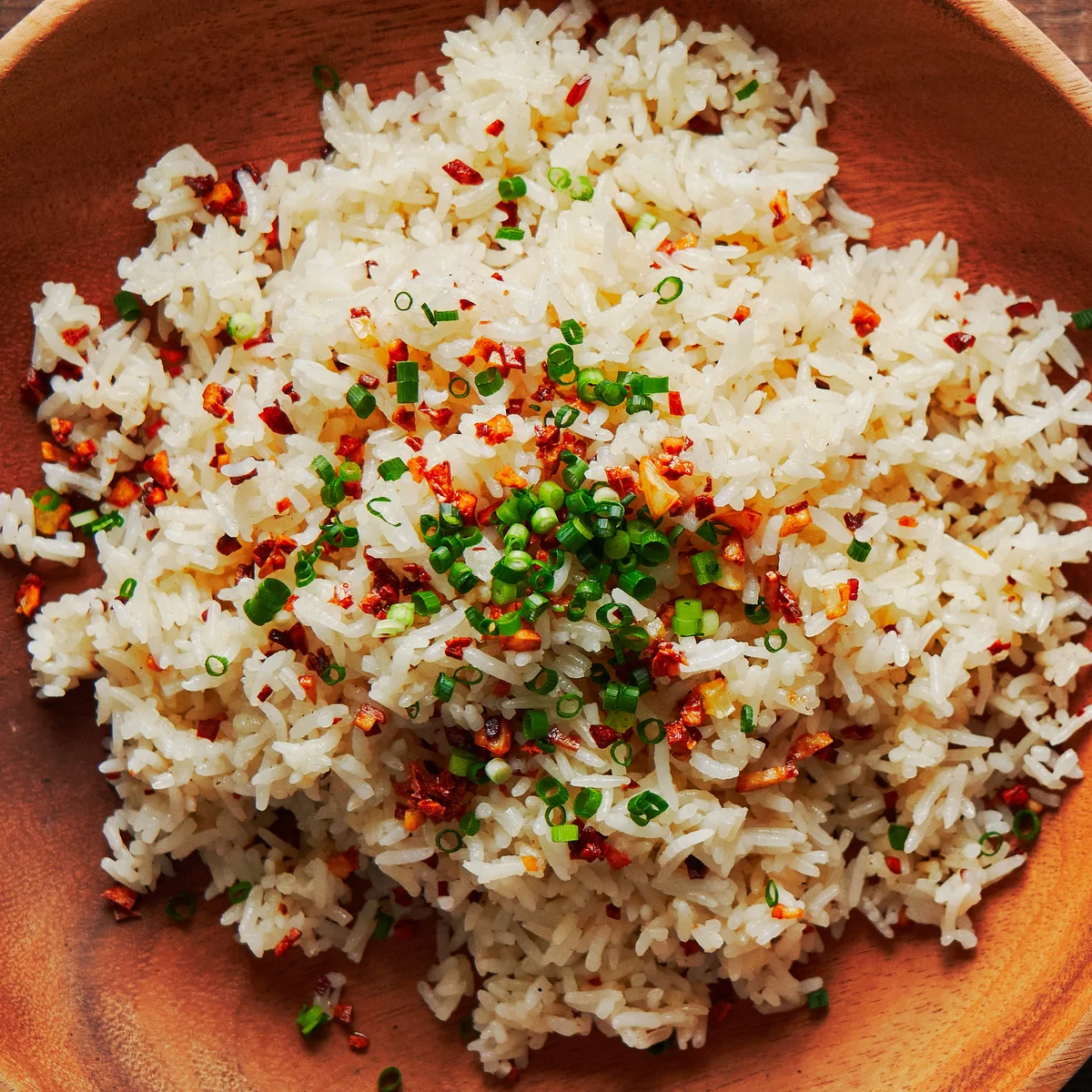
Sinangag is Filipino garlic fried rice: fluffy long-grain rice tossed in garlicky olive oil and finished with crisp, golden garlic. It is a quick, flavourful way to turn cooked rice into a simple side or breakfast dish.
Ingredients
- 300 g (about 2 cups)cooked long-grain rice
- 30 ml (2 tablespoons)olive oil
- 20 g (3 large cloves), mincedgarlic
- ¼ teaspoonsalt
- ¼ teaspoonwhite pepper
Instructions
- 1
Break up rice
Use your hands to separate any clumps in the 300 g of cooked long-grain rice.
- 2
Fry the garlic
Put the 30 ml of olive oil and 20 g of garlic in a large frying pan over medium-high heat. Stir regularly so the garlic browns evenly, and fry until most of the sizzling has subsided and the garlic is golden brown.
- 3
Reserve some garlic
Lift half of the garlic out of the pan, leaving the oil behind.
- 4
Add the rice
Add the rice and toss it until evenly coated with the oil and garlic.
- 5
Stir-fry rice
Stir-fry until the rice is heated through. Season with ¼ teaspoon salt and ¼ teaspoon white pepper to taste.
- 6
Serve hot
Serve the Sinangag hot, topped with the reserved garlic. Scallions can also be added for colour.
What is Sinangag?
Sinangag is Filipino garlic fried rice, often served as part of a breakfast with other dishes. This version keeps the ingredient list short, letting the rice absorb the flavour of garlic fried in oil.
The method also saves some crisp garlic for the finish, adding a more pronounced garlic flavour and a little contrast to the soft rice.
Nutrition and macros by portion
The nutrition label shows one serving as written: 222 calories, 3g protein, 30g carbs, 9g fat.
| Portion | Adjustment | kcal | Protein | Carbs | Fat |
|---|---|---|---|---|---|
| Lighter | Use less olive oil | 155 kcal | 2g | 21g | 6g |
| This serving | As written | 222 kcal | 3g | 30g | 9g |
| Hungry | Serve a larger portion | 333 kcal | 5g | 45g | 14g |
Most of the carbohydrates come from the rice, while the olive oil supplies most of the fat. The rice and garlic contribute a small amount of protein. Pair a serving with eggs or another protein and vegetables to make a more balanced plate.
Why use cooked rice?
Cooked long-grain rice is the foundation of the dish, and breaking up clumps before frying helps the grains coat evenly in the oil. Leftover rice is especially convenient because it is already cooked and ready to reheat in the pan.
Fry the garlic carefully
Garlic: Stir it regularly over medium-high heat so it browns evenly. Take it off the heat once it is golden; very dark garlic can taste bitter.
Oil: The olive oil carries the garlic flavour through the rice. Removing half the fried garlic while leaving the oil in the pan keeps those flavours in the dish and saves a crisp topping.
Get the right texture
Separate grains: Break apart clumps before the rice goes into the pan, then toss it to coat. This helps avoid patches that are oily or under-seasoned.
Doneness: Stir-fry until the rice is heated through. The grains should remain distinct rather than mashed together.
Keep the cook quick
The garlic browns quickly, so stay by the pan and stir as it cooks. Once the rice is added, keep tossing and stirring until it is hot, then season and serve.
What to serve with it
Serve Sinangag alongside eggs, vegetables or a savoury main for a fuller meal. A little sliced scallion can add colour, as suggested in the method.
Recipe notes & tips
- Separate the rice clumps before you start frying the garlic.
- Stir the garlic often to encourage even browning.
- Remove the reserved garlic as soon as it is golden.
- Toss the rice well so the grains pick up the garlic oil.
- Serve straight away for the best contrast between tender rice and crisp garlic.
Variations
- Add scallions: Scatter sliced scallions over the rice for colour.
- Use another oil: Replace the olive oil with a neutral cooking oil.
- Add chilli: Stir sliced chilli through the rice for heat.
- Add egg: Serve with a fried egg or stir cooked egg through the rice.
- Add vegetables: Toss in finely chopped vegetables and cook until hot.
Common mistakes to avoid
- Leaving rice clumped: Break it apart before it goes into the pan so it coats evenly.
- Burning the garlic: Stir regularly and remove it when golden brown.
- Discarding the oil: Leave it in the pan after reserving half the garlic to flavour the rice.
- Crowding the pan: Use a large frying pan so you can toss the rice evenly.
- Serving before heated through: Keep stir-frying until the rice is hot throughout.
How to store
Refrigerate leftovers promptly in an airtight container and use within 2 days. Reheat until steaming hot in a frying pan, stirring often; add a small splash of water if the rice seems dry.
Frequently asked questions
Can I use freshly cooked rice?
Yes, as long as it is cooked and you can separate the grains before frying. Let it cool enough to handle, then break up any clumps.
Why is leftover rice useful for Sinangag?
It is already cooked and easy to break into separate grains, making it convenient to fry quickly.
How do I know when the garlic is ready?
Look for a golden-brown colour and wait until most of the sizzling has subsided, as directed in the method. Remove it before it turns very dark.
Can I use black pepper instead of white pepper?
Yes. The flavour and appearance will differ slightly, but black pepper can season the rice in the same way.
Can I make Sinangag ahead?
It is best served hot after frying. You can break up the cooked rice in advance, then fry and season it just before serving.
What can I serve with garlic fried rice?
Serve it with eggs, vegetables or a savoury main. The method also suggests sliced scallions as an optional garnish.
Cook it from the original
This recipe comes from norecipes.com. Their page has the author’s own photos, notes and tips — the best place to cook it from.
Open the recipe on norecipes.com