
Italian Cacciatore Sausage
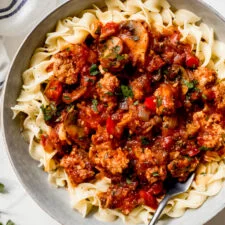
Italian cacciatore sausage pairs browned mild Italian sausage with a tomato sauce full of peppers, mushrooms, onion and herbs. It is a satisfying one-pan meal, served over cooked egg noodles to catch the rich sauce.
Ingredients
- 60 ml (4 Tbsp.)olive oil
- 454 g (1 lb.)bulk mild Italian sausage
- 1 mediumyellow onion, chopped
- 1 largered bell pepper, chopped
- 227 g (8 oz.)white or cremini mushrooms, thinly sliced
- 3 clovesgarlic, minced
- 180 ml (3/4 cup)dry white wine, such as Pinot Grigio or Sauvignon Blanc
- 794 g (1 (28 oz) can)good-quality crushed tomatoes, such as San Marzano
- 1 1/2 tsp.dried oregano
- 1/2 tsp.sugar
- 120 ml (1/2 cup)water
- 60 ml (1/4 cup)fresh chopped parsley or basil
- to tasteKosher salt and fresh black pepper
Instructions
- 1
Brown the sausage
Heat the olive oil in a large, heavy-based sauté pan or skillet over medium-high heat. Add the sausage and cook, breaking it into crumbles, until browned, about 5 minutes. Lift it out with a slotted spoon and set it in a bowl.
- 2
Soften the vegetables
Add the onion, bell pepper and mushrooms to the same pan, then season with salt and pepper to taste. Cook, stirring occasionally, until the vegetables start to soften, about 5–8 minutes. If they begin to stick, add 1–2 tablespoons of water to loosen them. Stir in the garlic and cook just until fragrant.
- 3
Reduce the wine
Pour in the wine and let it reduce by half, about 2–3 minutes.
- 4
Simmer the sauce
Add the tomatoes, oregano, sugar and water, then season with salt and pepper. Bring to a simmer and stir the sausage back in. Simmer on low, partially covered, for 15–20 minutes, until the sauce is slightly thickened and the vegetables are fully tender. Stir in the parsley and serve over cooked egg noodles.
What is sausage cacciatore?
Cacciatore means “hunter-style” in Italian and commonly refers to a rustic dish of meat cooked with vegetables, herbs and tomatoes. This version uses crumbled Italian sausage rather than larger pieces of meat, making it easy to portion and ensuring each serving gets plenty of sauce.
Sausage and vegetables are browned first, then simmered with tomatoes and herbs. The result is a robust sauce that works especially well over egg noodles.
Nutrition and macros by portion
The nutrition label shows one serving as written: 265 calories, 8g protein, 43g carbs, 12g fat.
| Portion | Adjustment | kcal | Protein | Carbs | Fat |
|---|---|---|---|---|---|
| Lighter | Less oil, more vegetables | 186 kcal | 6g | 30g | 9g |
| This serving | As written | 265 kcal | 8g | 43g | 12g |
| Hungry | Larger noodle portion | 398 kcal | 12g | 64g | 19g |
The egg noodles and tomatoes supply much of the carbohydrates, while olive oil and sausage contribute most of the fat; the sausage also provides protein. Balance the bowl with a generous side of salad or vegetables, or use a little less noodle and more vegetables.
Build flavour in the pan
Brown the sausage: Let it develop colour before removing it from the pan; the browned bits left behind add savoury depth to the vegetables and sauce.
Soften the vegetables: Give the onion, pepper and mushrooms 5–8 minutes to begin softening. If they catch on the pan, the method calls for 1–2 tablespoons of water to loosen them.
Why the wine reduces first
Reducing the wine by half for 2–3 minutes concentrates its flavour before the tomatoes go in. Keep the pan at a lively simmer and wait until the liquid has visibly reduced.
Simmer to the right texture
A low, partially covered simmer gives the vegetables time to become fully tender while the sauce thickens. Start checking around 15 minutes; the method allows 15–20 minutes in total.
The finished sauce should cling to a spoon rather than look watery. If it needs more time, keep it at a gentle simmer and stir occasionally.
Tomatoes and seasoning
Crushed tomatoes form the body of the sauce, while dried oregano brings a familiar herbal note. A small amount of sugar is included alongside the tomatoes to round out the flavour.
Season with salt and black pepper as directed, then taste again after simmering. Sausage and canned tomatoes can vary in saltiness, so adjust at the end.
Finish with fresh herbs
Parsley or basil is stirred in after the sauce has simmered, keeping its fresh flavour distinct from the dried oregano. Chop the herbs shortly before adding them.
Serve it over noodles
Cook egg noodles separately and serve the cacciatore over them, as directed. Their shape and soft texture make them a good match for the thick tomato sauce.
A simple green salad or steamed vegetables alongside can add freshness and contrast to the hearty sausage and noodles.
Recipe notes & tips
- Use a large, heavy-based pan so the sausage and vegetables have room to brown.
- Break the sausage into fairly even crumbles as it cooks for consistent browning.
- Add the wine only after the garlic has become fragrant, then let it reduce by half.
- Keep the sauce at a gentle simmer rather than a rapid boil.
- Stir in the fresh parsley or basil just before serving.
- Cook the egg noodles separately and serve the sauce over them.
Variations
- Choose basil: Use fresh chopped basil instead of parsley for a more aromatic finish.
- Use cremini mushrooms: Choose cremini for a deeper, earthier mushroom flavour.
- Switch the wine: Use Pinot Grigio or Sauvignon Blanc, as suggested, for the dry white wine.
- Adjust the heat: Choose a spicier Italian sausage in place of mild sausage for a hotter sauce.
- Change the pasta: Serve the sauce over another cooked pasta shape if you do not have egg noodles.
Common mistakes to avoid
- Crowding the sausage: It may steam rather than brown; use a large pan and let it cook until coloured.
- Skipping the wine reduction: The sauce will miss the concentrated flavour; reduce the wine by half before adding tomatoes.
- Cooking the vegetables too quickly: They may stay firm; allow 5–8 minutes and stir occasionally.
- Boiling the sauce hard: It can reduce too quickly; keep it at a low simmer, partially covered.
- Adding herbs too early: Their fresh flavour can fade; stir parsley or basil in at the end.
How to store
Refrigerate leftover sauce in a covered container for up to 3 days. Reheat it gently in a saucepan until hot throughout, adding a splash of water if it has thickened; store cooked noodles separately when possible.
Frequently asked questions
Can I make the sauce ahead?
Yes. Prepare the sauce, cool it and refrigerate it in a covered container for up to 3 days. Reheat gently and add the fresh herbs just before serving.
Can I use fresh tomatoes instead of canned?
The recipe specifies a 794 g can of crushed tomatoes. Fresh tomatoes will have a different amount of liquid and may need longer cooking to reach a similar sauce consistency.
What should I serve with sausage cacciatore?
The method recommends serving it over cooked egg noodles. A simple salad or vegetables also make a fresh side.
How do I know when the sauce is ready?
After 15–20 minutes at a low simmer, the vegetables should be fully tender and the sauce slightly thickened.
Can I use parsley instead of basil?
Yes. The recipe allows either fresh chopped parsley or fresh chopped basil; stir it into the sauce at the end.
Cook it from the original
This recipe comes from littlebroken.com. Their page has the author’s own photos, notes and tips — the best place to cook it from.
Open the recipe on littlebroken.com