
Spinach Avocado Pasta
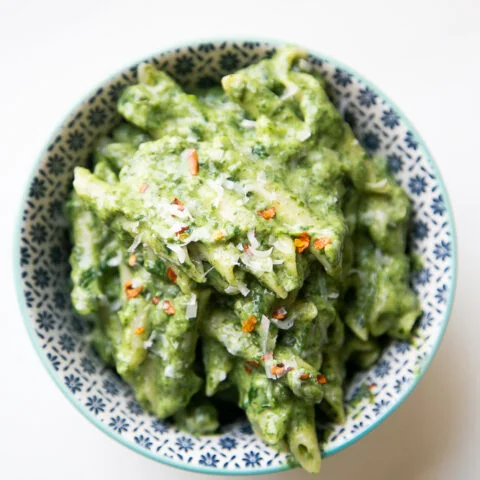
Spinach avocado pasta coats gluten-free pasta in a creamy green sauce made with wilted spinach, avocado, Greek yoghurt and cheese. It is a fresh change from red sauce and comes together using the pasta water to bring the sauce to the right consistency.
Ingredients
- 227 g (8 oz)gluten-free pasta, any shape
- 28 g (2 tablespoons)butter
- 2 clovesgarlic, peeled and minced or Microplaned
- A pinch, plus more to tastesalt
- 3–4 large handfuls (about 227 g/8 oz)spinach
- 60 ml (¼ cup)full-fat Greek yoghurt
- 1avocado, peeled, pitted and cut into large chunks
- About 50 g (½ cup)freshly grated Pecorino Romano or Parmesan, plus more for garnish
- To tasteblack pepper
Instructions
- 1
Cook the pasta
Bring a very large pot of salted water to the boil and cook the pasta according to the packet instructions until al dente. Drain it, reserving about 240 ml (1 cup) of the pasta water.
- 2
Wilt the spinach
Return the pasta to the pot and set it aside. In a medium saucepan, melt the butter over medium heat, then add the garlic and cook for about 1–2 minutes. Add a pinch of salt and the spinach; the pan will be full, so press the leaves in.
- 3
Finish the sauce
Cover the saucepan and reduce the heat to medium-low. Cook for about 4–5 minutes, until the spinach has completely wilted. Add the yoghurt, avocado and half of the reserved pasta water to the spinach.
- 4
Blend until smooth
Stir the mixture briefly, then blend it with an immersion blender. If you do not have one, transfer it to a food processor or blender, blend well and pour the sauce into the pot with the pasta.
- 5
Toss and serve
Stir in the cheese, adding more pasta water if the sauce seems too thick. Season with salt and pepper to taste, then serve with a sprinkling of grated cheese.
What is spinach avocado pasta?
This is a pasta dish with a blended green sauce rather than the familiar tomato-based one. The method draws on the Italian tradition of dressing pasta with vegetables, cheese and a little cooking water, though this particular combination is a modern, flexible take.
Wilted spinach gives the sauce its colour, while avocado and full-fat Greek yoghurt make it creamy. Pecorino Romano or Parmesan adds a salty, savoury finish.
Nutrition and macros by portion
The nutrition label shows one serving as written: 390 calories, 15g protein, 44g carbs, 19g fat.
| Portion | Adjustment | kcal | Protein | Carbs | Fat |
|---|---|---|---|---|---|
| Lighter | Use less butter and cheese | 273 kcal | 11g | 31g | 13g |
| This serving | As written | 390 kcal | 15g | 44g | 19g |
| Hungry | Serve a larger portion | 585 kcal | 23g | 66g | 29g |
Most of the carbohydrates come from the pasta, while butter, avocado, yoghurt and cheese contribute much of the fat. The pasta, cheese and yoghurt also provide protein. For a more balanced plate, serve it with a side salad or extra vegetables.
Choosing the ingredients
Pasta: Use any shape of gluten-free pasta, and follow its packet instructions because cooking times vary. Reserve some cooking water before draining; its starch helps the sauce cling.
Greens and avocado: A few large handfuls of fresh spinach wilt down substantially. Choose a ripe avocado that blends easily, but avoid one that is overripe or strongly flavoured.
Cheese: Freshly grated Pecorino Romano or Parmesan brings salt and savouriness. Since both can be salty, taste the finished sauce before adding much extra salt.
Wilting the spinach
A full saucepan is expected when the fresh spinach first goes in. Covering it and cooking over medium-low heat gives the leaves time to collapse without needing to add liquid.
Keep the heat moderate and check that the garlic does not brown while the spinach wilts. The leaves are ready when they have collapsed completely.
Blending a smooth sauce
An immersion blender lets you blend the spinach mixture directly in its saucepan. If using a countertop blender or food processor, transfer the mixture carefully and blend until the spinach is evenly broken down.
The avocado and yoghurt make the sauce creamy, while the reserved pasta water loosens it. Add the water gradually if you want to control the final thickness.
Getting the texture right
The sauce should coat the pasta rather than sit in a thick lump. Stir it through while the pasta is warm, and add reserved cooking water a little at a time if it needs loosening.
Taste after adding the cheese, then adjust the salt and pepper. A final dusting of grated cheese adds a savoury accent at the table.
Serving the pasta
Serve the pasta straight after tossing, while the sauce is fresh and easy to coat. A simple side salad or steamed vegetables can add crunch and make the meal feel more substantial.
Keep some grated cheese at the table for anyone who wants a little more. If you have reserved pasta water left, keep it nearby until the sauce has been mixed through.
Recipe notes & tips
- Reserve the pasta water before draining, as it is difficult to replace once it has gone down the sink.
- Grate the cheese finely so it stirs into the warm sauce more easily.
- Add the reserved pasta water gradually to avoid making the sauce too thin.
- Taste the sauce after stirring in the cheese before adding more salt.
- Serve soon after blending for the freshest flavour and texture.
Variations
- Use Parmesan: Choose it instead of Pecorino Romano for a slightly different savoury finish.
- Change the pasta shape: Use any gluten-free shape you have, adjusting the cooking time to its packet instructions.
- Add lemon: Stir in a little lemon zest for a brighter flavour.
- Add herbs: Blend in a small handful of fresh basil for an extra herbal note.
- Make it dairy-free: Use plant-based butter, yoghurt and grated cheese alternatives.
Common mistakes to avoid
- Forgetting the pasta water: Reserve about 240 ml before draining so you can adjust the sauce.
- Browning the garlic: Cook it gently for about 1–2 minutes; browned garlic can taste bitter.
- Rushing the spinach: Keep the saucepan covered for about 4–5 minutes, until all the leaves have wilted.
- Adding all the water at once: Start with half, then add more only if the blended sauce needs thinning.
- Over-salting the sauce: Cheese contributes salt, so taste before seasoning further.
How to store
Refrigerate leftovers in an airtight container and eat within 2 days. Reheat gently in a saucepan, stirring in a splash of water to loosen the sauce; avoid high heat, which can make the sauce separate.
Frequently asked questions
Can I use regular pasta instead of gluten-free pasta?
Yes. Use the same amount and cook it according to its packet instructions until al dente.
Can I make the sauce without an immersion blender?
Yes. Transfer the spinach mixture to a food processor or blender, blend it well, then combine it with the pasta.
Why reserve pasta water?
It helps loosen the blended sauce and makes it easier to coat the pasta. Add it gradually until the consistency looks right.
Can I prepare the sauce ahead?
It is best blended and served fresh, as the avocado can change colour and texture over time. You can grate the cheese and prepare the spinach and garlic in advance.
Which cheese works best?
Either freshly grated Pecorino Romano or Parmesan works. Both add a savoury, salty flavour, so season after stirring the cheese into the sauce.
Cook it from the original
This recipe comes from perrysplate.com. Their page has the author’s own photos, notes and tips — the best place to cook it from.
Open the recipe on perrysplate.com