
Homemade Potato Chips
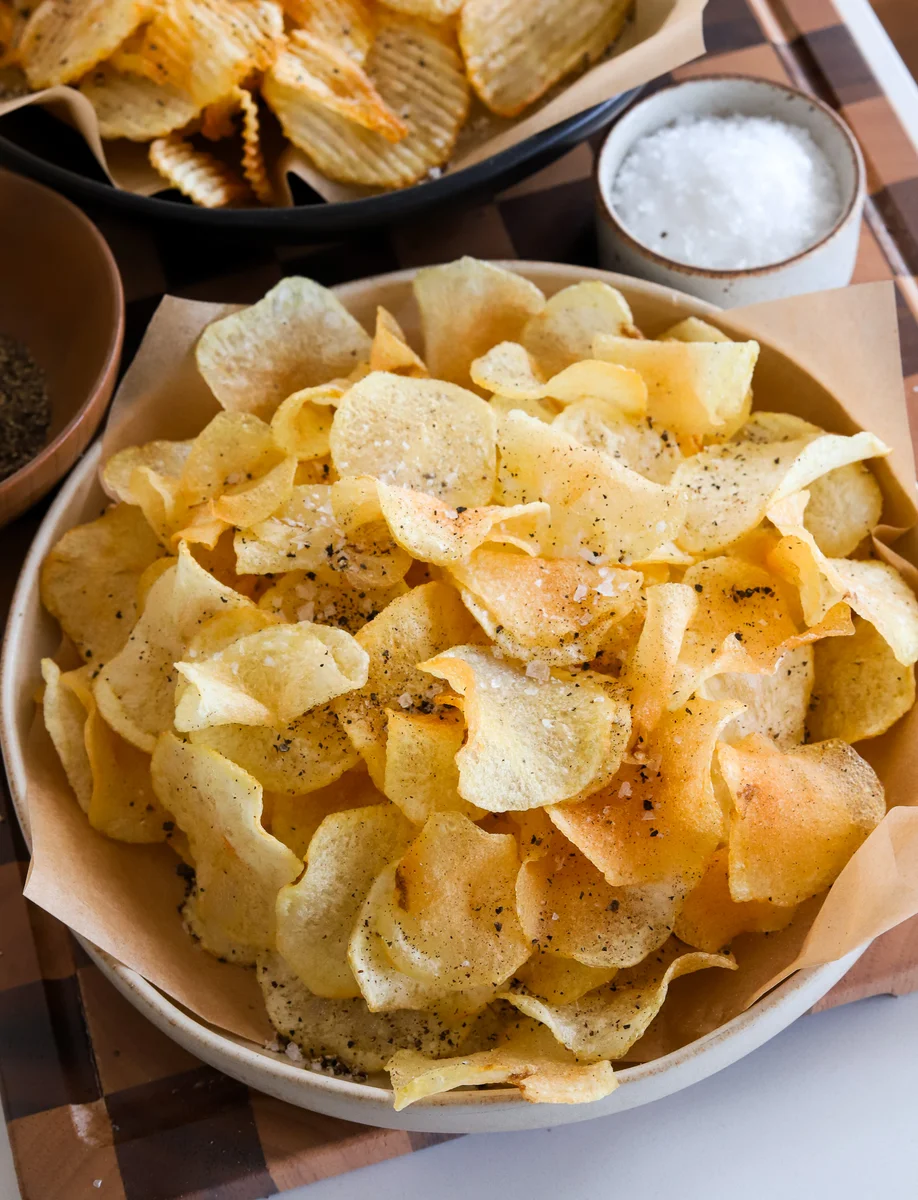
These thin, crisp homemade potato chips are fried in small batches for an even golden colour and a satisfying crunch. They make a fresh snack or a salty side, and you can season them as soon as they come out of the oil.
Ingredients
- 2 to 3 largepotatoes (Russet or Yukon Gold)
- 950 to 1,420 mlneutral oil (vegetable, rapeseed or avocado)
- to tastesalt
- optionalblack pepper
Instructions
- 1
Slice the potatoes
Wash and peel the potatoes. Use a mandoline to slice them 1.6–3.2 mm thick (1/16–1/8 inch). Choose a straight blade for regular chips or a ridged blade for crinkle-cut ones.
- 2
Soak the slices
Put the slices in a bowl of iced water and leave them to soak for 20–30 minutes to draw out excess starch.
- 3
Rinse and dry
Drain the potatoes and rinse them under cold water until the water runs clear. Dry each slice thoroughly with a clean tea towel or kitchen paper; damp slices can splatter in hot oil and are less likely to crisp well.
- 4
Heat the oil
Pour the oil into a deep pan or pot and heat it to 160°C (320°F). Keeping the oil near this temperature helps the chips cook without becoming too dark.
- 5
Fry in batches
Carefully add a small batch of slices, taking care not to crowd the pan. After each batch, check the oil temperature and let it return to 163–166°C (325–330°F) if needed.
- 6
Shape the folds
As the slices start frying, gently stir them and nudge them along the sides of the pot with a slotted spoon to encourage folds and curls before they crisp.
- 7
Cook until crisp
Fry for 3–5 minutes, until the chips are crisp and light yellow. Lift them out with a slotted spoon and drain on a wire rack set over a baking sheet.
- 8
Season and serve
While the chips are still hot, sprinkle them with salt and a little black pepper if you like. Serve fresh, or let them cool before storing in an airtight container.
What are homemade potato chips?
Potato chips are thin slices of potato fried until crisp, a familiar snack with roots in the United States. This home version uses a mandoline for even slices and a brief soak to help remove surface starch.
The method aims for pale, crunchy chips rather than deeply browned ones. Small batches and careful temperature checks help keep the frying more consistent.
Nutrition and macros by portion
The nutrition label shows one serving as written: 300 calories, 4g protein, 32g carbs, 18g fat.
| Portion | Adjustment | kcal | Protein | Carbs | Fat |
|---|---|---|---|---|---|
| Lighter | Use less oil-absorbing portion | 210 kcal | 3g | 22g | 13g |
| This serving | As written | 300 kcal | 4g | 32g | 18g |
| Hungry | Add another potato | 450 kcal | 6g | 48g | 27g |
Potatoes provide most of the carbohydrates, while the frying oil contributes most of the fat and calories; there is relatively little protein. Serve a portion with a protein-rich main and vegetables or salad to make the plate more balanced.
Choosing the potatoes
Russet potatoes: Their relatively dry, starchy flesh suits crisp frying and gives a classic chip texture.
Yukon Gold: These can also be used, bringing a slightly waxier texture and a naturally golden tone. Whichever variety you choose, slice it evenly so the pieces finish cooking at about the same time.
Why soak the slices
The cold-water soak loosens some of the starch on the cut surfaces. Rinsing until the water runs clear helps remove that starch before frying.
Drying matters just as much: water on the slices can make hot oil spit. Pat both sides carefully, and work in manageable batches so the slices do not sit wet for long.
Managing the hot oil
Temperature: Start at 160°C (320°F), then allow the oil to return to 163–166°C (325–330°F) between batches as the method directs. A thermometer makes these checks easier.
Batch size: Add only a small amount of potato at a time. Too many slices cool the oil and make it harder to fry them evenly.
Crispness and colour cues
Timing: Fry each batch for 3–5 minutes, watching for a light yellow colour and a crisp finish. Slice thickness and the amount in the pan can affect how quickly a batch cooks, so use the visual and texture cues too.
Draining: Lift the chips onto a wire rack rather than piling them up. Air can circulate around the pieces while excess oil drains onto the baking sheet below.
Seasoning and serving
Salt the chips while they are still hot so it adheres to their surface. Add black pepper if you want a little extra savoury bite.
Serve them on their own as a snack, or alongside sandwiches, burgers or a simple lunch. They are at their crunchiest soon after frying.
Recipe notes & tips
- Use a mandoline with its hand guard to help protect your fingers while slicing.
- Keep the slices as even as possible so they fry at a similar rate.
- Check the oil temperature between batches and allow it to recover before adding more potatoes.
- Keep a close eye on the chips towards the end of frying, as their colour can change quickly.
- Season each batch as soon as it comes out of the oil.
Variations
- Crinkle-cut chips: Use a ridged mandoline blade for wavy edges.
- Pepper seasoning: Add black pepper while the chips are hot.
- Herb finish: Toss the cooked chips with finely crumbled dried herbs.
- Paprika: Dust the hot chips lightly with paprika for a warm, savoury flavour.
- Different potatoes: Try Russet or Yukon Gold potatoes and compare their textures.
Common mistakes to avoid
- Uneven slices: Use a mandoline carefully so the pieces cook at a similar pace.
- Wet potatoes: Dry the slices thoroughly to reduce splattering and help them crisp.
- Crowded pan: Fry in small batches to avoid a sharp drop in oil temperature.
- Oil too cool: Check the temperature and let it recover between batches.
- Over-browning: Watch for a light yellow colour and remove the chips once crisp.
How to store
For best crunch, eat the chips soon after frying. Once completely cool, store them in an airtight container at room temperature and use within 2–3 days; if they soften, briefly crisp them in a low oven and let them cool before serving.
Frequently asked questions
Do I have to peel the potatoes?
The method calls for peeled potatoes, but you can leave the skins on if you prefer. Scrub them well first and dry them thoroughly after rinsing.
Can I make the slices without a mandoline?
Yes, use a sharp knife and aim for slices around 1.6–3.2 mm (1/16–1/8 inch) thick. Take care to keep them as even as possible.
Why do the potatoes need to soak?
Soaking and rinsing help remove excess starch from the cut surfaces. This supports a crisp finish.
How do I know when the chips are ready?
They should look light yellow and feel crisp after about 3–5 minutes of frying. Remove them with a slotted spoon and drain on a rack.
Can I prepare the chips ahead?
They are best freshly fried. You can slice and soak the potatoes ahead, but dry them thoroughly before frying.
How can I make crinkle-cut chips?
Use the ridged blade on a mandoline, if available. The rest of the method stays the same.
Cook it from the original
This recipe comes from moribyan.com. Their page has the author’s own photos, notes and tips — the best place to cook it from.
Open the recipe on moribyan.com