
Thai Curry Chicken (Instant Pot)
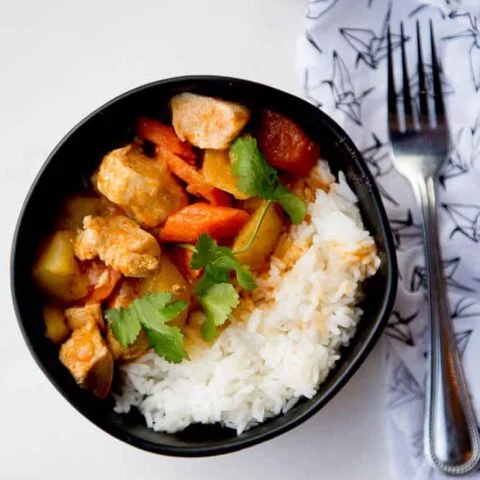
This Instant Pot Thai curry combines browned chicken, vegetables and a coconut-rich curry sauce in a comforting one-pot meal. Serve it with jasmine rice or cauliflower rice, and adjust the vegetables or protein to suit your table.
Ingredients
- 680–907 g (1½–2 lb)boneless, skinless chicken breasts or thighs, cut into 2.5 cm (1-inch) cubes
- A few generous pinchessea salt and black pepper
- 30 ml (2 tablespoons)coconut or avocado oil
- 1 smallonion, diced
- 3 largecarrots, peeled and cut into 1.3 cm (½-inch) pieces
- 3 mediumYukon Gold potatoes, cut into 2.5 cm (1-inch) pieces
- 1 jar, 113 g (4 oz), about 7 tablespoonsThai curry paste
- 15 ml (1 tablespoon)tomato paste
- 15 ml (1 tablespoon)fish sauce
- 15 ml (about 1 tablespoon)lime juice, from 1 lime
- 240 ml (1 cup)chicken broth
- 1 can, 383 g (13.5 oz)coconut cream or coconut milk
- To servesteamed jasmine rice or roasted cauliflower rice
Instructions
- 1
Season the chicken
Sprinkle the chicken with a few generous pinches of sea salt and a few pinches of black pepper.
- 2
Brown the chicken
Set the Instant Pot or electric pressure cooker to Sauté and add the oil. Once the pot is preheated, brown the chicken in two batches, turning it once or twice; it does not need to cook through. Press Cancel when finished.
- 3
Add the vegetables
Return all the chicken to the pot and add the prepared onion, carrots and potatoes.
- 4
Mix the curry sauce
Whisk the curry paste, tomato paste, fish sauce, lime juice and ½ teaspoon of salt together in a small measuring cup. Pour this mixture over the chicken and vegetables, add the broth and stir well.
- 5
Pressure cook
Fit and seal the lid, then check that the steam valve is set to Sealing. Cook at high pressure for 10 minutes using the Manual or Pressure Cook setting.
- 6
Release the pressure
When the cooking cycle ends, move the steam valve to Venting to release the pressure.
- 7
Finish with coconut
Remove the lid and stir in the coconut cream. Taste the curry and add a little more salt if needed.
- 8
Serve the curry
Serve with your choice of side dish.
What is Thai chicken curry?
Thai curry is commonly built around curry paste, which brings together aromatics and seasonings in a concentrated base. Coconut milk or cream softens that intensity into a rich sauce.
This version pairs the paste with chicken, carrots and potatoes in a pressure cooker. Browning the chicken first adds flavour, while the short ingredient list keeps the method straightforward.
Nutrition and macros by portion
The nutrition label shows one serving as written: 500 calories, 39g protein, 25g carbs, 28g fat.
| Portion | Adjustment | kcal | Protein | Carbs | Fat |
|---|---|---|---|---|---|
| Lighter | Use coconut milk | 350 kcal | 27g | 18g | 20g |
| This serving | As written | 500 kcal | 39g | 25g | 28g |
| Hungry | Add extra jasmine rice | 750 kcal | 59g | 38g | 42g |
The chicken supplies most of the protein, while the potatoes and carrots contribute much of the carbohydrate and fibre. Coconut cream and cooking oil account for a substantial share of the fat, and the rice served alongside adds further carbohydrate. For a balanced plate, serve a moderate portion of curry with cauliflower rice or add a green vegetable.
Choosing the curry paste
Curry paste: Thai curry pastes vary in heat and saltiness, so the finished dish can differ between brands. Start with the amount listed, then taste the sauce before adding extra salt.
Coconut: Coconut cream makes a particularly rich sauce, while coconut milk gives a lighter result. Either works here; stir it in after pressure cooking as directed.
Why brown the chicken first?
Browning: Work in two batches so the chicken can make contact with the hot pot rather than crowding together. It only needs colour at this stage, not a fully cooked centre.
Fond: Any browned bits left in the pot contribute flavour as the broth and curry mixture are stirred in. If the cooker is very hot, follow its controls and avoid letting the residue scorch.
Getting the vegetables right
Potatoes: Cut them into even 2.5 cm pieces so they cook at a similar rate. Yukon Gold potatoes hold their shape well in a saucy dish.
Carrots: The smaller 1.3 cm pieces soften alongside the potatoes. Keep the pieces close to the specified size for a more even result.
Pressure and finishing
Sealing: Check the valve is set to Sealing before starting the 10-minute high-pressure cycle. The pot also needs to build pressure before that cooking time begins.
Coconut: Stir in the coconut cream after releasing the pressure. Taste at the end, since the curry paste, broth and fish sauce all affect how much additional salt the dish needs.
What to serve alongside
Jasmine rice: Its mild flavour and tender texture make it a natural partner for the coconut curry sauce. Spoon the chicken and vegetables over the rice so it catches the sauce.
Cauliflower rice: Roasted cauliflower rice is the alternative suggested in the recipe. A simple green vegetable on the side can also round out the meal.
Recipe notes & tips
- Cut the chicken and vegetables to the stated sizes so they cook more evenly.
- Brown the chicken in two batches rather than crowding the pot.
- Measure the curry paste before cooking, as brands can differ in heat and saltiness.
- Stir the coconut cream in only after pressure cooking and releasing the steam.
- Taste before adding extra salt, especially if your curry paste or broth is salty.
Variations
- Change the vegetables: Swap in other vegetables that suit your preference, adjusting their size to help them cook evenly.
- Use a different protein: Replace the chicken with another protein, keeping in mind that cooking needs may differ.
- Make it vegetarian: Use a vegetarian curry paste and replace the chicken and fish sauce with suitable vegetarian alternatives.
- Choose your coconut: Use coconut milk instead of coconut cream for a less rich sauce.
- Pick a different side: Serve with roasted cauliflower rice instead of jasmine rice.
Common mistakes to avoid
- Crowding the pot: The chicken will brown less effectively; cook it in the two batches specified.
- Cooking the chicken through while browning: It only needs to brown at this stage, as it will cook under pressure.
- Skipping the valve check: The cooker needs to be set to Sealing for the pressure cycle.
- Adding coconut cream too early: Stir it in after pressure cooking, as the method directs.
- Salting before tasting: Curry paste, fish sauce and broth can all add salt; taste the finished sauce first.
How to store
Refrigerate leftovers in a covered container and use within 3–4 days. Reheat until piping hot, adding a splash of broth or water if the sauce has thickened; store rice separately where possible.
Frequently asked questions
Can I use chicken breasts or thighs?
Yes. The recipe allows either, cut into 2.5 cm cubes. Choose whichever you prefer.
Can I make this without an Instant Pot?
The recipe description also mentions stovetop and slow cooker instructions, but the method provided here is for the Instant Pot. Use a method-specific recipe for timings and directions on another cooker.
How spicy will the curry be?
That depends on the curry paste you use. Check its heat level and adjust the amount to your preference.
Can I make it vegetarian?
The recipe description suggests a vegetarian version. Use vegetarian curry paste and replace the chicken and fish sauce with suitable alternatives.
What should I serve with it?
Serve the curry with steamed jasmine rice or roasted cauliflower rice, as suggested in the recipe.
Cook it from the original
This recipe comes from perrysplate.com. Their page has the author’s own photos, notes and tips — the best place to cook it from.
Open the recipe on perrysplate.com