
Chicken Rendang (Rendang Ayam)
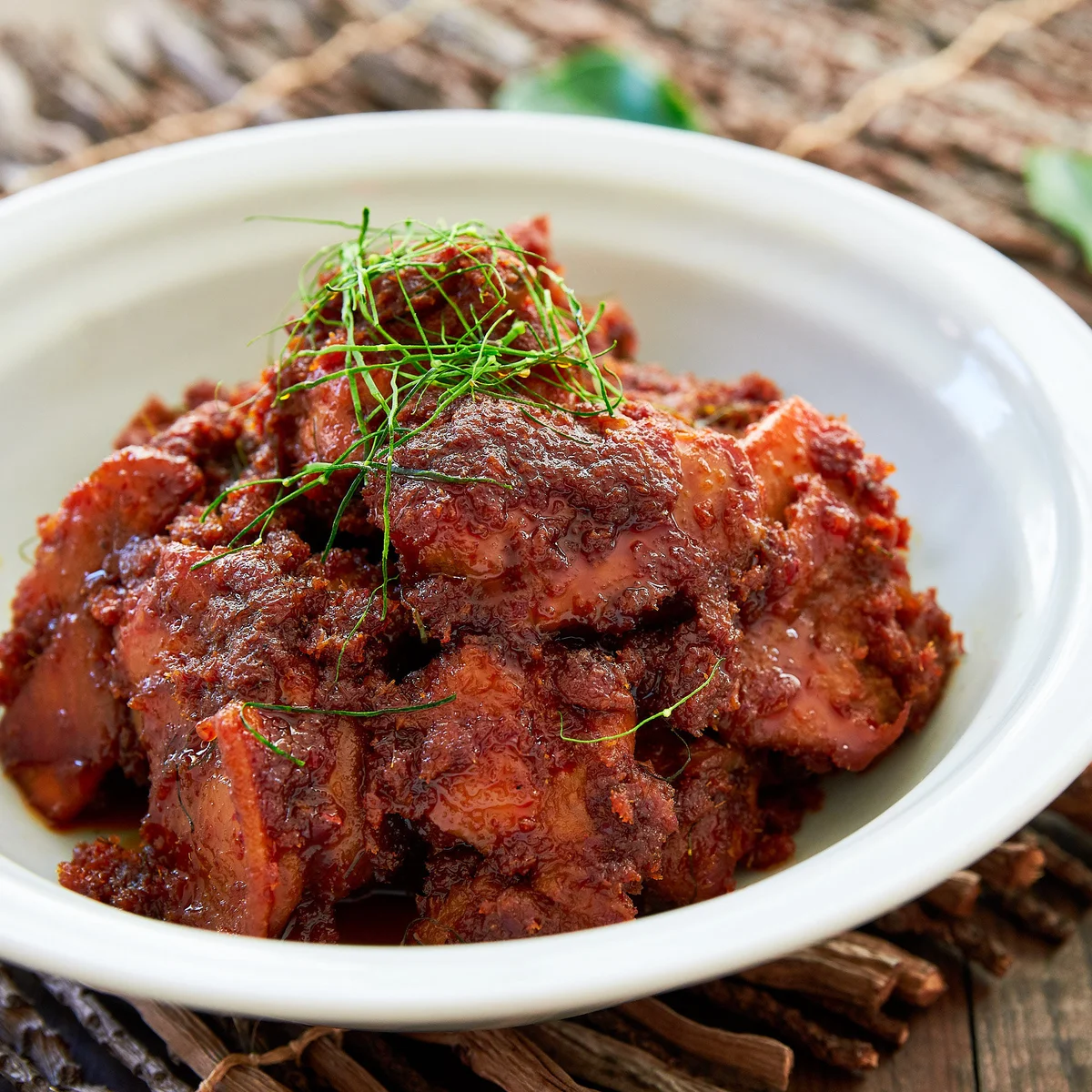
Chicken rendang is a rich Indonesian dry curry in which chicken simmers with a fragrant spice paste and coconut milk, then cooks down until coated in a concentrated, toasted sauce. It takes attention near the end, but the deeply savoury, lightly sweet result is worth it.
Ingredients
- 100 gshallots, peeled and chopped
- 30 ggalangal, peeled and sliced
- 30 glemongrass, light parts only, thinly sliced
- 20 gginger, peeled
- 3 tablespoonsdried chilli flakes, or to taste
- 1 teaspoonsalt
- ½ teaspoonground turmeric
- 60 ml (¼ cup)vegetable oil
- 25 ggarlic, about 4 large cloves, smashed
- 925 gboneless, skin-on chicken thighs, chopped into pieces
- 240 ml (1 cup)coconut milk, taken from the top of an unshaken can
- 20 g (2 tablespoons)coconut sugar
- 5kaffir lime leaves, sliced into very thin threads
- 50 g (¾ cup)grated unsweetened coconut
Instructions
- 1
Make the paste
Put the shallots, galangal, lemongrass, ginger, chilli flakes, salt and turmeric in a small food processor or blender. Blend to a paste, adding only the smallest amount of water needed to keep the mixture moving.
- 2
Brown the chicken
Heat the vegetable oil in a large, heavy-based pan over medium heat. Lay the chicken in skin-side down and tuck the garlic into the gaps. Brown the skin thoroughly, then transfer the chicken to a bowl.
- 3
Fry the paste
Add the spice paste to the same pan. Cook, stirring constantly, until it is very thick, fragrant and caramelised; keep it moving so it browns evenly without sticking or burning.
- 4
Simmer the chicken
Return the chicken to the pan and add the coconut milk and coconut sugar. Lower the heat to maintain a gentle simmer and cook for about 30 minutes, until the chicken is tender. Stir regularly, particularly as the sauce reduces.
- 5
Skim excess oil
If there is more oil on the surface than you want, spoon some off.
- 6
Toast the coconut
While the chicken cooks, put the grated coconut in a dry frying pan. Stir constantly until browned and very fragrant, then transfer to a bowl and set aside.
- 7
Add final ingredients
When the chicken is tender and little sauce remains, raise the heat to medium. Stir in the toasted coconut and sliced kaffir lime leaves.
- 8
Reduce and serve
Stir-fry for about 10 more minutes, until the sauce has caramelised into a thick coating on the chicken. Serve with rice.
What is chicken rendang?
Rendang is an Indonesian dish associated especially with Minangkabau cuisine of West Sumatra. It is known for meat cooked slowly with coconut milk and a fragrant spice mixture until the liquid reduces and the flavours concentrate.
This chicken version follows that same idea, finishing with toasted coconut for extra texture and a nutty aroma. Rather than serving it as a saucy curry, the method reduces the mixture until it clings to each piece.
Nutrition and macros by portion
The nutrition label shows one serving as written: 462 calories, 17g protein, 15g carbs, 38g fat.
| Portion | Adjustment | kcal | Protein | Carbs | Fat |
|---|---|---|---|---|---|
| Lighter | Less oil, more vegetables | 323 kcal | 12g | 11g | 27g |
| This serving | As written | 462 kcal | 17g | 15g | 38g |
| Hungry | Larger chicken portion | 693 kcal | 26g | 23g | 57g |
The chicken contributes most of the protein, while coconut milk, vegetable oil and grated coconut account for much of the fat. Coconut sugar and the rice served alongside contribute carbohydrates; balance the plate with a modest serving of rice and a generous portion of vegetables.
Build the spice paste
Fresh aromatics: Shallots, galangal, lemongrass and ginger form the paste's fragrant base. Blend them finely, using as little water as possible so the paste can fry rather than steam.
Chilli and turmeric: The chilli brings heat, while turmeric adds colour and earthy warmth. Start with the stated amount of chilli or adjust it to suit your preference.
Brown before simmering
Skin-side down: Give the chicken time to brown well before taking it out of the pan. This develops savoury flavour and leaves seasoned oil in the pan for frying the paste.
Garlic in the gaps: Adding the smashed cloves between the chicken pieces lets them cook in the oil without needing a separate step. Keep an eye on them so they do not catch while the skin browns.
Fry the paste carefully
Steady stirring: The paste needs to cook until thick, fragrant and caramelised before the coconut milk goes in. Stir and scrape the pan regularly to prevent it scorching in patches.
Gentle simmer: Once the chicken and coconut milk are back in the pan, keep the heat low enough for a calm simmer. Stir more often as the liquid dwindles, when the mixture is most likely to stick.
Look for the right finish
Tender chicken: After about 30 minutes of simmering, check that the chicken is tender. The timing can vary with the size of the pieces, so use tenderness as well as the clock.
Thick coating: Near the end, there should be very little loose sauce. The final cooking stage should leave a glossy, concentrated coating around the chicken rather than a pool of liquid.
Toast the coconut separately
Dry pan: Toast the grated coconut without oil, stirring constantly so it browns evenly. Take it off the heat once it is golden and fragrant, as it can continue to darken quickly.
Late addition: Stirring the coconut in near the end preserves its toasted character and gives the finished rendang a little texture.
Serve it with rice
Rice is a natural partner for the concentrated spice and coconut coating, and helps make the dish a fuller meal. Steamed vegetables or a simple fresh side can bring contrast without competing with the rendang.
Serve the chicken once the sauce has clung to it. If making rice alongside, time it so both are ready around the end of the final reduction.
Recipe notes & tips
- Use a wide, heavy-based pan so the paste can reduce evenly and is easier to stir.
- Blend the spice paste thoroughly for a smoother coating on the chicken.
- Keep the pan at a gentle simmer during the 30-minute cooking stage rather than letting it boil hard.
- Stir more frequently as the sauce reduces, scraping across the base of the pan.
- Toast the coconut in a dry pan and transfer it out as soon as it is fragrant and browned.
- Taste the finished rendang before serving and adjust the chilli level next time to suit your preference.
Variations
- Adjust the heat: Use fewer chilli flakes for a milder rendang or add more if you prefer a hotter dish.
- Use fresh turmeric: Replace the ground turmeric with one fresh turmeric root, as suggested in the ingredient list.
- Choose another cut: Boneless chicken thighs are specified, but bone-in thighs can be used if you allow for a longer cooking time and check for tenderness.
- Add a fresh side: Serve with sliced cucumber or lightly cooked greens for a cool or crisp contrast.
- Change the rice: Pair the rendang with steamed jasmine or another plain rice that can take up the coating.
Common mistakes to avoid
- Adding too much water to the paste: It can take longer to fry; blend in only what is needed to keep the blades moving.
- Leaving the paste unstirred: It can scorch on the pan; stir constantly while it thickens and caramelises.
- Simmering too vigorously: The sauce can reduce before the chicken is tender; keep the heat low and steady.
- Stirring only occasionally near the end: The thickening sauce can catch on the base; increase how often you stir as liquid disappears.
- Walking away from the coconut: It can brown too quickly in a dry pan; stir continuously and remove it once fragrant.
- Stopping while the sauce is runny: The coating will not have the intended concentrated finish; continue reducing until little loose sauce remains.
How to store
Cool leftovers promptly and refrigerate in an airtight container for up to 3 days. Reheat gently in a covered pan over low heat, adding a small splash of water if the coating has become too thick; stir until piping hot.
Frequently asked questions
How hot is chicken rendang?
The recipe uses 3 tablespoons of dried chilli flakes, but the amount can be adjusted to taste. Reduce it for a milder version.
Can I make the spice paste ahead?
Yes. Blend the paste ahead and refrigerate it in a covered container, then fry it thoroughly before adding the chicken and coconut milk.
How do I know when the chicken is done?
After about 30 minutes at a gentle simmer, check that the pieces are tender. If they need longer, continue simmering and keep stirring as the sauce reduces.
Why is there so little sauce?
That is the intended finish: the coconut milk reduces and caramelises around the chicken. Keep stirring during the final stage so the coating does not burn.
Can I use coconut milk from a carton?
The recipe calls for the thicker coconut milk from the top of an unshaken can. Carton coconut milk may be thinner, which can change how long the sauce takes to reduce.
What should I serve with chicken rendang?
Serve it with rice, as directed, and add vegetables or a fresh side if you would like a more balanced plate.
Cook it from the original
This recipe comes from norecipes.com. Their page has the author’s own photos, notes and tips — the best place to cook it from.
Open the recipe on norecipes.com