
Taiwanese Hot Pot Recipe
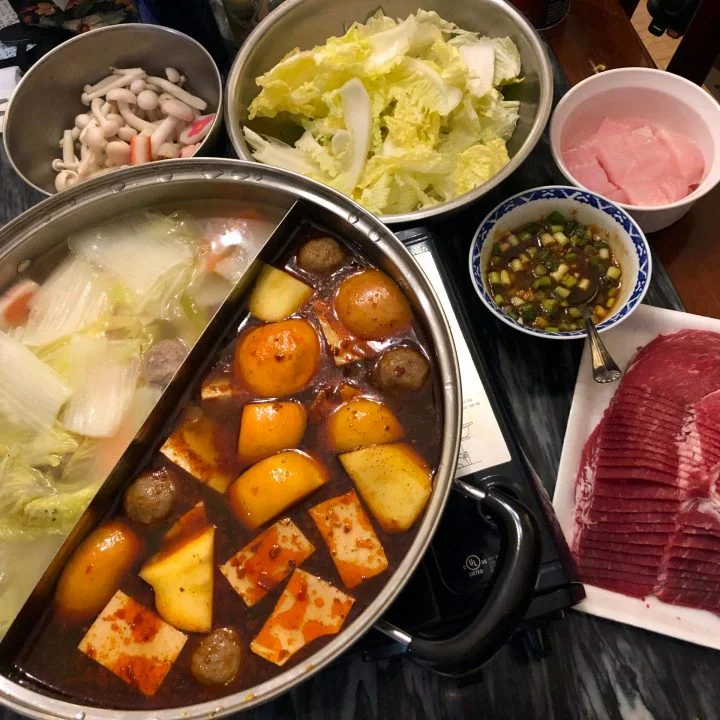
Taiwanese hot pot is a shared meal built around a simmering broth, with meat, seafood, vegetables, tofu and noodles cooked at the table. This version offers a chicken broth or a spicy mala broth, plus a shacha dipping sauce to bring the cooked ingredients together.
Ingredients
- 2 (32 oz) boxeschicken broth
- 8 cupswater
- 2 tbspcooking oil
- 2 tbspdried shrimp
- 10 cupswater or stock
- 2 tbspcooking oil
- 4–5 tbspchilli bean paste (doubanjiang)
- 1–2 teaspoonsChinese chilli powder
- 3 inchesginger, sliced
- 4dried red peppers
- 2 tbspSichuan peppercorns
- 1apple, cut into 1-inch pieces
- 2 lbsthinly sliced beef, pork or lamb
- 1 lbseafood, such as shrimp, fish fillets, squid or clams
- to tasteNapa cabbage (大白菜), chopped
- to tastemushrooms, such as shiitake, enoki, king oyster or button
- to tastedaikon radish, sliced
- to tastecorn on the cob, cut into chunks
- to tastefirm tofu or fried tofu puffs
- 16 ozassorted meatballs, such as fish, pork, beef or shrimp
- to tasteglass noodles (冬粉), soaked for 20 minutes
- to tasteother favourites, such as kamaboko, crab sticks or egg dumplings (蛋餃)
- 2 tbspsoy sauce
- 1 tbspshacha sauce (沙茶)
- 1 tspsesame oil
- 1 clovegarlic, minced
- 1 tbspscallions or coriander, chopped
- optional, to tastechilli oil, vinegar, sesame butter or fermented bean curd
Instructions
- 1
Prepare the broth
For the chicken version, heat 2 tbsp cooking oil in a small pan and stir-fry the dried shrimp until fragrant. Add them to a pot with the chicken broth and 8 cups water, bring to the boil, then simmer. For the spicy mala version, bring 10 cups water or stock to the boil. Heat 2 tbsp cooking oil in a pan, fry the chilli bean paste, ginger and dried red peppers until fragrant, then add to the pot with the chilli powder, Sichuan peppercorns and apple. Simmer for 15–20 minutes.
- 2
Prepare ingredients
Wash and slice the meats, seafood and vegetables. Arrange them with the tofu and noodles on plates around the table.
- 3
Mix the sauce
Stir together the soy sauce, shacha sauce, sesame oil, garlic and scallions. Add any of the optional condiments to suit your taste.
- 4
Set up the table
Put the burner and hot pot in the middle of the table. Set out communal and personal chopsticks, sauce bowls, ladles and slotted spoons.
- 5
Cook and eat
Add the heartier ingredients, such as corn, daikon, Napa cabbage, tofu and meatballs, first. Add thinly sliced meat, seafood and leafy greens in small batches. Swish the meat in the broth until its colour changes, then dip and eat.
- 6
Finish with broth
Ladle the soup into bowls at the end, after the other ingredients have flavoured it.
What is Taiwanese hot pot?
Hot pot, or huǒ guō, is a communal meal in which diners cook ingredients in a bubbling pot at the table. It is enjoyed in many parts of East Asia, and Taiwanese versions often make a centrepiece of the broth and a range of fresh additions and dipping sauces.
This recipe gives you a choice of a gentler chicken broth or a spicy, numbing mala-style broth. Cooking ingredients in small batches keeps the meal interactive and lets everyone choose what goes into their bowl.
Nutrition and macros by portion
The nutrition label shows one serving as written: 892 calories, 56g protein, 88g carbs, 35g fat.
| Portion | Adjustment | kcal | Protein | Carbs | Fat |
|---|---|---|---|---|---|
| Lighter | More vegetables, fewer noodles | 624 kcal | 39g | 62g | 25g |
| This serving | As written | 892 kcal | 56g | 88g | 35g |
| Hungry | Add extra noodles | 1338 kcal | 84g | 132g | 53g |
The listed per-serving nutrition is 892 kcal, with 56 g protein, 88 g carbohydrate and 35 g fat. Meat, seafood and meatballs contribute much of the protein; noodles, corn and vegetables contribute carbohydrates, while oil and sesame-based ingredients add fat. To balance the plate, serve a generous mix of vegetables alongside the meat, seafood and noodles.
Choose your broth
Chicken broth: Stir-frying dried shrimp first brings out their savoury aroma before they go into the broth. This route uses chicken broth and water, then simmers gently.
Mala broth: Frying the chilli bean paste, ginger and dried peppers helps release their fragrance. Sichuan peppercorns add a numbing note, while apple brings a subtle sweetness; adjust the chilli to your preference.
Prepare the ingredients
Thin slices: Thinly sliced meat cooks quickly in the hot broth, so keep it arranged separately and add only a few pieces at a time. Seafood and meatballs offer different textures and can be cooked in batches too.
Vegetables and noodles: Cut the vegetables into pieces that are easy to lift from the pot. Soak the glass noodles for 20 minutes as directed, and keep them ready to add when you want them.
Cook in stages
Hearty ingredients: Start with corn, daikon, Napa cabbage, tofu and meatballs, as the method directs. They can simmer while the table begins cooking the quicker additions.
Quick additions: Add thin meat, seafood and leafy greens in small batches. Swish the meat until its colour changes, and follow the cooking cues appropriate to each ingredient.
Make the dipping sauce
The soy sauce, shacha, sesame oil, garlic and scallions make a savoury, aromatic dip. Set out the optional chilli oil, vinegar, sesame butter and fermented bean curd so diners can customise their own bowls.
Serve and finish
Keep the pot at the centre of the table and provide separate personal chopsticks as well as communal utensils for serving. A ladle and slotted spoon make it easier to serve broth and lift out cooked ingredients.
At the end, ladle some of the now richly flavoured soup into bowls. Serve the hot pot with rice or another simple side if you would like a more substantial meal.
Recipe notes & tips
- Arrange the ingredients on separate plates before bringing the hot pot to the table.
- Keep raw meats and seafood separate from ready-to-eat ingredients.
- Add ingredients in small batches so the broth can return to a simmer between additions.
- Taste the mala broth before serving and adjust the chilli to suit the table.
- Use communal utensils to transfer raw ingredients into the pot and personal chopsticks to eat.
- Offer the dipping sauce and optional condiments separately so diners can season their own portions.
Variations
- Choose chicken broth: Use the chicken broth and dried shrimp option for a gentler base.
- Make it mala: Use the water or stock base with chilli bean paste, dried peppers and Sichuan peppercorns.
- Change the protein: Choose beef, pork or lamb, and include the seafood you prefer.
- Mix the mushrooms: Combine shiitake, enoki, king oyster or button mushrooms.
- Add hot-pot favourites: Include kamaboko, crab sticks or egg dumplings alongside the listed ingredients.
- Customise the dip: Offer chilli oil, vinegar, sesame butter or fermented bean curd as optional additions.
Common mistakes to avoid
- Adding everything at once: Cook in small batches so the broth stays hot and ingredients are easier to manage.
- Crowding the pot: Leave room for ingredients to cook in the broth and add more as they are eaten.
- Overcooking thin meat: Swish it until its colour changes, then lift it out.
- Skipping the noodle soak: Soak the glass noodles for 20 minutes before serving.
- Mixing raw and cooked utensils: Keep communal cooking utensils separate from personal chopsticks.
- Forgetting the broth finish: Save time at the end to ladle the flavourful soup into bowls.
How to store
Refrigerate leftover broth and cooked ingredients promptly in separate covered containers and use within 3 days. Reheat the broth until steaming and bring it to a simmer before adding any ingredients that need further cooking; avoid reheating the same portion repeatedly.
Frequently asked questions
Can I make the broth ahead?
Yes. Prepare either broth in advance, cool it promptly and refrigerate it in a covered container. Reheat it until steaming before setting up the hot pot.
How spicy is the mala broth?
Its heat depends on the amount of chilli bean paste and chilli powder you use. Begin at the lower end of the listed range and adjust to taste.
How do I know when the meat is cooked?
Swish thin slices through the simmering broth until their colour changes, as the recipe directs. Cook thicker or less finely sliced pieces for longer until cooked through.
Can I use a different stock?
The mala option allows water or stock. For the chicken version, the listed base is chicken broth and water.
What can I use instead of glass noodles?
The recipe does not specify a noodle substitute. You can leave them out or choose another hot-pot noodle you enjoy, adjusting its preparation to the packet instructions.
What should I serve with Taiwanese hot pot?
The hot pot is a complete shared meal with meat, seafood, vegetables, tofu and noodles. Rice is a simple optional side.
Cook it from the original
This recipe comes from ohsnapletseat.com. Their page has the author’s own photos, notes and tips — the best place to cook it from.
Open the recipe on ohsnapletseat.com