
Karaage (から揚げ)
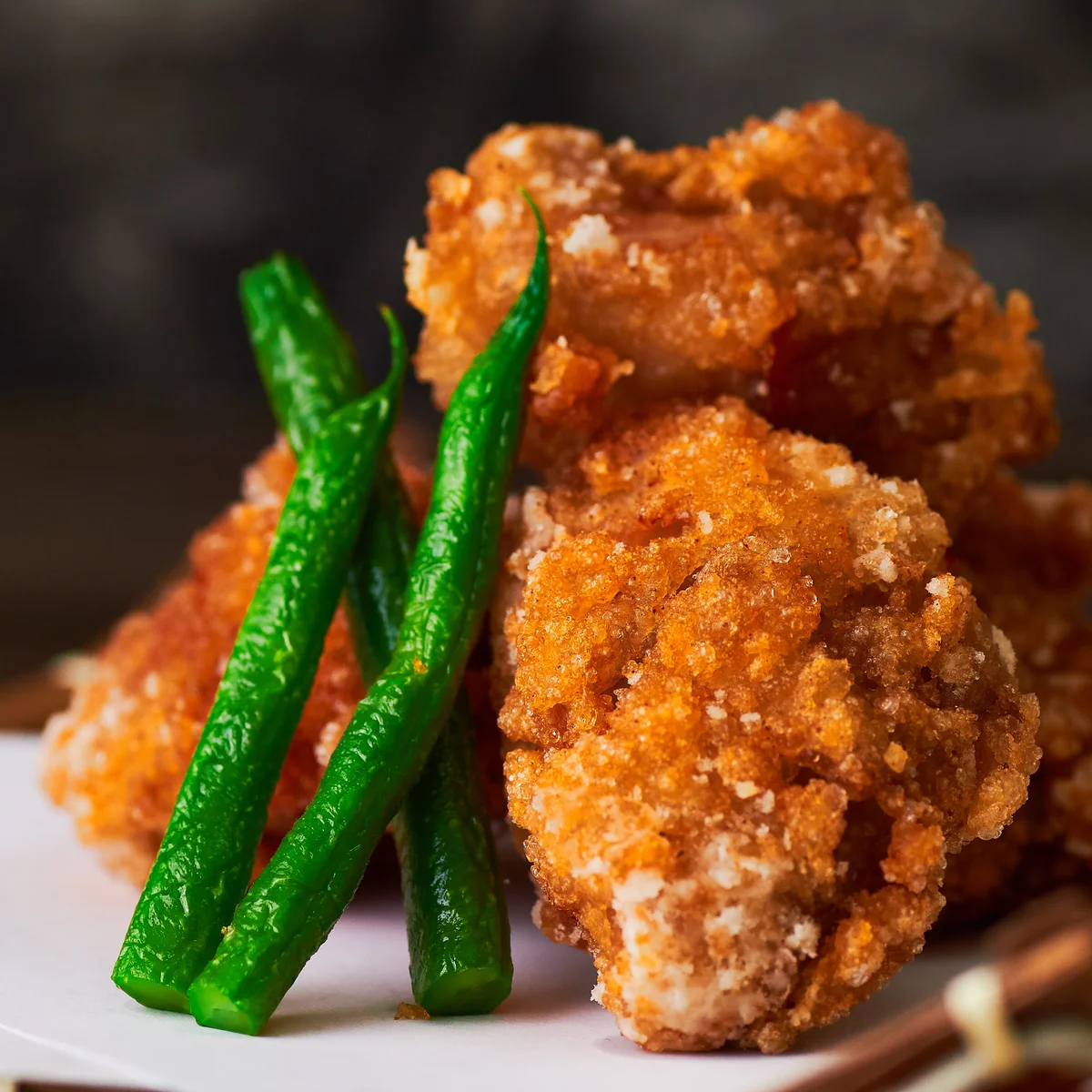
Karaage is Japanese fried chicken with a savoury ginger marinade and a crisp potato-starch coating. It makes a satisfying meal or a popular addition to a bento lunch.
Ingredients
- 80 ml (⅓ cup)soy sauce
- 30 ml (2 tablespoons)sake
- 25 gfresh ginger, grated
- 900 gboneless, skin-on chicken thighs, cut into bite-sized pieces
- 170 gpotato starch
- for fryingvegetable oil
- ½lemon, sliced into wedges for serving
Instructions
- 1
Mix the marinade
Combine the soy sauce, sake and grated ginger in a bowl.
- 2
Marinate the chicken
Add the chicken and mix until each piece is coated. Cover and refrigerate for at least 1 hour or up to 4 hours.
- 3
Heat the oil
When ready to fry, pour 2.5 cm (1 inch) of vegetable oil into a heavy-based pot or deep fryer. Heat to 170°C (340°F) and prepare a wire rack lined with kitchen paper.
- 4
Coat with starch
While the oil heats, put the potato starch in a shallow bowl. Coat each piece of chicken evenly, tapping off excess starch, then set the pieces on a tray.
- 5
Fry in batches
Fry the chicken in batches without overcrowding the pot. Keep pieces of a similar size together so they cook at roughly the same rate.
- 6
Drain and serve
After a few minutes, start checking the chicken for doneness. When it reaches 71°C (160°F) internally, transfer it to the prepared rack and leave it to rest for a few minutes. Serve with the lemon wedges.
What is karaage?
Karaage is a Japanese style of frying in which pieces of food are coated and fried until crisp. Chicken karaage is a familiar home-cooking favourite, often packed into bento boxes.
This version uses ginger and soy sauce to season the chicken, then potato starch for a delicate, crunchy shell. Bite-sized pieces make it easy to fry in batches and serve.
Nutrition and macros by portion
The nutrition label shows one serving as written: 450 calories, 28g protein, 26g carbs, 27g fat.
| Portion | Adjustment | kcal | Protein | Carbs | Fat |
|---|---|---|---|---|---|
| Lighter | Smaller chicken portion | 315 kcal | 20g | 18g | 19g |
| This serving | As written | 450 kcal | 28g | 26g | 27g |
| Hungry | Larger chicken portion | 675 kcal | 42g | 39g | 41g |
The chicken provides most of the protein, while the potato starch supplies much of the carbohydrate. Fat comes mainly from the skin-on chicken and the oil absorbed during frying. Balance the plate with vegetables alongside the chicken and rice.
The marinade
Ginger and soy: Grated ginger brings a fresh, aromatic note, while soy sauce seasons the chicken. Sake rounds out the simple marinade.
Marinating time: Give the chicken at least 1 hour in the fridge, or leave it for up to 4 hours as directed. Keep it covered while it marinates.
Why use potato starch?
Potato starch: Its fine coating fries into a crisp shell. Coat each piece evenly and tap away excess so the surface is not weighed down with loose starch.
Work in batches: Set the coated chicken on a tray as you go, then fry pieces of similar size together. This helps them cook at about the same pace.
Frying and checking doneness
Oil temperature: Heat the oil to 170°C (340°F) before frying. Frying in batches helps avoid overcrowding the pot.
Doneness cue: Start checking after a few minutes with a meat thermometer. The recipe specifies an internal temperature of 71°C (160°F); transfer the pieces to the rack and let them rest for a few minutes.
Serving karaage
Lemon wedges: Serve the chicken with lemon, as directed, so diners can add a little citrus to taste.
A meal alongside: Pair karaage with steamed rice and a simple vegetable side for a fuller plate. It can also be served as part of a bento lunch.
Recipe notes & tips
- Cut the chicken into similar-sized pieces so they cook at a similar rate.
- Let excess marinade drip off before coating the chicken in starch.
- Tap off loose starch for a more even coating.
- Use a wire rack lined with kitchen paper to drain the fried pieces.
- Allow the chicken to rest for a few minutes before serving.
Variations
- Add garlic: Mix grated garlic into the marinade for another savoury note.
- Try a citrus finish: Serve with extra lemon wedges for a brighter flavour.
- Pack a bento: Let the chicken cool before arranging it with rice and vegetables.
- Change the seasoning: Add a little black pepper to the potato starch before coating.
Common mistakes to avoid
- Crowding the pot: The chicken can cook unevenly; fry it in batches.
- Mixing piece sizes: Different sizes finish at different times; group similar-sized pieces together.
- Skipping the temperature check: Check the oil reaches 170°C (340°F) before frying.
- Leaving excess starch on: Tap each coated piece to remove loose starch.
- Serving straight from the oil: Rest the chicken on the prepared rack for a few minutes first.
How to store
Refrigerate cooled leftovers in a covered container and use within 3 days. Reheat in an oven until hot throughout to help restore some crispness; the coating may soften in storage.
Frequently asked questions
How long should I marinate the chicken?
Marinate it for at least 1 hour and up to 4 hours in the refrigerator, as directed.
Can I prepare the chicken ahead?
You can marinate the chicken ahead and keep it covered in the fridge for up to 4 hours. Coat it in starch shortly before frying.
How do I know when the oil is ready?
Use a thermometer to check that it has reached 170°C (340°F).
Why fry the chicken in batches?
Batches prevent overcrowding and let you group pieces of similar size so they cook at about the same rate.
What should I serve with karaage?
Serve it with the lemon wedges in the recipe. Steamed rice and vegetables also make useful accompaniments.
Cook it from the original
This recipe comes from norecipes.com. Their page has the author’s own photos, notes and tips — the best place to cook it from.
Open the recipe on norecipes.com