
Tabbouleh (Parsley & Bulgar Salad)
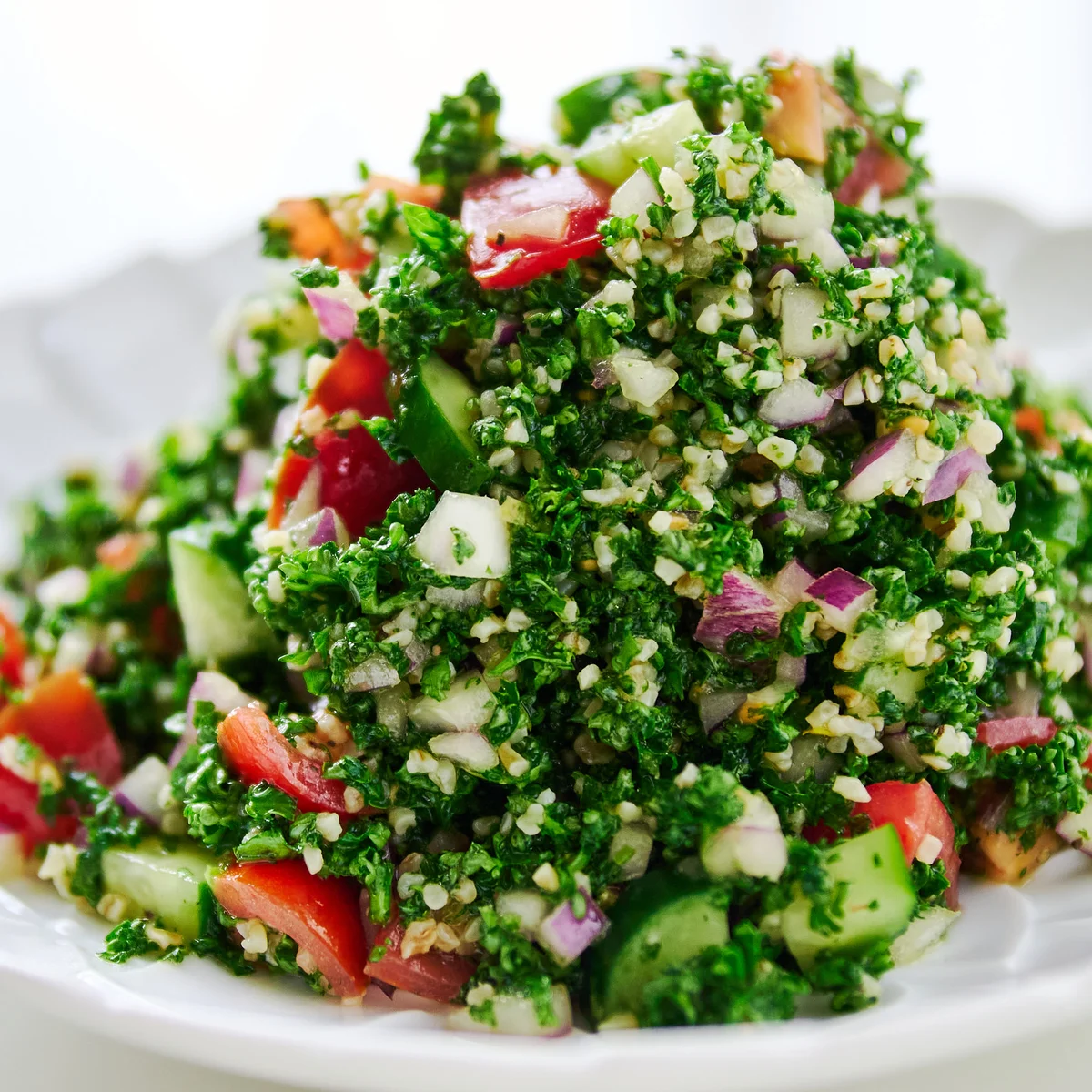
Tabbouleh is a bright Middle Eastern parsley and bulgur salad, here tossed with cucumber, ripe tomatoes and a lemony olive oil dressing. It makes a refreshing side dish, and resting the bulgur in the dressing helps it soften while taking on the citrus flavour.
Ingredients
- 5 ml (1 teaspoon)lemon zest
- 60 ml (¼ cup)lemon juice
- 60 ml (¼ cup)olive oil
- 1.25 ml (¼ teaspoon)coarsely ground black pepper
- 5 ml (1 teaspoon)salt
- 45 g (¼ cup)cracked bulgur
- ½red onion, finely diced
- 140 gflat-leaf parsley
- 140 gLebanese cucumbers, cubed (about 2 cucumbers)
- 225 gtomatoes, cubed (about 2 tomatoes)
Instructions
- 1
Soak the bulgur
Whisk the lemon zest, lemon juice, olive oil, black pepper and salt in a small bowl. Stir in the bulgur and leave it to soak for 1 to 2 hours, adjusting for the grain's coarseness and how soft you prefer it.
- 2
Soften the onion
If you find raw onion too strong, soak the diced onion in cold water with a pinch of baking soda for 30 minutes. Drain it and dry it thoroughly with paper towels before adding it to the salad.
- 3
Chop the parsley
Wash the parsley and dry it thoroughly in a salad spinner or with paper towels. Remove all the stems, roll a handful of leaves into a tight bundle and slice it as thinly as possible. Chop across those slices for an even cut.
- 4
Toss the salad
Put the parsley, cucumbers, tomatoes and onion in a large bowl. Add the soaked bulgur and its dressing, then toss to combine. Serve fresh, or leave it overnight so the flavours can meld.
What is tabbouleh?
Tabbouleh is a parsley-led salad associated with the Levant, a region of the eastern Mediterranean. It pairs fresh herbs and vegetables with bulgur and a sharp lemon dressing.
This version lets the bulgur soak directly in the seasoned dressing, so it softens while absorbing lemon and olive oil. Cucumber and ripe tomatoes bring a cool, juicy contrast to the herbs.
Nutrition and macros by portion
The nutrition label shows one serving as written: 187 calories, 3g protein, 15g carbs, 14g fat.
| Portion | Adjustment | kcal | Protein | Carbs | Fat |
|---|---|---|---|---|---|
| Lighter | Use less olive oil | 131 kcal | 2g | 11g | 10g |
| This serving | As written | 187 kcal | 3g | 15g | 14g |
| Hungry | Serve with extra bulgur | 281 kcal | 5g | 23g | 21g |
Most of the carbohydrates come from the bulgur, while olive oil supplies most of the fat; the parsley and vegetables contribute a little protein. Pair a serving with a protein-rich main such as grilled chicken, fish or chickpeas for a more substantial plate.
Why the bulgur soaks first
Dressing first: mixing the lemon, oil and seasonings before adding the bulgur gives the grains time to absorb flavour as they soften. Check them after an hour; coarser bulgur or a softer texture may need the full two hours.
Getting the herbs ready
Dry parsley: remove as much moisture as possible after washing, so water does not dilute the dressing. Removing the stems and slicing the leaves finely helps the herbs mix evenly with the other ingredients.
Balancing onion and vegetables
Mild onion: the cold-water soak is optional and useful if you prefer a gentler raw onion flavour. Dry the onion well afterwards so it does not add extra water to the bowl.
Juicy produce: ripe tomatoes and Lebanese cucumbers add freshness and crunch. Cut them into similar-sized pieces for a more even mix.
Mixing and resting
Gentle toss: once the bulgur has softened, combine it with the parsley, vegetables and all the dressing. Toss enough to distribute everything without crushing the tomatoes.
For the freshest texture, serve it the day you make it. An overnight rest gives the flavours more time to meld, though the vegetables may release some liquid.
What to serve with tabbouleh
Serve it alongside grilled vegetables, flatbreads or a main such as grilled chicken or falafel. It also works as part of a spread with hummus and other small plates.
Recipe notes & tips
- Taste the bulgur after an hour and leave it longer if it is still too firm for you.
- Dry the parsley thoroughly before chopping to keep the salad from becoming watery.
- Use a sharp knife to slice the parsley finely without bruising it.
- If the onion tastes too sharp, use the optional cold-water soak before assembling the salad.
- For the best balance, use ripe tomatoes and fresh, crisp cucumbers.
Variations
- Extra herbs: add finely chopped mint for another fresh herbal note.
- More citrus: add a little extra lemon zest for a brighter aroma.
- Milder onion: use the cold-water soak described in the method before mixing.
- Hearty side: serve with chickpeas to make the salad more filling.
- Different cucumber: use another crisp cucumber variety if Lebanese cucumbers are unavailable.
Common mistakes to avoid
- Wet parsley: excess water can thin the dressing; dry the leaves thoroughly before chopping.
- Rushed bulgur: grains that have not softened enough can stay tough; allow 1 to 2 hours of soaking.
- Large parsley pieces: uneven chopping makes the salad harder to eat; slice the leaves thinly, then chop across them.
- Undried onion: water left from soaking can dilute the salad; drain and dry the onion before adding it.
- Overmixing: vigorous tossing can crush the tomatoes; fold the ingredients together gently.
How to store
Keep leftovers covered in the fridge and eat within 1 to 2 days. The vegetables may release liquid as they sit, so stir before serving; this fresh salad is best served cold rather than reheated.
Frequently asked questions
Can I make tabbouleh ahead?
Yes. The bulgur can soak for 1 to 2 hours, and the assembled salad can rest overnight for more melded flavours. The vegetables may soften slightly as it sits.
How do I know when the bulgur is ready?
Taste a few grains after an hour. They should be softened to your liking; coarser bulgur may need up to 2 hours.
Do I need to soak the onion?
No, it is optional. Soak it in cold water with a pinch of baking soda for 30 minutes if you want a milder raw onion flavour, then drain and dry it well.
Can I use curly parsley instead?
Flat-leaf parsley is specified for this recipe. Curly parsley can be used, though its texture and chopping may feel a little different.
Can tabbouleh be frozen?
Freezing is not recommended for this salad, as the fresh parsley, cucumber and tomatoes can lose their texture when thawed.
Cook it from the original
This recipe comes from norecipes.com. Their page has the author’s own photos, notes and tips — the best place to cook it from.
Open the recipe on norecipes.com