
Chinese Red Braised Pork Belly (Hong Shao Rou)
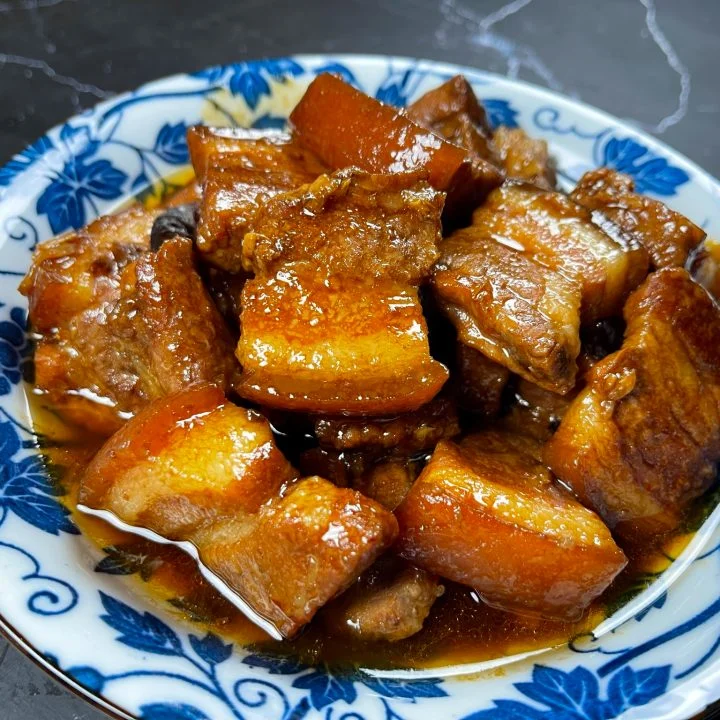
Hong Shao Rou is Chinese pork belly braised until tender in a savoury-sweet sauce flavoured with soy, rice wine, garlic and doubanjiang. The final uncovered simmer thickens the cooking liquid into a glossy coating, making this a rich centrepiece for steamed rice or noodles.
Ingredients
- 454 g (1 lb)pork belly, cut into 2.5–3.8 cm (1–1½-inch) cubes
- 4–5 clovesgarlic, smashed
- 1–2 tbspchilli bean paste (doubanjiang)
- 1–2 tbspbrown sugar or rock sugar
- 2–3 tbspmichiu (rice wine)
- 2 tbsplight soy sauce
- 1 tbspdark soy sauce
- about 355 ml (1½ cups), or enough to mostly cover the porkwater
- 1–2dried red chilli peppers (optional)
- to tastechopped spring onions, for garnish (optional)
Instructions
- 1
Fry aromatics
Set a large pot or wok over medium heat with a small amount of cooking oil. Add the garlic, brown sugar and dried red chillies, if using. Stir briefly until fragrant and the sugar starts to melt.
- 2
Brown the pork
Add the pork belly and brown it on several sides until lightly caramelised.
- 3
Add doubanjiang
Stir in the chilli bean paste, turning the pork so it is coated.
- 4
Add braising liquid
Transfer the pork to a clay pot if you like, or leave it in the same pot. Add the rice wine, light soy sauce, dark soy sauce, rock sugar and enough water to mostly cover the pork. Stir to combine.
- 5
Simmer until tender
Bring the liquid to the boil, then turn the heat to low. Cover and simmer for 50–60 minutes, stirring occasionally, until the pork is tender. For extra-soft pork, simmer for 75–90 minutes. Add a little water during cooking if needed.
- 6
Reduce the sauce
When the pork is tender, remove the lid and raise the heat to medium. Simmer uncovered for about 5–10 minutes, stirring occasionally, until the liquid has reduced to a thick, glossy sauce that coats the pork.
- 7
Garnish and serve
Scatter over chopped spring onions if using, and serve hot with steamed rice or noodles.
What is Hong Shao Rou?
Hong Shao Rou, often translated as red-braised pork, is a Chinese dish of pork cooked slowly in a seasoned braising liquid. The red-braising style gets its name from the deep colour and savoury-sweet flavour developed with soy sauce and sugar.
This version uses doubanjiang for a fermented, gently spicy savouriness, then reduces the liquid at the end so it clings to the pork rather than staying thin.
Nutrition and macros by portion
The nutrition label shows one serving as written: 608 calories, 12g protein, 1g carbs, 60g fat.
| Portion | Adjustment | kcal | Protein | Carbs | Fat |
|---|---|---|---|---|---|
| Lighter | Smaller pork portion | 426 kcal | 8g | 1g | 42g |
| This serving | As written | 608 kcal | 12g | 1g | 60g |
| Hungry | Larger portion with rice | 912 kcal | 18g | 2g | 90g |
Pork belly supplies most of the fat and protein, while the sugars and soy-based sauce contribute some carbohydrate and sodium. The listed per-serving nutrition is 608 kcal, with 12 g protein, 1 g carbohydrate and 60 g fat. Serve with a generous portion of rice or noodles and add a vegetable side to round out the plate.
Choosing the pork
Pork belly: Its layers of meat and fat become tender during the long, gentle simmer and enrich the sauce. Cut the pieces to a similar size so they cook at roughly the same rate.
Even browning: Give the cubes room to make contact with the pot and turn them to colour several sides. The aim is light caramelisation, not a hard crust.
Building the flavour
Garlic and sugar: Briefly heating these in the oil releases the garlic’s aroma and starts melting the sugar. Keep stirring so the sugar does not catch on the bottom of the pot.
Doubanjiang and soy: Stir the bean paste over the pork before adding the liquids, then use light and dark soy for a savoury base and deeper colour. Doubanjiang varies in saltiness and heat, so choose the amount to suit your taste.
Keeping the braise gentle
Low simmer: Once the liquid boils, lower the heat and cover the pot. A gentle simmer helps the pork soften without rapidly reducing the liquid.
Liquid level: The water should mostly cover the pork. Check occasionally as it cooks and add a little water if the pot is becoming too dry.
When the pork is ready
Tenderness: After 50–60 minutes, test a piece with a fork; it should be tender but still hold together. Simmer for 75–90 minutes if you prefer an extra-soft texture.
Glossy finish: Remove the lid only once the pork is tender. The final 5–10 minutes of uncovered simmering should reduce the liquid until it coats the pieces; stir so the sauce does not stick.
Serving the pork
Rice: Steamed rice is a straightforward match for the rich sauce and gives you something to catch it with. Noodles are another option, as suggested in the recipe.
Fresh garnish: Spring onions add a fresh contrast to the pork’s richness. Serve the dish hot, while the reduced sauce is still glossy.
Recipe notes & tips
- Cut the pork belly into evenly sized cubes for more consistent cooking.
- Use a small amount of oil to start, as the pork will release fat as it browns.
- Stir the garlic and sugar over medium heat so they become fragrant without scorching.
- Taste the sauce before the final reduction, keeping in mind that reducing it will concentrate its flavour.
- If the pork is still firm after 60 minutes, continue simmering gently and check it again.
- Watch the pot closely as the sauce thickens, stirring to prevent it catching.
Variations
- Adjust the heat: Use 1 tbsp doubanjiang for a milder result or 2 tbsp for more chilli-bean flavour.
- Add dried chilli: Include the optional dried red chillies with the garlic for extra heat.
- Choose rock sugar: Use rock sugar instead of brown sugar for the sweetener, as offered in the ingredient list.
- Use a clay pot: Transfer the pork to a clay pot for the covered braise if you have one.
- Change the base: Serve the pork and sauce over steamed rice or noodles.
Common mistakes to avoid
- Crowding the pot: The pork may steam rather than brown; brown it in batches if the pieces do not fit comfortably.
- Scorching the sugar: Keep it moving with the garlic and take care not to leave it over the heat too long.
- Boiling hard: Lower the heat after bringing the liquid to the boil so the pork can simmer gently.
- Letting the pot dry out: Check the liquid during braising and add a little water if needed.
- Reducing too soon: Keep the pot covered until the pork is tender, then simmer uncovered to thicken the sauce.
- Over-reducing the sauce: Stir often during the final minutes and take the pot off the heat once the sauce coats the pork.
How to store
Cool leftovers promptly and store in a covered container in the fridge for up to 3 days. Reheat gently in a saucepan until piping hot, adding a splash of water if the sauce has thickened too much.
Frequently asked questions
Can I make the pork extra tender?
Yes. The recipe suggests simmering it for 75–90 minutes for an extra-soft texture. Keep the heat low and add a little water if the pot needs it.
What can I use instead of michiu?
The recipe specifies michiu, a rice wine, and does not give a substitute. If you use another cooking rice wine, the flavour may differ.
Is Hong Shao Rou spicy?
It can have a gentle heat from the doubanjiang and optional dried chillies. Start with 1 tbsp doubanjiang and leave out the dried chillies for a milder version.
How do I know when the sauce is reduced enough?
After about 5–10 minutes uncovered, it should be thick and glossy and cling to the pork. Stir as it reduces so it does not stick.
Can I use a regular pot instead of a clay pot?
Yes. The recipe allows you to continue in the same large pot or wok; transferring to a clay pot is optional.
What should I serve with red-braised pork belly?
Serve it hot with steamed rice or noodles, as suggested in the recipe. Spring onions make an optional garnish.
Cook it from the original
This recipe comes from ohsnapletseat.com. Their page has the author’s own photos, notes and tips — the best place to cook it from.
Open the recipe on ohsnapletseat.com