
Roasted Half Chicken Recipe (Split Chicken)
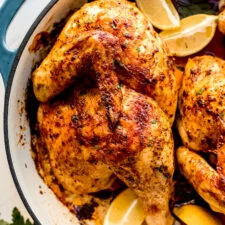
This American-style roast chicken is split into two halves, then rubbed with butter, smoked paprika and lemon before roasting. Splitting the bird helps it cook more evenly and makes it easier to carve at the table.
Ingredients
- 1 (1.8–2.3 kg; 4–5 lb)whole chicken
- 57 g (4 tbsp)unsalted butter, at room temperature
- 10 ml (2 tsp)smoked paprika
- 15 ml (about 1 tbsp)juice of half a lemon
- to tastekosher salt and freshly ground black pepper
Instructions
- 1
Prepare the chicken
Remove the giblets, trim away excess fat and pat the chicken dry with paper towels.
- 2
Cut out the backbone
Set the chicken breast-side down on a large cutting board, with the neck end facing you. Using sharp kitchen shears, cut down one side of the backbone, as close to it as possible, to separate it from the ribs. Repeat along the other side.
- 3
Separate the halves
Turn the chicken over. Cut through the cartilage and soft breastbone down the centre so the chicken divides into two halves. Put them on a clean cutting board lined with several layers of paper towels and leave at room temperature for 30 minutes.
- 4
Preheat the oven
Heat the oven to 220°C (425°F).
- 5
Dry the chicken
Pat the chicken dry again with a clean paper towel, then transfer it to a baking sheet or ovenproof skillet.
- 6
Rub with butter
Coat the chicken all over with the softened butter. The butter spreads more easily when it is very soft, and the chicken should be as dry as possible.
- 7
Season the halves
Sprinkle paprika over the skin and underside, then season generously with salt. Lift the halves to season all over, including beneath the wings and around the legs. Finish with black pepper and squeeze the lemon juice over the chicken.
- 8
Roast until done
Roast for 35–40 minutes. The chicken is ready when the internal temperature reaches 74°C (165°F), or the juices run clear when you cut between a leg and thigh.
- 9
Rest before serving
Take the chicken out of the oven, cover it loosely with foil and leave it to rest for 10–15 minutes before serving.
What is roasted half chicken?
Roasted half chicken is a whole bird divided into two portions before cooking. It belongs to the broad American tradition of oven-roasted chicken: a simple main course built around crisp skin, well-seasoned meat and familiar accompaniments.
This version uses butter to coat the chicken and smoked paprika and lemon for savoury, bright flavour. Splitting the bird also makes it simpler to season underneath and check for doneness.
Nutrition and macros by portion
The nutrition label shows one serving as written: 521 calories, 82g protein, 1g carbs, 19g fat.
| Portion | Adjustment | kcal | Protein | Carbs | Fat |
|---|---|---|---|---|---|
| Lighter | Less butter, more vegetables | 365 kcal | 57g | 1g | 13g |
| This serving | As written | 521 kcal | 82g | 1g | 19g |
| Hungry | Add a potato side | 782 kcal | 123g | 2g | 28g |
The chicken supplies most of the protein, while the butter contributes much of the fat; the paprika and lemon add very little carbohydrate. Serve a half-chicken portion with vegetables and a modest helping of potatoes or another starch to round out the plate.
Why split the chicken?
Backbone: Cutting close to the spine leaves as much meat on the chicken as possible. Kitchen shears are useful here; work carefully on a stable board.
Breastbone: Cutting through the cartilage and soft bone lets the bird divide into two halves. If it resists, reposition the knife or shears rather than forcing a slippery chicken.
Dry skin and softened butter
Drying: Patting the chicken dry before seasoning helps the butter and spices cling to the surface. The second pat after the 30-minute rest removes moisture that has collected on the skin.
Butter: Use butter that is soft enough to spread without tearing the skin. Rub it across the skin and underside so the seasoning has an even coating.
Season every surface
Paprika: Smoked paprika gives the chicken a rounded, smoky note. Sprinkle it across both the skin and underside rather than concentrating it in one place.
Salt and pepper: Lift the halves to reach the underside, wings and legs. Lemon goes on last, so its juice is distributed over the seasoned chicken.
Check doneness carefully
Temperature: Check the thickest part of the chicken with a food thermometer, avoiding the bone. The method gives 74°C (165°F) as the target temperature.
Juices: If you are checking without a thermometer, cut between the leg and thigh and look for clear juices. Since ovens and chicken sizes can vary, use the doneness cues rather than time alone.
Rest, then serve
Resting: A loose foil cover keeps the chicken warm while it rests for 10–15 minutes. This gives you time to prepare side dishes and makes the meat easier to carve.
Sides: Serve with roasted potatoes, green vegetables or a crisp salad. A simple pan of vegetables makes a good contrast to the buttery, savoury chicken.
Recipe notes & tips
- Use sharp kitchen shears and keep the chicken steady while removing the backbone.
- Save the backbone for stock if you do not want to discard it.
- Soften the butter until it spreads easily, but do not melt it.
- Season underneath the wings and legs as well as across the main surfaces.
- Check the temperature in the thickest meat, keeping the thermometer tip away from bone.
- Let the chicken rest loosely covered so it stays warm without trapping too much steam.
Variations
- Add garlic: Mix finely grated garlic into the softened butter before rubbing it on.
- Use fresh herbs: Add chopped thyme or rosemary to the butter for an aromatic note.
- Change the paprika: Use sweet paprika for a milder flavour or hot paprika for more heat.
- Add citrus zest: Finely grate lemon zest over the chicken before roasting for a more fragrant finish.
- Season with herbs: Add dried oregano to the paprika for a different savoury profile.
Common mistakes to avoid
- Leaving the skin damp: Pat it dry again before buttering so the coating can spread evenly.
- Cutting far from the backbone: Stay close to the spine to avoid removing unnecessary meat.
- Using firm butter: Let it soften first so you can coat the chicken without pulling at the skin.
- Missing the underside: Lift each half and season beneath the wings and legs as well.
- Relying only on the clock: Check the thickest part for 74°C (165°F) and allow extra time if needed.
- Skipping the rest: Leave the chicken for 10–15 minutes before carving.
How to store
Refrigerate leftover chicken in an airtight container within 2 hours and use within 3–4 days. Reheat until piping hot throughout; covering it while reheating can help keep the meat moist.
Frequently asked questions
Can I split the chicken ahead of time?
Yes. You can split and pat it dry ahead, then keep it covered in the fridge. Bring it out for the recipe's 30-minute room-temperature rest before roasting.
Can I use a roasting tin instead of a skillet?
Yes. Use a baking sheet or roasting tin large enough to hold both halves without crowding them.
Do I need to turn the chicken while it roasts?
The method does not call for turning it. Roast the halves as arranged on the baking sheet or ovenproof skillet.
How do I know when the chicken is cooked?
Check for 74°C (165°F) in the thickest part, away from the bone. Alternatively, the juices should run clear when you cut between the leg and thigh.
Can I make this without smoked paprika?
Yes. Use sweet paprika instead for a less smoky flavour, or leave it out and season with salt and pepper.
Can I use salted butter?
You can, but the recipe calls for unsalted butter so you can control the salt more easily. If using salted butter, season more cautiously.
Cook it from the original
This recipe comes from littlebroken.com. Their page has the author’s own photos, notes and tips — the best place to cook it from.
Open the recipe on littlebroken.com