
Dill Salmon Recipe (Salmon with Creamy Dill Sauce)
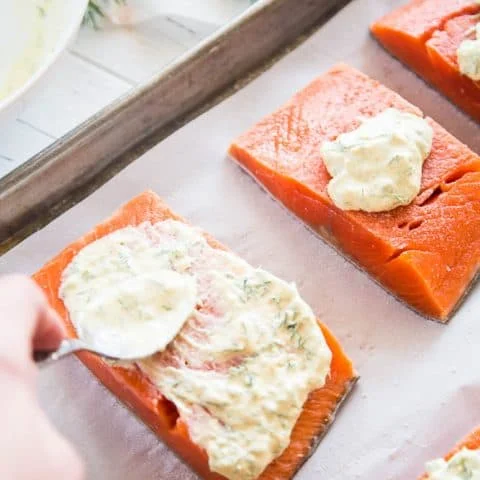
Roasted salmon fillets are topped with a creamy sauce of dill, chives, garlic and lemon. This quick oven-baked supper is a simple way to let fresh herbs brighten the rich flavour of salmon.
Ingredients
- 6 fillets, about 113–142 g (4–5 oz) eachsalmon
- to tastepink Himalayan salt
- 80 ml (⅓ cup)paleo-friendly mayonnaise
- 1 clovegarlic, grated or crushed
- 15 ml (1 tablespoon) fresh, or 7.5 ml (1½ teaspoons) driedchives, chopped
- 45 ml (3 tablespoons) fresh, or 2.5 ml (½ teaspoon) drieddill, chopped
- 15 ml (1 tablespoon)nutritional yeast or freshly grated Parmesan
- 15–30 ml (1–2 tablespoons)lemon juice, from ½ a lemon
Instructions
- 1
Preheat the oven
Heat the oven to 175°C (350°F).
- 2
Season the salmon
Arrange the salmon fillets on a baking tray lined with parchment and sprinkle them with salt.
- 3
Mix the sauce
In a small bowl, stir together the mayonnaise, garlic, chives, dill, nutritional yeast and lemon juice.
- 4
Top the fillets
Spread 1–2 tablespoons of sauce over each fillet, using all of it.
- 5
Bake until tender
Bake for 12–15 minutes, until the salmon is just cooked through. It should flake fairly easily with a fork without becoming stiff or rubbery.
- 6
Cool and serve
Set the salmon aside to cool, then serve.
What is salmon with creamy dill sauce?
This is a straightforward baked salmon dish with a creamy, herb-flecked topping. Dill is a familiar companion to salmon in northern European cooking, where its fresh, lightly anise-like flavour complements oily fish.
Here, mayonnaise gives the sauce body, while garlic, chives and lemon bring savoury and bright notes. The topping bakes directly onto the fillets, so there is no separate sauce to cook.
Nutrition and macros by portion
The nutrition label shows one serving as written: 365 calories, 27g protein, 2g carbs, 27g fat.
| Portion | Adjustment | kcal | Protein | Carbs | Fat |
|---|---|---|---|---|---|
| Lighter | Use less mayonnaise | 255 kcal | 19g | 1g | 19g |
| This serving | As written | 365 kcal | 27g | 2g | 27g |
| Hungry | Add a larger fillet | 548 kcal | 41g | 3g | 41g |
Salmon supplies most of the protein and some of the fat, while mayonnaise adds a substantial share of the fat and energy. The fish contributes very little carbohydrate; the small amount comes mainly from the sauce ingredients. Serve with vegetables and a moderate portion of potatoes or another grain to make a balanced plate.
Choosing the salmon
Fillet size: The recipe allows for pieces of about 113–142 g each. Aim for fillets of similar thickness so they cook at roughly the same pace.
Skin: Skin-on or skinless fillets both work on a parchment-lined tray. Keep the skin side down if present, which makes the cooked fish easier to lift away from the paper.
Making the herb topping
Fresh herbs: Fresh dill and chives give the topping its clearest herbal flavour. Chop them finely so they distribute evenly through the mayonnaise.
Dried herbs: Use the alternative dried quantities listed if fresh herbs are unavailable. Stir the sauce well so the garlic and seasonings are evenly spread.
Getting the bake right
Oven heat: Bake at 175°C (350°F) for 12–15 minutes, as a guide. The exact time depends on the thickness of the fillets and how cold they are when they go into the oven.
Doneness: Check the thickest part with a fork near the end of cooking. The fish should separate into flakes readily but still look moist, rather than feeling firm and rubbery.
Balancing the lemon and garlic
Lemon: The recipe gives a range of 15–30 ml of juice. Start at the lower end for a gentler tang, or use more if you prefer a brighter sauce.
Garlic: One grated or crushed clove flavours the mayonnaise throughout. Grating it finely helps avoid large, sharp pieces in the finished topping.
Serving the salmon
Fresh sides: Serve with green vegetables, such as broccoli or green beans, and boiled or roasted potatoes for a simple meal.
Extra brightness: A wedge of lemon or a crisp green salad works well alongside the rich, creamy topping. Spoon any sauce left on the tray over the fish just before serving.
Recipe notes & tips
- Choose fillets of similar thickness to help them finish baking together.
- Chop the dill and chives finely so they are spread evenly through the sauce.
- Line the tray with parchment to make serving and clean-up easier.
- Begin checking the salmon at 12 minutes, especially if the fillets are thin.
- Season the fish lightly at first, since you can add more salt at the table.
Variations
- Use Parmesan: Swap the nutritional yeast for the same amount of freshly grated Parmesan.
- Add extra lemon: Use the full 30 ml of juice for a sharper, more citrus-forward topping.
- Try dried herbs: Use the listed dried quantities when fresh dill or chives are not available.
- Add black pepper: Season the fillets with a little freshly ground pepper along with the salt.
- Serve with greens: Add steamed broccoli or green beans to make the meal more vegetable-led.
Common mistakes to avoid
- Overbaking the fish: Start checking at 12 minutes and take it out once it flakes easily.
- Uneven fillets: Pieces of very different thicknesses cook at different speeds; group similar-sized fillets together.
- Too much salt: Mayonnaise and Parmesan can both be salty, so season the salmon with a light hand.
- Coarse garlic pieces: Grate or crush the clove finely so its flavour is distributed through the sauce.
- Skipping the parchment: Line the tray to help prevent the sauce and fish from sticking.
How to store
Refrigerate leftover salmon in a covered container for up to 3 days. Reheat gently in a low oven or microwave until warmed through, taking care not to overcook it; it can also be eaten cold.
Frequently asked questions
Can I use frozen salmon?
Yes, but thaw it fully in the fridge first and pat it dry before seasoning and adding the sauce. Excess surface water can make the topping runny.
Can I make the sauce ahead?
You can mix it a few hours ahead and keep it covered in the fridge. Stir it again before spreading it over the salmon.
How do I know when the salmon is cooked?
Check the thickest part: it should separate into flakes with gentle pressure from a fork while remaining moist. Begin checking at 12 minutes, as thickness affects cooking time.
Can I use dried dill and chives?
Yes. Use 2.5 ml (½ teaspoon) dried dill and 7.5 ml (1½ teaspoons) dried chives, as listed in the ingredients.
What can I use instead of nutritional yeast?
Use 15 ml (1 tablespoon) freshly grated Parmesan for the alternative given in the recipe.
Can I cook this without parchment?
Yes. Use a lightly greased baking tray if needed, though parchment makes it easier to lift the fillets and clean the tray.
Cook it from the original
This recipe comes from perrysplate.com. Their page has the author’s own photos, notes and tips — the best place to cook it from.
Open the recipe on perrysplate.com