
Saganaki - Greek Fried Cheese
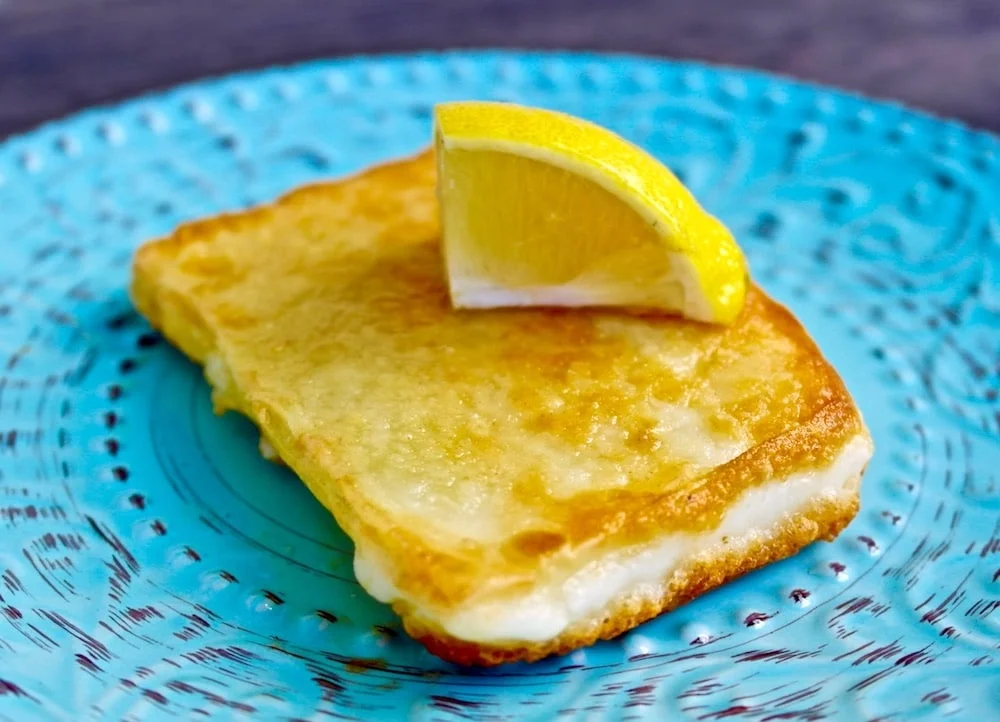
Saganaki is Greek fried cheese with a crisp, golden flour coating and a soft, melting centre. It takes only minutes to cook and is best served piping hot with lemon.
Ingredients
- 1 tablespoonolive oil
- to tasteflour
- 1 slice, about 85–113 g (3–4 oz)kefalotyri or another hard cheese, cut into a thick square
- to tastelemon, for serving
Instructions
- 1
Coat the cheese
Dip the cheese in cold water, then coat it in flour. Shake off the excess and smooth the coating over the surface with your fingers.
- 2
Fry until golden
Heat 1 tablespoon of olive oil in a small pan over medium heat. When the oil is hot, add the cheese and fry for about 2 minutes. Carefully turn it with a thin rubber spatula, taking care not to dislodge the crust, and fry the other side for about 2 minutes, until golden.
- 3
Finish with lemon
Transfer the cheese to a plate, squeeze lemon over it and serve straight away.
What is saganaki?
Saganaki is a Greek appetiser of cheese cooked until its coating turns crisp and its middle softens. The name is also associated with the small pan used to cook dishes this way.
This simple version relies on a quick flour coating and a hot pan, then finishes with lemon to cut through the cheese’s richness.
Nutrition and macros by portion
The nutrition label shows one serving as written: 145 calories, 0g protein, 0g carbs, 0g fat.
| Portion | Adjustment | kcal | Protein | Carbs | Fat |
|---|---|---|---|---|---|
| Lighter | Use less olive oil | 102 kcal | 0g | 0g | 0g |
| This serving | As written | 145 kcal | 0g | 0g | 0g |
| Hungry | Serve with bread | 218 kcal | 0g | 0g | 0g |
The cheese supplies most of the protein and fat, with olive oil adding fat and the flour coating contributing some carbohydrate. Pair a piece with salad or vegetables, and add bread if you want a more substantial plate.
Choosing the cheese
Hard cheese: Kefalotyri is a traditional choice for frying, but another firm hard cheese can work. A thick slice is easier to turn and helps the outside brown before the centre becomes too soft.
Slice size: The recipe uses one slice of about 85–113 g. Keep it evenly thick so it cooks at a similar rate across the surface.
Getting the coating to cling
Cold water: Dip the cheese briefly before flouring so the flour has something to adhere to. Shake away extra water rather than leaving the surface dripping.
Flour: Coat all sides, then remove excess and smooth the flour with your fingers. A thin, even layer is less likely to slip when the cheese is turned.
Frying without losing the crust
Hot pan: Heat the olive oil over medium heat and wait until it is hot before adding the cheese. If the pan is not ready, the coating may not start browning promptly.
Careful turn: Fry for about 2 minutes on each side. Slide a thin spatula underneath and turn gently, watching that the crust stays in place.
Serving it at its best
Timing: Saganaki is at its best immediately after frying, while the outside is crisp and the centre is still soft. Squeeze lemon over it just before serving.
On the table: Offer it as a warm starter or shareable appetiser. Bread and a fresh salad make simple accompaniments without competing with the cheese.
Adjusting the plate
Cheese: The cheese provides most of the dish’s protein and fat, while the flour coating contributes a small amount of carbohydrate. Olive oil adds further fat.
Balance: Serve a modest piece alongside salad or vegetables and bread if you want a more rounded plate.
Recipe notes & tips
- Pat the cheese dry of excess water before flouring so the coating is not pasty.
- Shake away loose flour to help the crust stay neat in the pan.
- Use a small pan so the olive oil coats the cooking area.
- Choose a thin, flexible spatula to make turning easier.
- Have the lemon and serving plate ready before frying, as the cheese is best served hot.
Variations
- Add oregano: Sprinkle a little over the cheese just before serving.
- Use another hard cheese: Choose a firm cheese that can be cut into a thick slice.
- Add black pepper: Grind a little over the finished cheese for a peppery note.
- Serve with herbs: Add chopped parsley alongside the lemon.
- Make it a platter: Serve with bread and a crisp salad as well as lemon.
Common mistakes to avoid
- Using a thin slice: It can soften too quickly; choose a thick, even piece of cheese.
- Leaving excess water on: Wet cheese can make the flour coating uneven; shake off the water before dredging.
- Leaving loose flour on: Excess flour can come away in the pan; shake it off and smooth the coating.
- Turning too soon or roughly: The crust may slide off; fry for about 2 minutes and turn carefully with a thin spatula.
- Waiting to serve: The crust loses its crispness as it sits; bring it to the table straight from the pan.
How to store
Saganaki is best eaten immediately. If you have leftovers, refrigerate them in a covered container and use within 2 days; reheat briefly in a pan, though the crust may not regain its original crispness.
Frequently asked questions
What cheese can I use instead of kefalotyri?
Use another hard cheese that can be cut into a thick slice and fried. The result will vary depending on how it melts.
Why dip the cheese in water first?
The brief dip helps the flour adhere to the cheese. Shake off excess water before coating.
How do I stop the crust coming off?
Shake away excess flour and smooth the coating over the cheese. Turn it gently with a thin spatula after the first side has fried for about 2 minutes.
How do I know when saganaki is ready?
The coating should be golden after about 2 minutes on each side. Serve it promptly so the middle stays soft and the outside crisp.
Can I make saganaki ahead?
It is better cooked just before serving, since the crust softens as it sits. Prepare the lemon and plate in advance instead.
What should I serve with saganaki?
Serve it with lemon, as directed, and offer bread or a fresh salad alongside.
Cook it from the original
This recipe comes from olivetomato.com. Their page has the author’s own photos, notes and tips — the best place to cook it from.
Open the recipe on olivetomato.com