
Seafood Stir Fry (Shrimp & Squid Recipe)
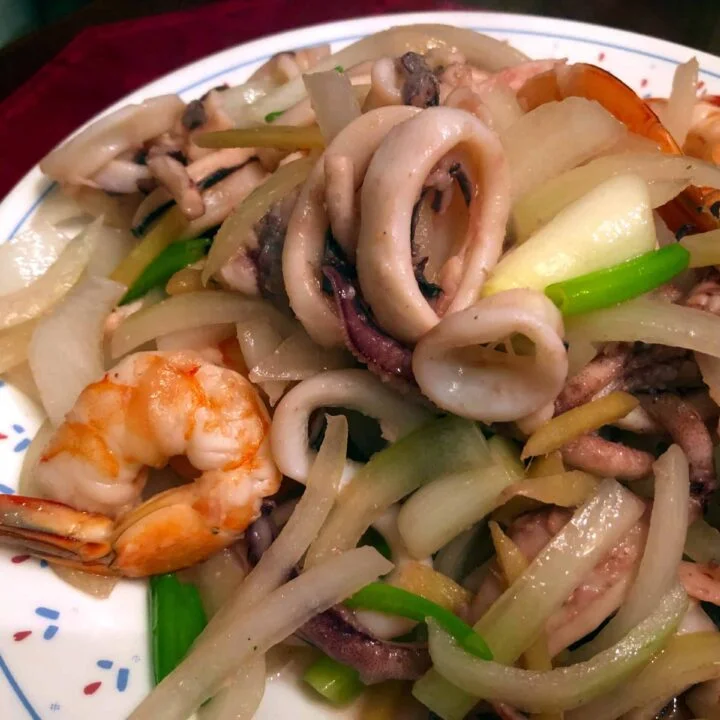
This quick Chinese-style seafood stir-fry pairs shrimp and squid with ginger, onion and spring onions. A brief blanch followed by a fast stir-fry keeps the seafood tender and makes this a simple but eye-catching dinner.
Ingredients
- 10large shrimp, peeled and deveined
- 2 mediumsquid, tentacles separated and bodies cut into rings (or pre-cut rings)
- 1/3onion, sliced
- 2spring onions, chopped into 2.5 cm pieces
- 30 ml (2 tbsp)olive oil or another neutral oil for stir-frying
- 10 ml (2 tsp)fresh ginger, sliced
- to tastesalt
- 5–10 ml (1–2 tsp), optionalsoy sauce
Instructions
- 1
Blanch the seafood
Bring a medium saucepan of water to the boil. Add the shrimp and squid and blanch for about 30 seconds. Drain and set aside.
- 2
Fry the aromatics
Heat the oil in a wok or frying pan over a high heat. Add the ginger and onion and stir-fry for about 1 minute, until fragrant.
- 3
Cook the seafood
Add the shrimp and squid and stir-fry for 2 minutes, or until fully cooked.
- 4
Season and serve
Season with salt to taste and, if using, drizzle in the soy sauce. Add the spring onions, toss everything together and serve immediately.
What is seafood stir-fry?
Stir-frying is a Chinese cooking technique in which ingredients are cooked quickly over high heat, with frequent tossing. This version brings together shrimp and squid with ginger, onion and spring onions for a savoury, fresh-tasting dish.
The brief blanch before stir-frying is a useful feature here: it gives the seafood a head start so the final cooking can stay quick.
Nutrition and macros by portion
The nutrition label shows one serving as written: 208 calories, 14g protein, 6g carbs, 15g fat.
| Portion | Adjustment | kcal | Protein | Carbs | Fat |
|---|---|---|---|---|---|
| Lighter | Use less oil | 146 kcal | 10g | 4g | 11g |
| This serving | As written | 208 kcal | 14g | 6g | 15g |
| Hungry | Add steamed rice | 312 kcal | 21g | 9g | 23g |
The shrimp and squid provide most of the protein, while the oil is the main source of fat. The small amount of onion and spring onion contributes some carbohydrate; serve with rice or noodles if you want a more filling plate, or add vegetables alongside.
Choosing the seafood
Shrimp: Use peeled and deveined shrimp so they are ready to cook. If using frozen shrimp, thaw them fully and pat them dry before blanching.
Squid: Fresh or pre-cut rings both work. Keep the tentacles if they are included; cutting the body into rings helps the pieces cook evenly.
Why blanch first?
Briefly blanching the shrimp and squid for about 30 seconds starts the cooking without leaving them in the pan for long. Drain them well so excess water does not dilute the oil and aromatics.
The final two-minute stir-fry is still important: cook the seafood until fully done, but avoid extending the time unnecessarily, as squid can become chewy when overcooked.
Build the flavour quickly
Ginger and onion: Stir-fry these in the hot oil for about 1 minute, just until fragrant. Keep them moving so they flavour the oil without catching.
Spring onions: Add them at the end and toss briefly. This preserves their fresh flavour and gives the finished dish a little colour.
Getting the texture right
Use a properly heated wok or frying pan before adding the oil and aromatics. Once the seafood goes in, toss it around the pan so it cooks evenly.
The shrimp should be fully cooked and the squid opaque. Serve as soon as the spring onions have been mixed through, rather than leaving the seafood in the hot pan.
What to serve alongside
Serve the stir-fry with steamed rice to make a more substantial meal, or pair it with noodles. Plain rice also lets the ginger and seafood flavours stand out.
For a fuller plate, add a simple side of stir-fried greens or steamed vegetables. Keep any side seasoning light if you use the optional soy sauce in the seafood.
Recipe notes & tips
- Prepare and slice all the ingredients before heating the wok, as the cooking moves quickly.
- Drain the blanched seafood thoroughly before adding it to the pan.
- Use a neutral oil if you prefer a flavour that is less pronounced than olive oil.
- Add soy sauce gradually, tasting before adding more salt.
- Serve immediately so the seafood does not continue cooking in the hot pan.
Variations
- Add vegetables: Toss in sliced peppers or greens and stir-fry until just tender.
- Make it spicier: Add sliced fresh chilli with the ginger.
- Use garlic: Add a little sliced garlic alongside the ginger for a stronger savoury note.
- Choose another oil: Use a neutral stir-frying oil in place of olive oil.
- Add more soy: Use the optional soy sauce for a deeper savoury seasoning, then adjust the salt.
Common mistakes to avoid
- Skipping the draining: Excess blanching water can make the stir-fry watery; drain the seafood well.
- Overcooking the seafood: Shrimp and squid can turn tough; follow the brief blanch and two-minute stir-fry, checking for doneness.
- Crowding the pan: A crowded pan can lose heat; use a wide wok or frying pan and stir-fry in batches if needed.
- Letting the ginger catch: Burnt ginger can taste bitter; stir constantly and keep the aromatics to about 1 minute.
- Adding too much soy sauce: It can overwhelm the seafood; start with a small amount and taste before adding more.
How to store
Refrigerate leftovers in a sealed container and use within 1–2 days. Reheat gently in a frying pan just until hot, taking care not to cook the seafood for longer than necessary; the texture is best when freshly made.
Frequently asked questions
Can I use frozen shrimp or squid?
Yes. Thaw them fully in the fridge first, then drain and pat dry before cooking.
Can I use pre-cut squid rings?
Yes. The recipe allows for pre-cut rings, so add them in place of squid cut at home.
How do I know when the seafood is cooked?
The shrimp should be fully cooked and the squid opaque. Follow the stated cooking times as a guide and check the thickest pieces.
Is soy sauce essential?
No, it is optional. The dish can be seasoned with salt alone, or you can add 1–2 teaspoons for extra savoury flavour.
What can I serve with this stir-fry?
Steamed rice or noodles make it a more substantial meal. A side of greens or other vegetables also works well.
Cook it from the original
This recipe comes from ohsnapletseat.com. Their page has the author’s own photos, notes and tips — the best place to cook it from.
Open the recipe on ohsnapletseat.com