
Taiwanese Fried Chicken (台式鸡排)
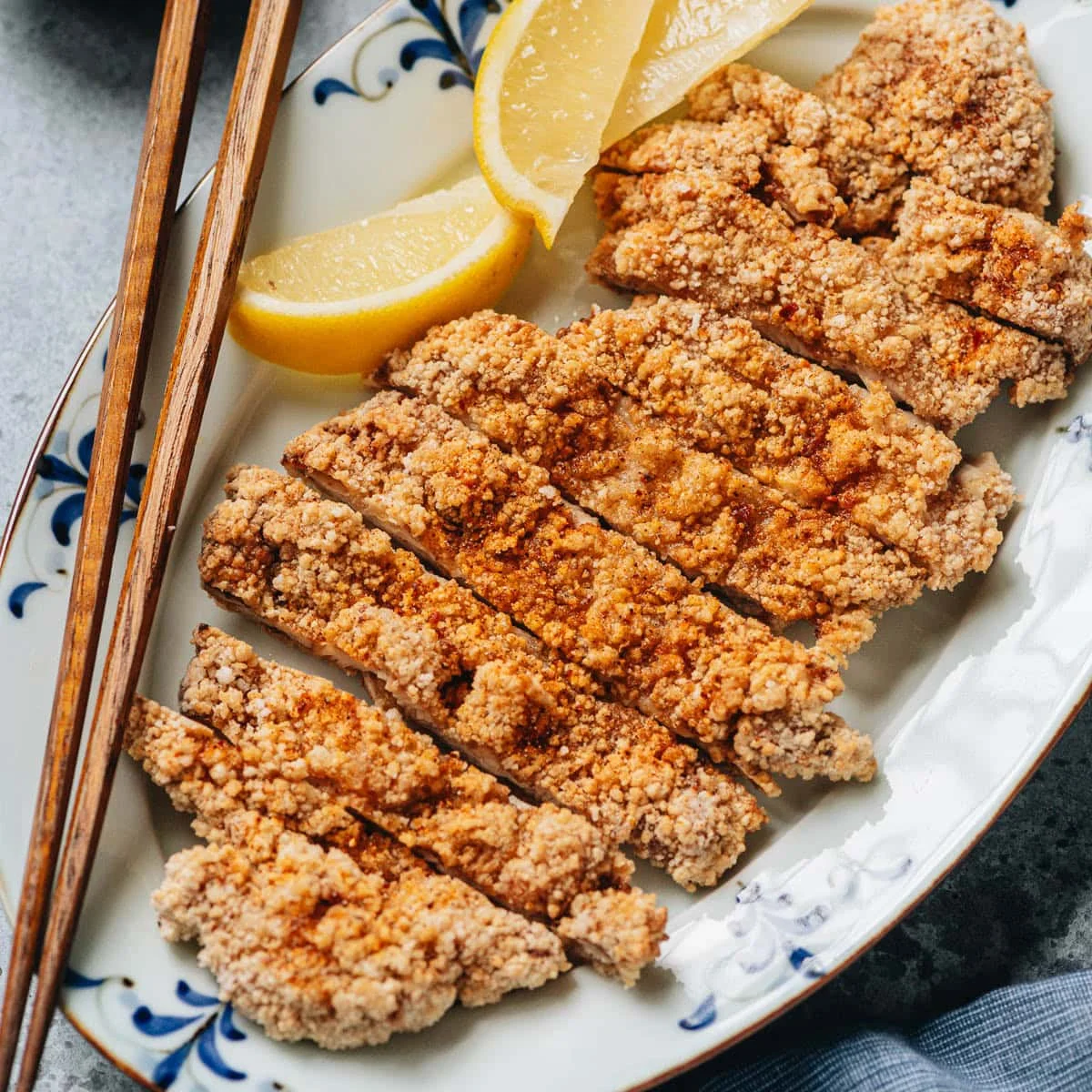
Taiwanese fried chicken is a large, crisp-coated chicken cutlet seasoned with a savoury, aromatic marinade and a finishing spice mix. It makes a satisfying main with lemon and mayonnaise, and the overnight marinade can be prepared ahead.
Ingredients
- 454 g (1 lb)boneless, skinless chicken thighs (or breasts)
- 30 ml (2 tablespoons)light soy sauce
- 15 ml (1 tablespoon)Shaoxing wine
- 15 ml (1 tablespoon)sugar
- 2.5 cm (1 inch)ginger, grated
- 3 clovesgarlic, grated
- 1 teaspoonwhite pepper
- 1 teaspoonfive-spice powder
- 1 teaspoonsalt
- 1/4 teaspoonChinese chilli flakes
- 1/4 teaspoonpaprika
- 1/4 teaspoonfive-spice powder
- 1/4 teaspoonwhite pepper
- 1/4 teaspoongarlic powder
- 950 ml (2 pints)peanut oil, for frying
- 3eggs
- 30 g (1/4 cup)cornflour
- 240 ml (1 cup)chunky sweet potato starch (or panko breadcrumbs)
- To servelemon wedges
- To servemayonnaise
Instructions
- 1
Pound the chicken
Working with one piece at a time, place the chicken on a chopping board and cover it with cling film. Use a meat tenderiser or the back of a heavy knife to pound it until it is evenly about 8 mm (1/3 inch) thick. If a chicken breast is thick, slice it horizontally into two thinner pieces before pounding.
- 2
Marinate the chicken
Mix the marinade ingredients in a medium bowl. Arrange the pounded chicken in a plate or tray and pour over the marinade; turn and rub the pieces gently so they are evenly coated. Cover with cling film and refrigerate for at least 3 hours, preferably overnight.
- 3
Set up the station
Beat the eggs with the cornflour in a wide bowl until the cornflour is mostly dissolved; a few small lumps are fine. Put the sweet potato starch in a large bowl. Set out a tray for the coated chicken and another tray lined with a wire rack for the fried pieces.
- 4
Mix the spices
Combine all the spice-mix ingredients in a small bowl.
- 5
Coat the chicken
Coat one piece at a time: lift it from the marinade and let the excess drip away, then turn it in the egg mixture. Shake off excess egg, coat both sides in sweet potato starch and place it on the prepared tray.
- 6
Fry the chicken
Heat the oil in a wok or large, high-sided pan over medium-high heat to 185°C (365°F). Carefully lower in a coated chicken piece and fry for 2 minutes. Turn it carefully with tongs and fry for another 2 minutes, until light golden and cooked through. Transfer it to the rack-lined tray to drain, then fry the remaining chicken.
- 7
Add the spice mix
While the chicken is still hot, sprinkle the spice mix evenly over both sides.
- 8
Serve straight away
Serve immediately as a main dish. The chicken is enjoyable on its own, or with lemon wedges and a squeeze of mayonnaise.
What is Taiwanese fried chicken?
Taiwanese fried chicken is a popular night-market-style snack, often made as a broad, thin cutlet with a crisp coating. This version builds flavour in two stages: a savoury marinade, followed by a fragrant seasoning sprinkled over the chicken after frying.
Pounding the meat to an even thickness helps it cook quickly, while chunky sweet potato starch gives the coating a distinctive craggy crunch.
Nutrition and macros by portion
The nutrition label shows one serving as written: 366 calories, 25g protein, 18g carbs, 21g fat.
| Portion | Adjustment | kcal | Protein | Carbs | Fat |
|---|---|---|---|---|---|
| Lighter | Use less mayonnaise | 256 kcal | 17g | 12g | 15g |
| This serving | As written | 366 kcal | 25g | 18g | 21g |
| Hungry | Serve with extra sides | 549 kcal | 37g | 26g | 32g |
The chicken supplies most of the protein, while the starch coating contributes carbohydrates. Frying oil and the eggs account for much of the fat, and the soy sauce and added salt contribute sodium. Pair a cutlet with vegetables or salad for a more balanced plate.
The marinade and seasoning
Marinade: Soy sauce, Shaoxing wine, sugar, ginger, garlic, salt, white pepper and five-spice flavour the chicken before it is coated. Give the pieces time to absorb the mixture; the recipe recommends at least 3 hours and preferably overnight.
Finishing spices: The separate mix of chilli flakes, paprika, five-spice, white pepper and garlic powder goes on after frying. Sprinkling it over hot chicken helps it cling to the crust.
Getting the coating right
Egg mixture: Whisk the eggs and cornflour together until the cornflour is mostly incorporated. Small lumps are acceptable, so there is no need to keep whisking until perfectly smooth.
Starch: Let excess marinade and egg mixture drip off before coating each piece. Press or turn the chicken so both sides are covered in the sweet potato starch, then set it aside on the tray.
Frying for a crisp crust
Temperature: Bring the oil to 185°C (365°F) before adding the chicken. Use a thermometer to check the temperature if you have one, and lower each piece into the oil carefully.
Doneness: Fry each cutlet for 2 minutes, turn it with tongs, then fry for another 2 minutes. The coating should be light golden and the chicken cooked through; transfer it to a wire rack to drain.
Planning the timing
The hands-on steps are straightforward, but marinating is the part to plan ahead. Set the chicken in the marinade the night before if that suits your schedule, or allow at least 3 hours in the fridge.
Prepare the bowls, trays and spice mix before heating the oil. The chicken is best served right after frying, while the crust is hot and crisp.
What to serve with it
Lemon: Serve wedges alongside so each person can add a squeeze at the table. The citrus gives a bright contrast to the savoury coating.
Mayonnaise: A little mayonnaise is an optional finishing touch. For a fuller plate, serve the cutlets with a simple salad or steamed vegetables.
Recipe notes & tips
- Pound the chicken between layers of cling film to keep the work surface tidy.
- Aim for an even thickness so the cutlets cook at a similar rate.
- Let each piece drain briefly after the marinade and egg coating to avoid excess clumps.
- Arrange the coated chicken on a tray before you start frying.
- Sprinkle on the spice mix while the chicken is still hot.
- Use a wire rack for draining so the undersides stay crisp.
Variations
- Use chicken breast: Slice a thick breast horizontally before pounding, as directed in the method.
- Try panko: Replace the sweet potato starch with panko breadcrumbs for a different crust.
- Add more heat: Increase the chilli flakes in the finishing spice mix to taste.
- Serve with citrus: Offer extra lemon wedges for a brighter finish.
- Skip the mayonnaise: Serve with lemon alone for a simpler accompaniment.
Common mistakes to avoid
- Uneven thickness: Pound the chicken to about 8 mm so it cooks evenly.
- Short marinating: Allow at least 3 hours in the fridge, preferably overnight.
- Wet coating: Drain excess marinade and shake off extra egg before adding the starch.
- Oil at the wrong temperature: Heat it to 185°C before frying each cutlet.
- Crowding the pan: Fry the pieces one at a time if needed so they can be turned safely.
- Seasoning too late: Sprinkle on the spice mix while the chicken is still hot.
How to store
Refrigerate leftover chicken in a covered container and use within 3–4 days. Reheat in an oven until hot throughout to help restore some crispness; the coating will soften during storage.
Frequently asked questions
Can I use chicken breasts instead of thighs?
Yes. If a breast is thick, slice it horizontally into two thinner pieces, then pound it evenly to about 8 mm.
How long should I marinate the chicken?
Refrigerate it for at least 3 hours, preferably overnight.
Can I use panko instead of sweet potato starch?
Yes. The ingredient list gives panko breadcrumbs as an alternative, though the finished crust will differ.
How do I know when the chicken is cooked?
Follow the method's timing of 2 minutes per side at 185°C oil, and check that the chicken is cooked through. The coating should be light golden.
Can I prepare the chicken ahead?
You can marinate it ahead and keep it covered in the fridge. For the best crispness, coat and fry it shortly before serving.
What should I serve with Taiwanese fried chicken?
Serve it with lemon wedges and mayonnaise, as suggested, or add a simple salad or vegetables to make it a fuller meal.
Cook it from the original
This recipe comes from omnivorescookbook.com. Their page has the author’s own photos, notes and tips — the best place to cook it from.
Open the recipe on omnivorescookbook.com