
Swiss Roll
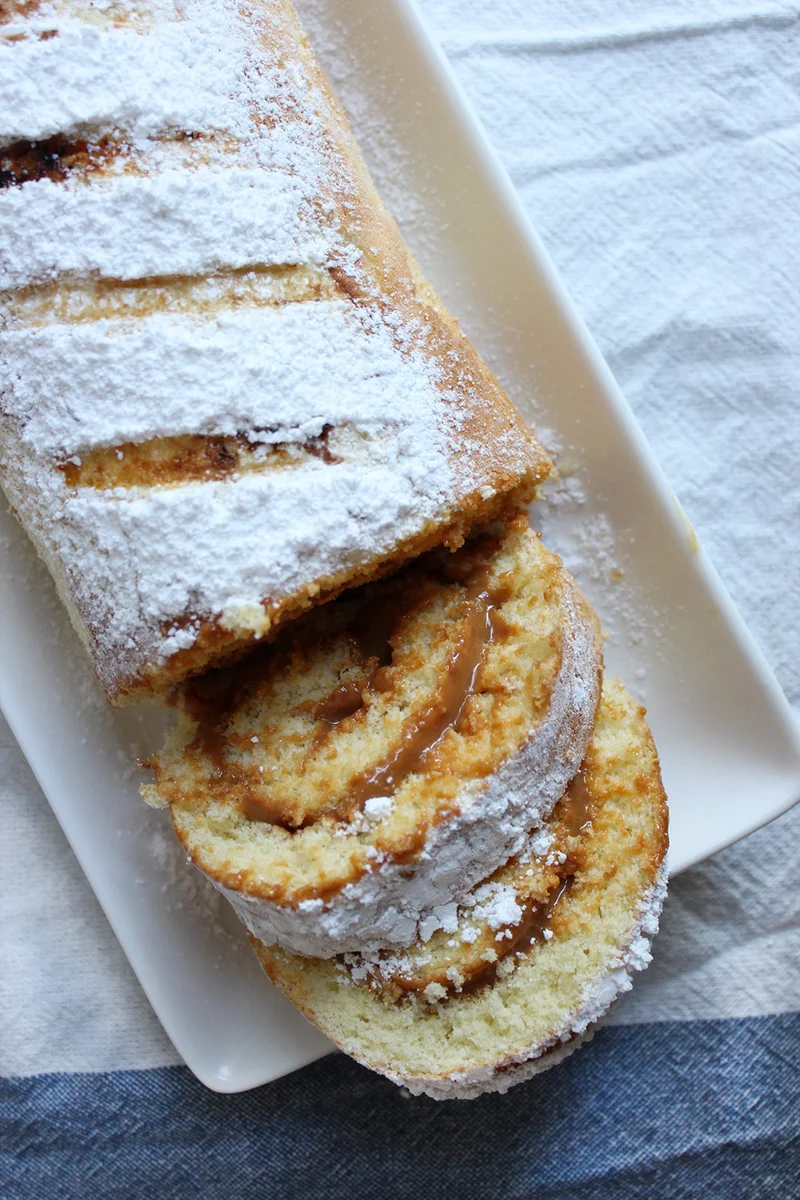
This light sponge cake is rolled around a dulce de leche filling and finished with a dusting of icing sugar. It makes a celebratory-looking dessert with a short bake and a soft, sweet centre.
Ingredients
- 6eggs
- about 120 g (1 cup)sifted icing sugar
- about 125 g (1 cup)sifted plain flour
- 2 teaspoonsbaking powder
- to tastedulce de leche (milk caramel)
- to tasteicing sugar, for sprinkling
Instructions
- 1
Whisk the eggs
Beat the egg whites until stiff. Gently add the sugar while stirring continuously, then add the egg yolks one at a time. Fold in the sifted flour and baking powder.
- 2
Bake the sponge
Spread the mixture evenly over a baking tray lined with buttered baking parchment. Bake in an oven preheated to 180°C (350°F) for 8–10 minutes, without letting the sponge brown. The time may vary with your oven.
- 3
Roll and cool
Turn the baked sponge onto paper sprinkled with icing sugar, then peel away the parchment used for baking. Quickly roll the sponge up with the sugared paper and leave it to cool.
- 4
Fill the roll
Unroll the cooled sponge, spread it with dulce de leche, then roll it up again.
- 5
Finish with sugar
Sprinkle icing sugar over the outside before serving.
What is a Swiss roll?
A Swiss roll is a thin sponge cake rolled around a filling; despite its name, it is a familiar style of cake across many countries. This version uses dulce de leche, a thick milk caramel, for a rich, sweet centre.
The sponge is baked briefly in a shallow tray, which keeps it thin enough to roll. Rolling it while warm helps it take shape before it is filled.
Nutrition and macros by portion
The nutrition label shows one serving as written: 275 calories, 9g protein, 49g carbs, 6g fat.
| Portion | Adjustment | kcal | Protein | Carbs | Fat |
|---|---|---|---|---|---|
| Lighter | Use a thinner caramel layer | 193 kcal | 6g | 34g | 4g |
| This serving | As written | 275 kcal | 9g | 49g | 6g |
| Hungry | Serve a larger slice | 413 kcal | 14g | 74g | 9g |
The sponge's carbohydrates come mainly from the icing sugar and flour, while the dulce de leche adds more sugar and some fat; eggs provide most of the protein. Serve a slice with fresh fruit to add a fresh contrast and round out the plate.
The sponge ingredients
Eggs: separating the whites and beating them stiff gives the sponge much of its lift. Add the yolks gradually so the mixture stays even.
Flour and raising agent: sift both before folding them in to distribute the baking powder and reduce lumps. Fold gently to avoid knocking too much air out.
Rolling without cracks
Warm sponge: turn it out as soon as it is baked and roll it promptly with the sugared paper. If it cools flat first, it can be less flexible and more likely to split.
Gentle handling: use the paper to guide the roll rather than pulling the cake tightly. Let it cool in that shape before unrolling it to add the filling.
Watch the short bake
Timing: start checking at 8 minutes, as the thin layer cooks quickly and oven performance varies. The recipe calls for a pale sponge, so take it out before it browns.
Doneness: the sponge should be set rather than wet in the centre. Avoid leaving it in the oven longer than needed, which can make it dry and harder to roll.
Filling and finish
Dulce de leche: spread it across the unrolled sponge in an even layer, leaving the cake flexible enough to roll back up. The recipe gives no fixed amount, so use enough to coat the surface without overfilling.
Icing sugar: sprinkle it over the paper before rolling and over the finished cake before serving. It adds a light coating and helps keep the roll from sticking to the paper.
Serving ideas
Serve slices on their own or with fresh berries to add a tart contrast to the caramel filling. A small spoonful of lightly whipped cream also works alongside the cake.
For neater slices, use a sharp knife and wipe it between cuts. The roll is easiest to portion after it has cooled completely.
Recipe notes & tips
- Have the sugared paper ready before taking the sponge out of the oven.
- Beat the egg whites until stiff peaks form, but fold the flour in gently.
- Spread the batter evenly so the sponge bakes at a consistent thickness.
- Check the sponge from 8 minutes and keep it pale.
- Roll the sponge promptly while it is still warm and pliable.
- Let the rolled sponge cool before unrolling it to spread the filling.
Variations
- Add berries: scatter a few thinly sliced berries over the dulce de leche before rolling.
- Use jam: replace the milk caramel with a layer of fruit jam.
- Add citrus: finely grate a little lemon zest into the filling for a fresh note.
- Finish with cocoa: dust the outside with a little cocoa powder instead of icing sugar.
- Add nuts: sprinkle finely chopped toasted nuts over the filling before rolling.
Common mistakes to avoid
- Overbaking: the sponge can turn dry and crack; check it from 8 minutes and remove it while pale.
- Waiting to roll: a cooled sponge is less flexible; roll it straight away using the paper.
- Rough folding: vigorous mixing can deflate the egg whites; fold in the dry ingredients gently.
- Uneven spreading: thick and thin patches bake differently; level the batter across the tray.
- Too much filling: an overloaded roll can be difficult to close; spread a thin, even layer.
- Unrolling while warm: the sponge may break; let it cool in its rolled shape first.
How to store
Keep the filled roll covered in the fridge and eat within 3 days. Serve chilled or let slices stand briefly at room temperature; reheating is not recommended.
Frequently asked questions
How do I know when the sponge is done?
It should be set through the centre but still pale, as the method specifies no browning. Start checking at 8 minutes because the bake is brief.
Why did my Swiss roll crack?
It may have cooled before being rolled, or it may have baked for too long and dried out. Roll it promptly while warm and avoid browning it.
Can I make the sponge ahead?
The method is designed for rolling the sponge warm, so it is best to bake and shape it just before cooling. Once filled, keep the roll covered in the fridge.
How much dulce de leche should I use?
The recipe does not specify a quantity. Spread on enough for an even layer, without adding so much that the roll becomes difficult to close.
Can I use a different filling?
Yes. A thin layer of jam is a simple alternative; keep the filling spreadable and avoid using so much that it spills out as you roll.
Can I freeze a Swiss roll?
It can be frozen well wrapped, though the texture of the filling may change slightly after thawing. Defrost it in the fridge before serving.
Cook it from the original
This recipe comes from midiariodecocina.com. Their page has the author’s own photos, notes and tips — the best place to cook it from.
Open the recipe on midiariodecocina.com