
Stuffed Miso Eggplant (Nikumiso Dengaku)
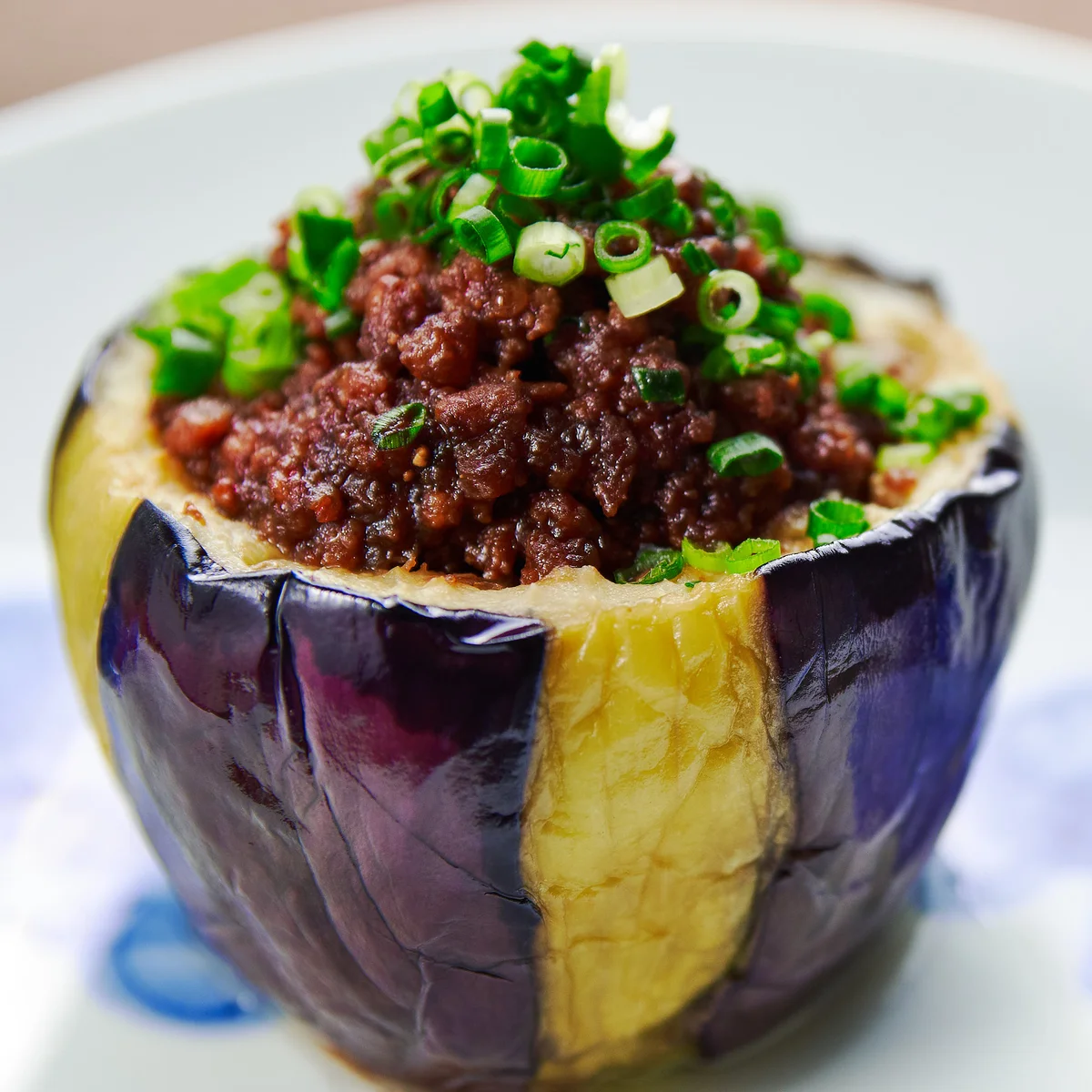
This Japanese-inspired dish pairs tender, deep-fried eggplant cups with a savoury-sweet pork and miso filling. It brings the flavours of nasu dengaku and niku miso together for a substantial main course.
Ingredients
- 2 tablespoonsevaporated cane sugar
- 3 tablespoonssake
- 2 tablespoonshatcho miso (black miso)
- 2 smalleggplants (globe or Italian)
- as neededvegetable oil, for frying
- 1 teaspoonvegetable oil
- 12 gginger, finely minced
- 200 gground pork
- 1scallion, finely chopped
Instructions
- 1
Mix the sauce
Whisk the sugar, sake and hatcho miso together to make the dengaku sauce.
- 2
Heat the oil
In a heavy-based pot, heat about 7.5 cm (3 inches) of oil to 175°C.
- 3
Trim the stems
Cut off the stem ends of the eggplants.
- 4
Strip the skin
Use a vegetable peeler to remove alternating strips of skin, leaving a striped pattern.
- 5
Prepare the bases
Trim a little from the bottom of each eggplant, then cut each in half so the pieces can stand fairly straight. If any wobble, trim their bases until they sit flat.
- 6
Carve the openings
With a small spoon, scoop out the centre at the wide end of each piece, leaving a 1.3 cm (½-inch) border at the sides and bottom.
- 7
Shape the cups
Use the spoon to hollow out the centre of each piece into a cup, leaving about 2 cm of flesh on the sides and bottom.
- 8
Fry the eggplant
Deep-fry the eggplant pieces, turning each one a few times in the oil to set the skin’s colour before adding the next. They may float, so keep turning them to help them cook evenly.
- 9
Drain the pieces
When a skewer pierces the eggplant easily, transfer the pieces, carved side down, to a rack lined with paper towels to drain.
- 10
Cook the ginger
Heat 1 teaspoon of vegetable oil and sauté the ginger until fragrant.
- 11
Brown the pork
Add the ground pork and break it up with a spatula. Cook until it is mostly done.
- 12
Remove excess fat
If a lot of oil has collected in the pan, use dry paper towels to soak up some of the excess grease.
- 13
Reduce the sauce
Add the dengaku sauce and stir-fry until very little liquid remains and the mixture no longer smells of alcohol.
- 14
Fill and garnish
Spoon the nikumiso into the fried eggplant cups and finish with the chopped scallion.
What is stuffed miso eggplant?
Nasu dengaku is eggplant served with a sweet-savoury miso glaze, while niku miso is a seasoned meat-and-miso mixture. This recipe combines the two Japanese favourites by using hollowed eggplant pieces as little cups for minced pork.
The striped skin gives the pieces a distinctive look, and frying makes the flesh soft enough to contrast with the rich, crumbly filling. Hatcho miso brings a deep, robust flavour to the sweetened sauce.
Nutrition and macros by portion
The nutrition label shows one serving as written: 256 calories, 12g protein, 23g carbs, 13g fat.
| Portion | Adjustment | kcal | Protein | Carbs | Fat |
|---|---|---|---|---|---|
| Lighter | Use less pork filling | 179 kcal | 8g | 16g | 9g |
| This serving | As written | 256 kcal | 12g | 23g | 13g |
| Hungry | Add steamed rice | 384 kcal | 18g | 35g | 20g |
The pork contributes much of the protein and fat, while the sugar and eggplant provide most of the carbohydrates. Serve a cup or two with steamed rice and vegetables to make a balanced plate with a fresh, less-rich accompaniment.
Choosing the ingredients
Eggplant: Small globe or Italian eggplants are the suggested choices. Look for pieces that can stand upright once trimmed, so the filling is easier to hold.
Miso and sake: Hatcho miso has a strong, savoury character, balanced here with sugar and sake. Whisk them together before cooking the pork so the sauce is ready to add.
Making the eggplant cups
Striped skin: Peel alternating bands rather than removing all the skin. The remaining strips help the eggplant keep its shape as it fries.
Hollowing: Leave a substantial wall and base when scooping out the centre. The method gives two border measurements; take care not to cut through the flesh while shaping the cups.
Frying and checking doneness
Oil temperature: Heat the oil to 175°C before frying. Add the eggplant pieces one at a time, turning them several times so the skin colours evenly.
Tenderness: The eggplant is ready when a skewer passes through it easily. Drain the pieces carved side down on a paper-towel-lined rack before filling.
Getting the pork filling right
Even crumbles: Break the pork apart with a spatula as it cooks, so it is easy to spoon into the cups. Cook it until mostly done before adding the sauce.
Reduced sauce: Stir-fry the pork with the dengaku mixture until little liquid remains and the alcohol smell has gone. If excess oil pools in the pan, absorb some with dry paper towels as directed.
Serving the dish
Serve the eggplant warm, soon after filling, while the cups are tender and the pork mixture is savoury and moist. Scatter the chopped scallion over the top for a fresh finish.
For a more rounded meal, add steamed rice and a simple vegetable side. Keep the sides plain so they do not compete with the concentrated miso flavour.
Recipe notes & tips
- Set up a rack lined with paper towels before you start frying, so the eggplant can drain promptly.
- Trim each base carefully until the pieces stand upright without wobbling.
- Use a small spoon to hollow out the eggplant gradually and avoid breaking through the sides.
- Turn floating eggplant pieces regularly so they cook evenly.
- Prepare the dengaku sauce before heating the pan for the pork.
- Drain the fried cups with their carved sides facing down before stuffing.
Variations
- Use another miso: Substitute a different miso if hatcho miso is unavailable, bearing in mind that the flavour will change.
- Try minced chicken: Replace the ground pork with minced chicken for a different meat filling.
- Add chilli: Stir a little chilli into the pork mixture for gentle heat.
- Finish with sesame: Sprinkle toasted sesame seeds over the filled cups just before serving.
- Serve with rice: Add steamed rice alongside to make the dish more substantial.
Common mistakes to avoid
- Cutting through the cup: Leave enough flesh around the sides and base so the filling stays inside.
- Skipping the striped peel: Remove alternating bands of skin rather than peeling the eggplant completely.
- Adding pieces too quickly: Fry the eggplant one at a time, turning each before adding the next.
- Leaving the eggplant unturned: Floating pieces need regular turns to cook evenly.
- Stopping the sauce too soon: Keep stir-frying until very little liquid remains and the alcohol smell has gone.
- Filling before draining: Let the fried eggplant drain carved side down before adding the pork mixture.
How to store
Store leftover stuffed eggplant in an airtight container in the refrigerator and eat within 2 days. Reheat gently in the microwave or in a covered pan until hot; the fried eggplant will soften further after storage.
Frequently asked questions
Can I use a different type of eggplant?
The recipe suggests small globe or Italian eggplants. Choose pieces that can be trimmed to stand upright and hollowed without breaking.
What can I use instead of hatcho miso?
Another miso can be used, although its colour and flavour may differ. Hatcho miso is specifically recommended for this recipe.
How do I know when the eggplant is cooked?
Pierce it with a skewer; it is ready when the skewer passes through easily.
Why do I need to turn the eggplant while frying?
The pieces tend to float, so turning them helps them colour and cook more evenly.
Can I make the pork filling ahead?
You can prepare the filling ahead and refrigerate it, then reheat it before stuffing the eggplant. For the best texture, fry the eggplant close to serving time.
What should I serve with stuffed miso eggplant?
Steamed rice and a simple vegetable side make good accompaniments to the rich miso-and-pork filling.
Cook it from the original
This recipe comes from norecipes.com. Their page has the author’s own photos, notes and tips — the best place to cook it from.
Open the recipe on norecipes.com