
Herb Vinaigrette
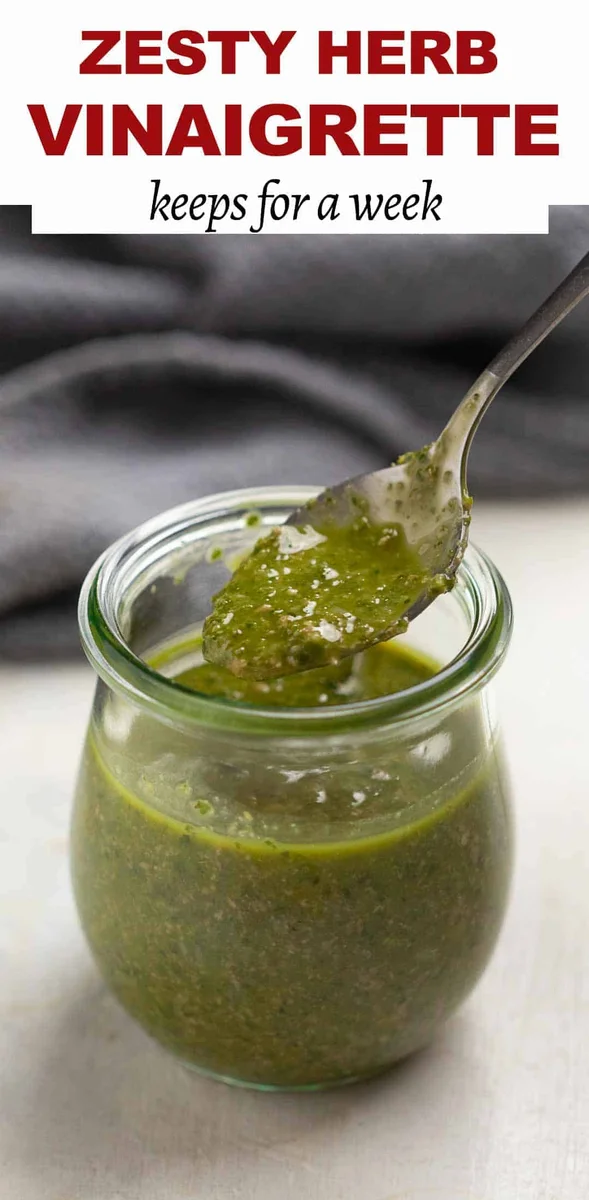
This bright, herb-forward vinaigrette blends fresh herbs, garlic and vinegar into a punchy dressing, finished with olive oil for a smooth emulsion. Make it in minutes to toss through whole-grain or noodle salads.
Ingredients
- 240 ml (1 cup)herbs (the original uses 180 ml basil and 60 ml mint)
- 5–6garlic cloves
- 2–3walnuts (optional)
- 15 ml (1 tablespoon)vinegar
- 30 ml (2 tablespoons)water
- 5 ml (1 teaspoon)salt
- 60 ml (1/4 cup)olive oil
Instructions
- 1
Blend the ingredients
Put everything except the oil in a blender and blend until smooth.
- 2
Emulsify with oil
With the blender running, pour in the oil in a thin trickle. Switch off the blender once the dressing has emulsified.
What is herb vinaigrette?
A vinaigrette is a dressing built around an acidic ingredient and oil. This American-style version takes a fresh, herb-heavy approach, with garlic for savoury bite and optional walnuts for extra body.
Blending the herbs and other ingredients before slowly adding the oil helps create a cohesive dressing. Its lively flavour works particularly well with whole-grain and noodle salads.
Nutrition and macros by portion
The nutrition label shows one serving as written: 103 calories, 1g protein, 3g carbs, 10g fat.
| Portion | Adjustment | kcal | Protein | Carbs | Fat |
|---|---|---|---|---|---|
| Lighter | Use less dressing | 72 kcal | 1g | 2g | 7g |
| This serving | As written | 103 kcal | 1g | 3g | 10g |
| Hungry | Larger salad portion | 155 kcal | 2g | 5g | 15g |
Olive oil supplies most of the fat, while the herbs, garlic and optional walnuts contribute small amounts of carbohydrate, protein and fat. Serve a measured amount over a salad with whole grains or noodles, and include vegetables to make a more balanced plate.
Choosing the herbs
Basil and mint: the recipe's suggested mix brings a fragrant, sweet-green flavour with a cool note. Use the full cup of herbs, loosely measured.
Freshness: herbs with bright leaves give the dressing its colour and clean flavour. Remove any tough stems before blending if they do not break down easily.
Getting the emulsion right
Blend first: process everything except the oil until the mixture looks smooth. This gives the herbs, garlic, vinegar, water and salt a chance to combine.
Add gradually: pour the oil in a thin stream while the blender continues running. Adding it all at once can make it harder for the dressing to come together evenly.
Adjusting the flavour
Garlic: five to six cloves give this dressing a pronounced savoury edge. If you prefer a milder result, start with the lower amount.
Walnuts: these are optional, so the vinaigrette can be made without them. When included, they add richness and a slightly fuller texture.
Texture and serving
Smooth finish: blend until no large pieces of herbs remain, then stop once the oil has emulsified. The finished dressing should look unified rather than separated.
Pairing: toss it with a whole-grain or noodle salad, as suggested in the recipe. Add it gradually so you can coat the salad without using more than you need.
Timing and equipment
Quick preparation: the stated total time is 10 minutes, and the method has just two blending stages. A blender or food processor can be used for the preparation.
For the oil: pour slowly and steadily while blending. Pause briefly if needed to check the texture, then continue until the dressing comes together.
Recipe notes & tips
- Measure the herbs loosely rather than packing them tightly into the cup.
- Start with five garlic cloves if you want a less forceful garlic flavour.
- Keep the blender running as you add the oil in a thin trickle.
- Use the optional walnuts only if you want a richer, fuller dressing.
- Stop blending as soon as the dressing has emulsified.
Variations
- Basil and mint: use the suggested three-quarter basil and one-quarter mint blend for a fresh, aromatic result.
- Walnut-free: leave out the optional walnuts for a simpler herb dressing.
- More garlic: use six cloves for a bolder savoury flavour.
- Milder garlic: use five cloves to keep the garlic note more restrained.
Common mistakes to avoid
- Adding oil too quickly: the dressing may not emulsify evenly; pour it in a thin trickle while blending.
- Pouring oil in before blending: the herbs and other ingredients will not be pre-blended; add everything except the oil first.
- Blending past the emulsion: the method only calls for blending until the dressing comes together; switch off at that point.
- Using too much garlic for your taste: begin with five cloves and choose the higher amount only if you want a stronger bite.
How to store
Store the vinaigrette in a covered container in the refrigerator and use it within 3–4 days. Stir or shake it before serving if it separates; let it stand briefly at room temperature if the chilled oil has thickened.
Frequently asked questions
Can I make this without walnuts?
Yes. The walnuts are optional, so you can leave them out and follow the rest of the recipe as written.
Can I use a food processor instead of a blender?
Yes. The recipe can be prepared in either a blender or a food processor; add the oil gradually while the machine runs.
Why add the oil slowly?
A thin, steady trickle helps the oil combine with the blended ingredients into an emulsion. Adding it all at once can make the texture less even.
What salads go well with this dressing?
It is suggested for whole-grain or noodle salads. Add it gradually and toss to coat.
How do I know when it is emulsified?
The dressing should look combined rather than like separate liquid and oil. Stop blending once it reaches that point.
Can I make it less garlicky?
Use five cloves rather than six. The recipe gives a range, so choose the lower amount for a milder garlic flavour.
Cook it from the original
This recipe comes from myfoodstory.com. Their page has the author’s own photos, notes and tips — the best place to cook it from.
Open the recipe on myfoodstory.com