
Potato Cabbage Fry (Patta gobhi aloo sabzi)
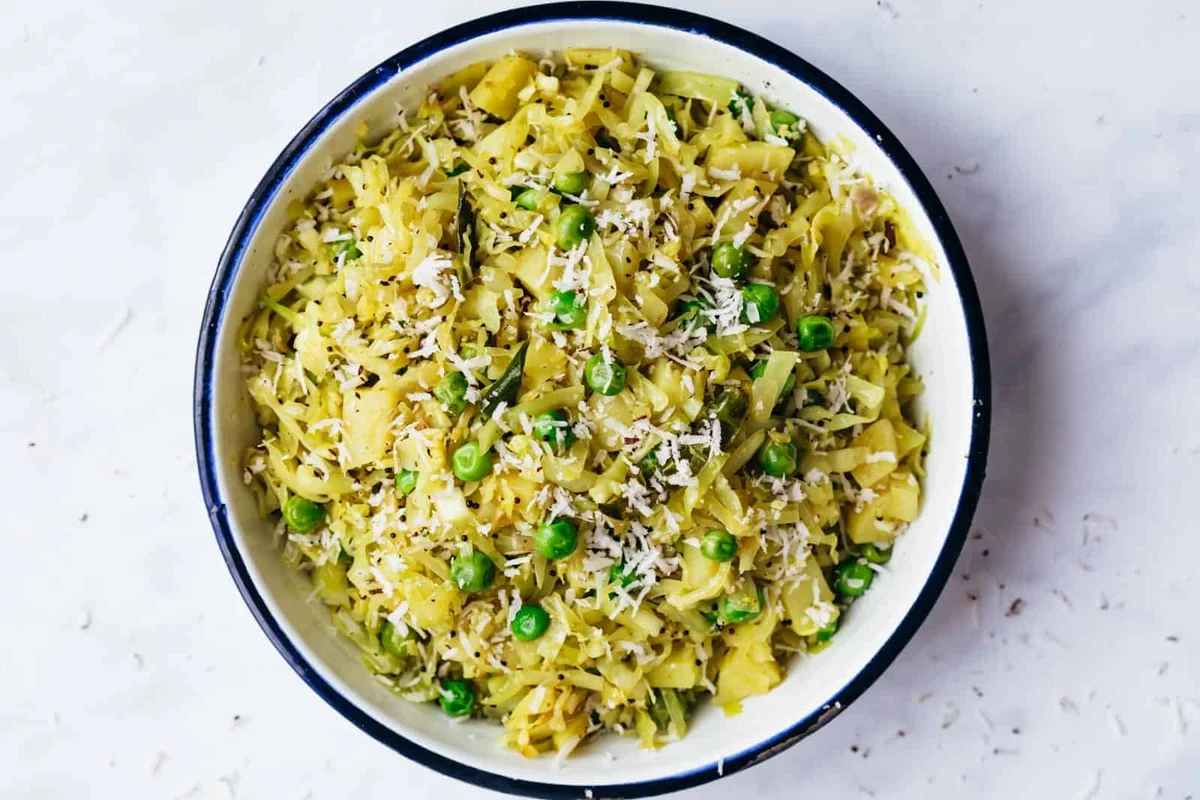
Potato cabbage fry is an Indian-style sabzi of tender cabbage and potatoes cooked with spices, chillies and a fragrant mustard-seed tempering. It makes a straightforward, flavourful side for a weeknight meal, with green peas and optional coconut to finish.
Ingredients
- 30 ml (2 tablespoons)Coconut oil
- 5 ml (1 teaspoon)Mustard seeds
- 15 ml (1 tablespoon)Ginger, chopped
- 2Green chillies or serrano peppers, slit lengthwise
- 8–10Curry leaves
- 120 ml (½ cup)Onion, finely chopped
- 1 head (approximately 550 g)Cabbage, shredded thinly
- 2 mediumPotatoes, peeled and cut into 6 mm pieces
- 2.5 ml (½ teaspoon)Turmeric powder
- 2.5 ml (½ teaspoon)Red chilli powder or paprika
- 5 ml (1 teaspoon)Coriander powder
- 5 ml (1 teaspoon)Salt
- 80 g (½ cup)Green peas
- 20 g (¼ cup)Grated coconut (optional)
Instructions
- 1
Temper the spices
Heat the coconut oil in a large kadhai or wok. Add the mustard seeds, ginger, slit chillies and curry leaves.
- 2
Cook the vegetables
When the mustard seeds start to sputter, add the onion and stir-fry for 2 minutes. Add the cabbage, potatoes, turmeric, chilli powder, coriander powder and salt; mix well. Cover and cook over a low heat for 15 minutes, stirring once or twice.
- 3
Finish with peas
Add the green peas and mix. Cook for a further 5–7 minutes, until the potatoes are tender. Turn off the heat, top with grated coconut and serve immediately.
What is potato cabbage fry?
Potato cabbage fry, or patta gobhi aloo sabzi, is a vegetable dish from Indian home cooking. Cabbage and potato cook together with spices, while a quick tempering of mustard seeds, ginger, chillies and curry leaves builds flavour at the start.
This version keeps the ingredient list short and adds peas near the end, so they retain their shape. Grated coconut is an optional finishing touch.
Nutrition and macros by portion
The nutrition label shows one serving as written: 167 calories, 5g protein, 26g carbs, 6g fat.
| Portion | Adjustment | kcal | Protein | Carbs | Fat |
|---|---|---|---|---|---|
| Lighter | Use less coconut oil | 117 kcal | 4g | 18g | 4g |
| This serving | As written | 167 kcal | 5g | 26g | 6g |
| Hungry | Serve a larger portion | 251 kcal | 8g | 39g | 9g |
The potatoes and peas provide most of the carbohydrates, while coconut oil contributes much of the fat. The vegetables and peas also contribute some protein; serve a portion with dal or another protein-rich dish to balance the plate.
The mustard-seed tempering
Mustard seeds: add them to the hot coconut oil with the ginger, chillies and curry leaves. Wait for them to start sputtering before adding the onion; this signals that the tempering is underway.
Chillies: slit them lengthwise as directed, and handle them carefully. The recipe uses two, so the finished dish will have a noticeable chilli presence.
Cut the vegetables evenly
Cabbage: shred it thinly so it cooks down alongside the potatoes during the covered stage.
Potatoes: cut them into even 6 mm pieces. Keeping the pieces small helps them become tender in the recipe’s cooking time.
Keep the heat low
Covered cooking: once the vegetables and spices are mixed, keep the pan covered over a low heat for 15 minutes. Stir once or twice during this stage, as the recipe directs.
Tenderness: after adding the peas, cook for another 5–7 minutes and check that the potato pieces are tender before turning off the heat.
Add the peas at the end
Green peas: stir them in after the cabbage and potatoes have had their first 15 minutes. The final 5–7 minutes lets them heat through while the potatoes finish cooking.
Coconut: scatter it over the dish once the heat is off. Leave it out if you prefer the sabzi without a coconut topping.
How to serve it
Serve the sabzi immediately as a vegetable side alongside rice or flatbreads. For a more rounded plate, pair it with a protein-rich dish such as dal, and add another fresh or cooked vegetable if you like.
Recipe notes & tips
- Use a wide kadhai or wok so the vegetables are easy to mix.
- Shred the cabbage thinly and cut the potatoes into even pieces for more consistent cooking.
- Keep the heat low while the pan is covered, and stir once or twice during the 15-minute cook.
- Check the potatoes for tenderness before taking the pan off the heat.
- Add the grated coconut only after turning off the heat.
Variations
- Milder chilli: use fewer chillies or remove their seeds before cooking.
- Paprika option: use paprika in place of red chilli powder for a less hot seasoning.
- Skip the coconut: leave out the optional grated coconut topping.
- Fresh peas: use fresh peas in place of the listed green peas and cook until heated through.
- More cabbage: add extra shredded cabbage, allowing for a longer cook if the pan is crowded.
Common mistakes to avoid
- Large potato pieces: they may stay firm; cut them evenly into 6 mm pieces.
- High heat under the lid: the vegetables can catch before they soften; keep the flame low.
- Skipping the stir: the mixture may cook unevenly; stir once or twice during the covered 15 minutes.
- Adding peas too early: they have a shorter final cooking stage; add them after the initial 15 minutes.
- Serving before checking: test a potato piece and continue cooking for 5–7 minutes with the peas until tender.
How to store
Refrigerate leftovers in a covered container and use within 3–4 days. Reheat in a pan over a low heat, stirring until hot; add a small splash of water if the vegetables seem dry.
Frequently asked questions
Can I make this without a kadhai?
Yes. Use a large wok or a wide, heavy-based pan with a lid.
How do I know when the potatoes are cooked?
They should be tender when pierced or pressed with a fork. If they are still firm, continue cooking until tender.
Can I leave out the coconut?
Yes. The grated coconut is optional and is added as a topping after the heat is turned off.
Can I use paprika instead of red chilli powder?
Yes. The recipe lists paprika as an alternative to red chilli powder.
Can I prepare this ahead?
You can cook it ahead and refrigerate it, then reheat it before serving. The recipe recommends serving it immediately after cooking.
Cook it from the original
This recipe comes from myfoodstory.com. Their page has the author’s own photos, notes and tips — the best place to cook it from.
Open the recipe on myfoodstory.com