
Pickled Jalapeños
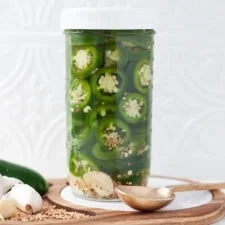
These quick-pickled jalapeños are sharp, savoury and gently sweet, with garlic, mustard seed and oregano adding extra flavour. Make a jar ahead to add a bright, spicy bite to tacos, sandwiches and other meals.
Ingredients
- 10jalapeños
- 3 cloves, peeled and halvedgarlic
- 1 teaspoonyellow mustard seeds
- 1/2 teaspoondried oregano
- 240 ml (1 cup)white vinegar
- 240 ml (1 cup)water
- 2 tablespoonsgranulated erythritol (optional; omit for Whole30)
- 2 teaspoonssea salt
Instructions
- 1
Slice the chillies
Cut off the jalapeño stems, then slice the chillies into rings about 6 mm (1/4 inch) thick.
- 2
Fill the jar
Put the jalapeño rings in a 950 ml (32-ounce) Mason jar with the garlic, mustard seeds and oregano.
- 3
Heat the brine
Combine the vinegar, water, erythritol and salt in a saucepan over medium heat. Bring to a gentle boil, stirring until the erythritol and salt dissolve.
- 4
Add the brine
Pour the hot liquid over the jalapeños, making sure they are submerged, and stir the oregano through.
- 5
Cool and chill
Leave the jar on the counter for 1 hour, then cap it and refrigerate.
- 6
Wait before serving
Keep the jar refrigerated for up to 2 months. The jalapeños can be eaten after 2 days, though their flavour develops further with more time in the fridge.
What are pickled jalapeños?
Pickled jalapeños are sliced chillies preserved in a sharp vinegar brine, a familiar condiment in Mexican and Tex-Mex cooking. They bring heat and acidity to rich or savoury dishes.
This version uses garlic, mustard seed and oregano for a more rounded brine, while a little erythritol softens the vinegar's sharpness. The quick method makes a ready-to-use jar without a long cooking process.
Nutrition and macros by portion
The nutrition label shows one serving as written: 3 calories, 0g protein, 1g carbs, 0g fat.
| Portion | Adjustment | kcal | Protein | Carbs | Fat |
|---|---|---|---|---|---|
| Lighter | Use less erythritol | 2 kcal | 0g | 0g | 0g |
| This serving | As written | 3 kcal | 0g | 1g | 0g |
| Hungry | Serve a larger spoonful | 5 kcal | 0g | 1g | 0g |
The stated serving nutrition is very low, with the small amount of carbohydrate mainly coming from the jalapeños and seasonings; the vinegar and water contribute little energy. Serve a few rings alongside a meal with a substantial source of protein and a filling carbohydrate such as beans or wholegrain bread.
Choosing and slicing the jalapeños
Fresh chillies: Choose firm jalapeños without soft spots so the rings hold their shape in the jar.
Even slices: Cut the rings to a similar thickness, around 6 mm, so they pickle at a consistent pace. Avoid touching your face while handling the chillies, and wash your hands afterwards.
Building the brine
Vinegar and water: White vinegar supplies the sharp, clean flavour, while water tempers it. Keep the stated proportions for this refrigerator pickle.
Seasoning: Dissolve the salt and erythritol in the gently heated liquid before pouring it over the chillies. The garlic, mustard seed and oregano flavour the brine as the jar rests.
Getting the texture right
Full coverage: Pour in enough brine to submerge the jalapeño rings so they are all in contact with the pickling liquid.
Cooling: Let the jar stand for 1 hour before capping and refrigerating, as directed. Chilling helps the rings take on the seasoning while keeping their fresh chilli character.
When to eat them
First taste: Wait at least 2 days before eating so the vinegar and seasonings have time to work into the slices.
More time: The flavour continues to develop in the fridge, so the jalapeños may taste more blended after a longer rest.
How to serve
Tacos and sandwiches: Add a few rings for a sharp, spicy contrast to savoury fillings.
Everyday meals: Try them with eggs, beans, burgers or a cheese board. A little brine can also add tang to a dressing or sauce.
Recipe notes & tips
- Use a clean jar and lid before filling it.
- Slice the jalapeños evenly so the rings pickle at a similar rate.
- Stir the brine until the salt and erythritol have fully dissolved.
- Check that the rings are submerged before refrigerating.
- Label the jar with the date so you can keep track of its storage time.
Variations
- Skip the sweetener: Omit the erythritol for a sharper brine, as suggested in the ingredient note.
- Adjust the heat: Remove the seeds and pale inner ribs before slicing for a milder result.
- Add onion: Include thinly sliced red onion in the jar for another crisp, tangy topping.
- Use fresh herbs: Add a small sprig of fresh oregano in place of the dried oregano.
- Add peppercorns: Include a few whole peppercorns with the mustard seed for a different aromatic note.
Common mistakes to avoid
- Uneven slices: Thick and thin rings pickle differently; aim for slices around 6 mm.
- Undissolved salt: The seasoning may not distribute evenly; stir the brine until the salt dissolves.
- Rings above the brine: Exposed slices may not pickle evenly; press them below the liquid.
- Eating too soon: The flavour can be very sharp at first; wait at least 2 days for the brine to develop.
- Leaving the jar unrefrigerated: This recipe is for refrigerator storage; cap the jar after its 1-hour counter rest and chill it.
How to store
Cap the jar and store it in the refrigerator for up to 2 months. The jalapeños can be eaten after 2 days, and no reheating is needed; use a clean utensil to take them from the jar.
Frequently asked questions
How soon can I eat the pickled jalapeños?
They can be eaten after 2 days in the refrigerator. Their flavour continues to develop as they sit.
How long do they keep?
The recipe gives a refrigerated storage time of up to 2 months. Keep the jar capped between uses.
Can I leave out the erythritol?
Yes. The ingredient note says to omit it for Whole30; the brine will taste sharper without it.
Do I need to sterilise the jar?
This is a refrigerator pickle, not a shelf-stable preserve. Start with a clean jar and lid, then keep the finished jar refrigerated.
Can I make the jalapeños less spicy?
For a milder result, remove the seeds and pale inner ribs before slicing. The chillies will still have some heat.
What can I serve them with?
Use them as a topping for tacos, sandwiches, eggs, beans or burgers. Their acidity works especially well with rich, savoury fillings.
Cook it from the original
This recipe comes from peaceloveandlowcarb.com. Their page has the author’s own photos, notes and tips — the best place to cook it from.
Open the recipe on peaceloveandlowcarb.com